When Is PaaS Development Consulting the Smarter Choice for Building Scalable Applications?
Table of Contents
PaaS development consulting is the smarter choice when your team needs to launch scalable software faster, but does not want every release blocked by infrastructure management. It helps you make better platform decisions, improve cloud application scalability, and avoid expensive mistakes in architecture, security, and cost control.
The real value is focus. Instead of asking developers to manage servers, pipelines, databases, and monitoring from scratch, a good consulting partner helps you build on a cloud platform that fits the product, the team, and the stage of growth.
The short explanation
PaaS development consulting is the smarter choice when an application needs to scale quickly, ship reliably, and avoid unnecessary infrastructure work.
It is especially useful when:
- Your development team lacks deep cloud platform experience.
- Traffic is unpredictable or growing fast.
- Infrastructure management is slowing product delivery.
- A legacy application needs modernization.
- Cloud costs are rising without clear controls.
- Security, compliance, or disaster recovery need stronger design.
- You need a cleaner deployment path across AWS, Azure, Google Cloud, or a hybrid cloud setup.
In simple terms, PaaS gives the team a managed development foundation, while consultants help choose, configure, and govern that foundation so it supports real business growth.
Why PaaS Development Consulting Makes Sense Before Scaling Gets Messy
PaaS, or Platform as a Service, gives teams a managed layer for application development. It usually includes compute, server capacity, deployment tools, databases, networking, middleware, monitoring, and integrations that sit above raw cloud infrastructure.
That matters because scaling problems rarely arrive politely. A product can move from a steady workload to a sudden traffic spike after a campaign, launch, investor mention, seasonal peak, or enterprise rollout.
The smartest time to design for cloud application scalability is before the platform is already under pressure.
A consultant can help answer practical questions early:
- Which PaaS provider matches the product roadmap?
- Should the team use Azure, AWS, Google Cloud, or a smaller service provider?
- Which services should be managed, and which should stay custom?
- How should the database, cache, queue, storage, and APIs scale?
- What guardrails stop dynamic scaling from becoming dynamic overspending?
This is also where PaaS differs from IaaS and SaaS. Infrastructure as a Service gives more control over virtual machines, networks, and operating systems. Software as a Service gives a finished application. PaaS sits between them. It gives developers a productive cloud environment for building and deploying software without managing every server detail.
How PaaS Development Consulting Speeds Up Product Delivery
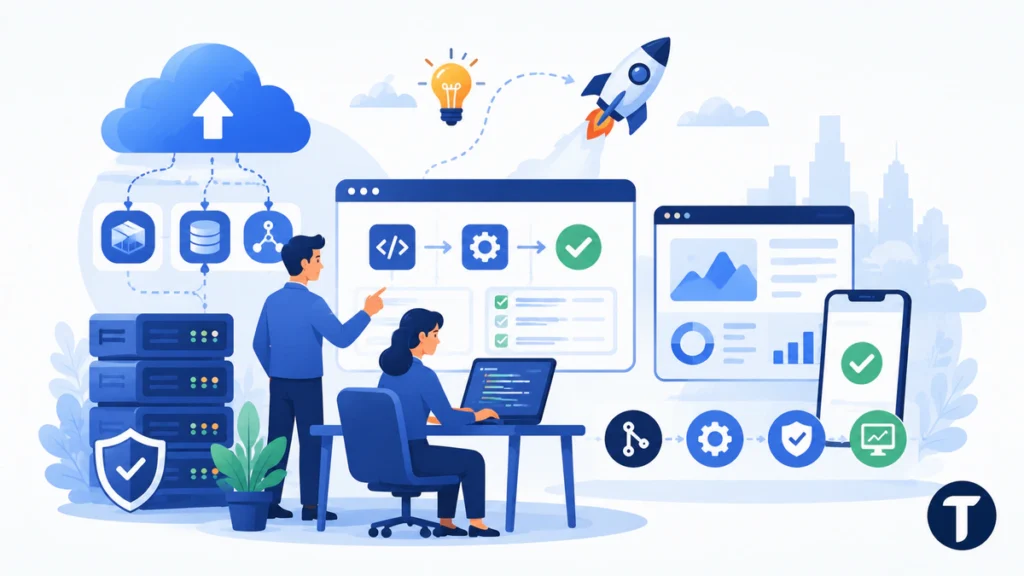
A strong PaaS setup can cut weeks of platform work from a software development plan. Instead of building every development environment, deployment script, database tier, and monitoring dashboard manually, the team starts with tested building blocks.
This is where outside support can shorten the path from idea to working software. Investing in professional the NIST cloud computing reference architecture enables organizations to rapidly assemble prototypes using prebuilt services, managed databases, and integrated developer tools.
That speed helps most when the goal is to test a product, launch an MVP, or expand an existing app without creating a fragile stack. For teams moving from platform strategy to delivery planning, TechBonna also explains how a 14-week app development timeline can turn a focused idea into a tested launch without adding unnecessary scope. Consultants can map a golden path for the developer workflow:
- Code moves from repository to build pipeline.
- Tests run before deployment.
- Secrets stay outside the codebase.
- Staging mirrors production closely enough to catch issues.
- Releases can be rolled back without panic.
- Logs, metrics, and alerts are visible from the start.
Fast delivery is not the same as rushed delivery. The best PaaS development approach uses automation to remove repeat work, not quality checks.
Why Product Teams Should Not Own Every Infrastructure Detail
Fast-growing companies usually win by improving the product, not by proving they can maintain every piece of cloud infrastructure manually. Users care about speed, reliability, useful features, and clear experiences. They do not care whether your team spent the week patching operating systems or tuning load balancers.
PaaS helps move non-differentiating infrastructure management work away from the core development team. The platform can handle much of the server, runtime, database, and deployment plumbing, while developers focus on the features users actually notice.
The aim is not to remove engineering discipline. It is to spend that discipline in the right place.
A consultant helps define what the development team should still own. That usually includes application logic, data models, API design, security requirements, performance targets, and release decisions. The cloud provider or PaaS provider can handle more of the managed compute, storage, runtime, and deployment layer.
This split is useful for startups, enterprise product teams, and development teams that need repeatable delivery without building a full platform engineering department too early.
How PaaS Development Consulting Prevents Cloud Costs From Running Away
Elastic scaling is one of the biggest advantages of PaaS services, and it supports cloud application scalability, but it can become a cost problem if no one sets limits. A platform that can scale up quickly can also waste money quickly.
Consultants help turn a flexible cloud service into a controlled operating model. They can right-size compute, set autoscaling rules, choose the right database tier, review storage patterns, and decide when serverless computing makes more sense than always-on services.
A practical cost-control plan should include:
- Autoscaling thresholds tied to real demand.
- Budget alerts before spend becomes a surprise.
- Separate development, staging, and production limits.
- Usage dashboards for engineering and finance.
- Reserved or committed usage only where workloads are predictable.
- Reviews of idle resources, oversized databases, and unused environments.
Good cloud cost control is not about blocking scale. It is about making scale predictable.
This matters in public cloud environments such as Microsoft Azure, Amazon Web Services, and Google Cloud because each provider has different pricing rules, managed services, and monitoring tools. A consulting partner can compare PaaS offerings before the team commits to a pattern that is hard to unwind later.
When Legacy Application Modernization Becomes Urgent
Legacy applications often work well until they do not. A monolith may support the business for years, then struggle when traffic rises, release cycles shorten, or one feature starts consuming too many resources.
Modernizing for PaaS does not always mean rewriting everything. PaaS development consulting can identify which legacy components should move first. In many cases, the safer path is phased cloud migration. The team can move specific services, APIs, data processing jobs, or user workflows to a modern cloud platform while the core system continues to run.
The right modernization plan reduces risk instead of creating a giant rewrite project.
Useful patterns include:
- Blue-green deployments for safer releases.
- Canary releases for testing changes with a small user group.
- Stateless service design where session data lives outside the app server.
- Message queues for asynchronous processing.
- Managed database services for easier backups and scaling.
- API layers that let old and new systems work together.
Microservices can help when teams need parts of the application to scale independently. They are not magic, though. A poorly designed microservice setup can create more deployment, observability, and data consistency problems than the original monolith.
Consultants help decide where decoupling creates value and where a modular monolith or managed PaaS solution is enough.
How PaaS Development Consulting Supports Security, Compliance, and Reliability
Security is a major reason to bring in outside guidance. PaaS platforms include many built-in controls, but they still need careful configuration. Misconfigured identity, storage permissions, network rules, or logging can turn a managed platform into a business risk.
The U.S. National Institute of Standards and Technology defines cloud computing as a model for convenient, on-demand network access to shared computing resources in its official cloud computing definition. That shared model is powerful, but it also means teams must understand where provider responsibility ends and customer responsibility begins.
AWS’s shared responsibility model puts that boundary in plain terms: the provider secures the underlying platform, while configuration, identity and data handling stay with the customer. The wording differs between providers, but the split is the thing to confirm before a platform decision is signed off.
A strong PaaS architecture should cover:
- Identity and access management.
- Least-privilege permissions for developers and services.
- Encrypted data storage and secure backups.
- Centralized logs and audit trails.
- Vulnerability management for application dependencies.
- Disaster recovery planning.
- Clear incident response ownership.
Managed infrastructure management does not remove accountability. It changes what the team must govern.
For regulated enterprise teams, consultants can also align the cloud strategy with data residency, access review, retention, and audit requirements.
Which PaaS Features Matter Most for Cloud Application Scalability?
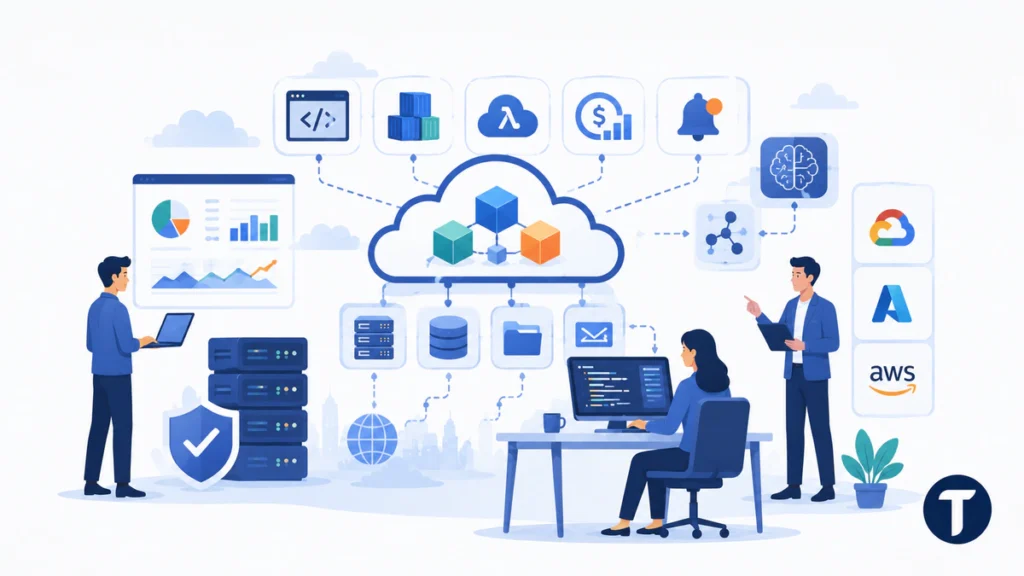
A useful PaaS solution should streamline the development process without hiding every important decision. The team still needs clear best practices for architecture, access, data, deployment, infrastructure management, and support. The same framework should support product development whether the old system is on-premises, in public cloud, or split across both.
Common features to review include:
- A development platform with built-in development tools.
- Managed compute, cloud storage, databases, and queues.
- Support for containerized applications and serverless workloads.
- Pay-as-you-go pricing with usable cost alerts.
- Cloud-native development and DevOps workflows.
- Integration options for analytics, AI, machine learning, and existing SaaS tools.
- AI-ready data flows where AI features are part of the roadmap, not a bolt-on later.
- Access to managed cloud services without rebuilding every layer internally.
- Deployment support for Google App Engine, Azure App Service, AWS Elastic Beanstalk, or similar services where they fit.
PaaS should reduce the need to manage hardware and software in a data center, but it should not remove visibility.
This is why comparing service models matters. A cloud computing model built on PaaS may be better than raw IaaS when the team wants faster development and deployment. IaaS may still fit teams that need low-level control. SaaS solutions may fit when no custom application is needed.
When PaaS Development Consulting May Not Be the Right Fit
PaaS is useful, but it is not always the best answer. Teams may prefer IaaS, containers, or a private cloud setup when they need low-level infrastructure control, custom networking, strict latency tuning, unusual runtime requirements, or predictable workloads where managed platform pricing becomes too expensive.
This does not mean PaaS is the wrong model. It means the PaaS development consulting process should compare trade-offs before the team commits.
What to Look for in a PaaS Development Consulting Partner
The right partner should do more than recommend a favorite cloud service provider. They should connect platform choices to product goals, team skills, security needs, and cost constraints.
Look for a partner that can explain trade-offs clearly. For example, Azure may fit a Microsoft-heavy enterprise environment using Microsoft identity, .NET, and Azure databases. AWS may offer strong breadth across compute, analytics, machine learning, and serverless options. Google Cloud may be attractive for data analytics, AI services, and Kubernetes-native teams. A private cloud or hybrid cloud model may fit compliance or integration constraints.
The best consulting partner helps you choose a platform you can operate after they leave.
Before hiring, ask for evidence of:
- Cloud migration planning.
- PaaS development experience.
- Application development and app development delivery.
- Security and compliance design.
- Cost optimization work.
- DevOps and CI/CD implementation.
- Observability, analytics, and incident response setup.
- Clear documentation and knowledge transfer.
Avoid any service provider that treats PaaS as a simple hosting switch. The bigger value is creating a repeatable development environment, safer deployment model, and realistic scaling plan.
PaaS Development Consulting Is the Smarter Choice When
PaaS development consulting is most valuable when the team needs a managed cloud platform but still needs expert judgment around architecture, cost, security, and scalability.
It is usually the smarter choice when:
- Your team is spending more time on infrastructure than product delivery.
- Scaling requirements are unclear or likely to change.
- You need cloud migration without a full rewrite.
- Security and compliance need to be designed before launch.
- Cloud costs are rising but no one clearly owns optimization.
- Your team needs repeatable deployment workflows.
- You want managed services without losing architectural control.
What this means in practice
PaaS development consulting is the smarter choice when the business needs cloud application scalability without letting infrastructure management take over the roadmap. It helps teams launch faster, modernize legacy applications carefully, control cloud costs, and choose a cloud platform that matches the product.
For companies building scalable applications, cloud application scalability is not only a technical decision. The right PaaS strategy gives the development team a cleaner path to deploy, monitor, secure, and improve software while keeping focus on the product users actually came for.