How Can You Turn an App Idea Into a Live Product in 14 Weeks?
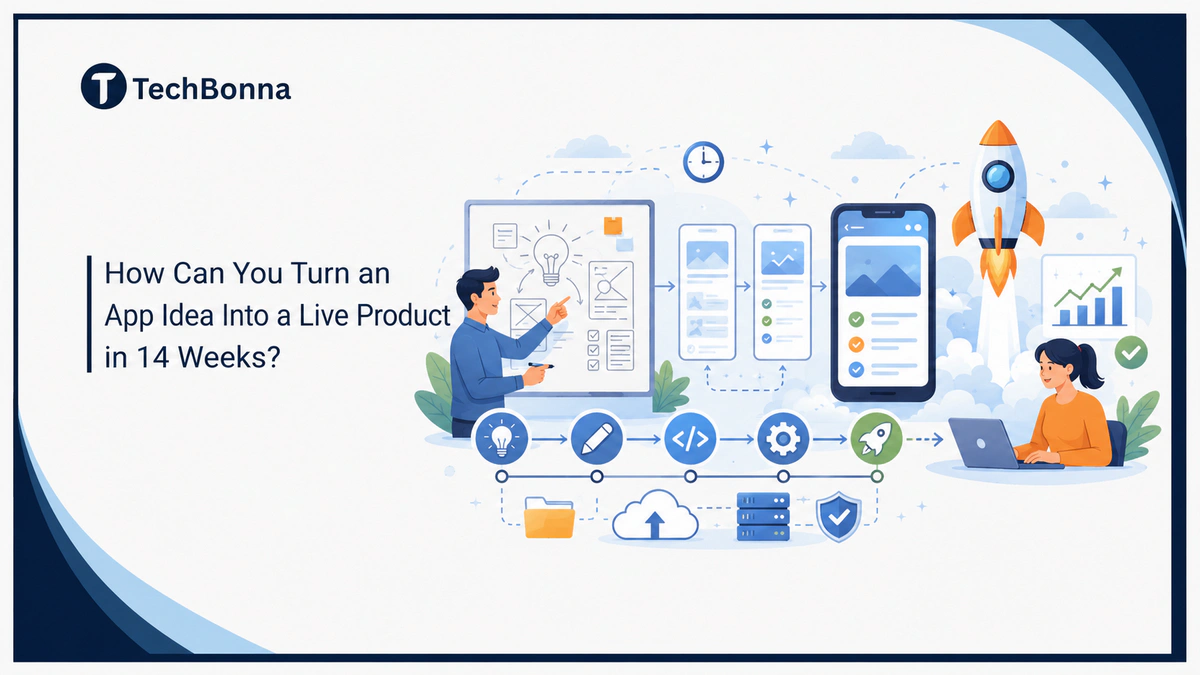
Table of Contents
Rapid On-Demand Architecture gives a startup a practical way to move from an app idea to launch without treating speed as a shortcut. A focused app development timeline, supported by AI planning where useful, keeps the first release clear.
Instead of trying to ship every feature, the team follows a product launch roadmap that defines scope, testing, and release steps. This is how Rapid On-Demand Architecture helps teams turn your idea into something users can test while still protecting quality.
The short explanation
To launch in 14 weeks, start with one clear user problem, define the minimum viable product, create wireframes, build the core app and backend, test with real users, prepare app store materials, and launch with analytics. This keeps the product launch roadmap practical instead of crowded.
A practical 14-week plan looks like this:
The official 2020 Scrum Guide describes short Sprints that produce usable increments and create regular points for inspection and adaptation. A 14-week launch plan is more credible when each stage leaves something testable, rather than postponing integration and user feedback until the final week.
- Weeks 1–2: validate your idea, define the audience, choose the type of app, and narrow the MVP.
- Weeks 3–4: map the workflow, design the main screens, and review a clickable prototype.
- Weeks 5–8: focus on developing the app, including accounts, core actions, admin tools, and the ability to make payments if needed.
- Weeks 9–11: test usability, security, performance, and edge cases before public release.
- Weeks 12–13: prepare store assets, analytics, support pages, and launch messages.
- Week 14: submit, launch, get feedback, monitor issues, and plan the next version.
Why the Startup Needs a Smaller App Idea First
A great app idea is not the same as a release-ready plan. An idea for an app becomes useful only when the team can explain the user, the problem, and the first measurable result.
The first version should do one job well, not become a crowded product that tries to impress everyone. A food delivery app and a restaurant reservation app may both use location, notifications, and payment flows, but they do not share the same user promise.
In Rapid On-Demand Architecture, that restraint matters because every extra feature adds design, engineering, testing, and support work. The first release should prove the main use case before the team expands the product.
This is where the app concept has to be reduced. What must the user do first? What business idea is being tested? What would prove the idea is viable? These questions help a founder, product lead, or co-founder avoid guessing for months.
The best app is usually the one that can solve real problems with the fewest moving parts. That is how teams save time and money while still building toward a successful app.
How AI, an App Builder, and No-Code Support the Workflow

AI can support planning, research, and early product decisions, but it should not replace judgment. An AI app builder may help sketch screens or generate basic flows, while AI solutions can summarize user research and organize feature ideas.
The useful part is not the novelty. It is the ability to automate repetitive planning work so the team can spend more time on product decisions. Using AI tools can also help product managers compare assumptions, spot missing steps, and prepare better sprint notes.
A tool with a free trial can be useful during discovery, especially for a SaaS product that needs early onboarding tests. Still, creating an app in 14 weeks requires human review, technical trade-offs, and clear ownership.
You can build an app faster when technologies like AI support the process, but the key differentiator is still focus. These tools should support the app development timeline, not replace the decisions that keep the product useful.
When to Build a Web App Around the Mobile Product
Sometimes the web layer should be built alongside the mobile experience. The customer may use the phone, but the business may need dashboards, admin controls, reporting screens, or live product demos for partners.
This is why web and mobile planning should happen together. A mobile and web system can share data, user roles, and backend logic instead of becoming two disconnected products.
For teams comparing outside support, TekRevol Web Development Services is a useful example of how the web layer can support a larger digital product. The point is not to copy another team’s process. The point is to understand how backend systems, web portals, and user-facing screens need to work together.
This keeps the product launch roadmap connected across the mobile app, backend, admin tools, and any customer-facing web experience.
Rapid On-Demand Architecture Weeks 1 to 4: Validate the First Flow
The first month should bring your idea down to the clearest user path. The team should map the screens, decide what data must move through the system, and remove anything that does not support launch.
This is also the right time to build a simple landing page. That page can explain the offer, collect interest, and test demand before the full release. It also gives the team a place to send early users, investors, or internal stakeholders.
For a 14-week project, this early step matters because it lets the team validate demand before too much budget is spent. It also creates a source of questions that can shape onboarding, pricing, and feature priority.
At this stage, the app development timeline is still flexible enough to absorb feedback without pushing the whole launch off track.
Weeks 5 to 8: Build the Core Product

The middle weeks turn the approved scope into working software. Developers build account flows, main screens, databases, APIs, notifications, and any required payment or booking logic.
This phase should not become a place for every new suggestion. There are always more app ideas to build, but the first release needs discipline. If a feature does not support the main user path, it should wait.
This is where delivery discipline matters most. The team needs clear technical scoping, realistic sprint planning, and steady communication between product, design, and engineering. A fast build should still leave room for code review, testing, and practical decisions about what belongs in the first version.
If the team is ready to compare delivery partners, TechBonna also has a practical shortlist of AI development companies with real client success stories that can help founders judge proof, delivery fit, and technical depth before choosing support.
Use AI Research Without Chasing Every Trend
AI can help teams pull trending topics, compare fresh app ideas, and group requests into themes. This can be helpful when founders are still comparing the best web app ideas or choosing which user problem deserves the first release.
But a market signal is not a strategy. The app industry changes quickly, and the loudest idea is not always the strongest. The team still needs to ask whether the product has a clear audience, a practical use case, and a reason to exist in the digital world.
Weeks 9 to 14: Test, Launch, and Learn
The last phase is about proving that the release works outside the planning room. The team should test device behavior, sign-up flows, admin actions, loading speed, errors, and security.
The product launch roadmap should also include support ownership, analytics, bug triage, and review monitoring. A fast release is only useful when the team knows what to watch after people start using the product.
Once the app is live, the next decision should come from evidence. Keep what users understand. Improve what creates friction. Move nonessential ideas to the next release.
What this means in practice
Rapid On-Demand Architecture works because it turns speed into a sequence of choices, not a rush. When your app development timeline stays tied to a clear product launch roadmap, a startup can launch, learn from users, and decide what to improve next.