Why Push Advertising Is the Secret Weapon for Scaling Affiliate and E-commerce Campaigns
Table of Contents
Push advertising can help affiliate marketing campaigns, e-commerce advertising campaigns, and performance marketing channels scale because it reaches users outside crowded search and social feeds. Instead of waiting for someone to search again or scroll into another feed placement, push gives advertisers a direct, measurable way to test offers, recover attention, and bring users back into a buying journey.
The FTC Endorsement Guides Q&A says endorsements must be honest and not misleading, and material connections that could affect how people evaluate them should be disclosed clearly and conspicuously. Affiliate campaigns therefore need disclosure and creative review built into scaling, not added after traffic has already increased.
That does not make it a shortcut. Push works best when the offer is clear, the landing page is fast, the tracking setup is reliable, and the campaign has a disciplined testing process.
The short explanation
Push advertising is a secret weapon for scaling affiliate marketing campaigns and e-commerce advertising campaigns because it gives marketers fast, measurable access to users outside crowded search and social feeds. It helps teams test offers quickly, re-engage interested visitors, control traffic by segment, and scale only the sources that produce profitable actions.
In practice, push advertising helps affiliate marketing campaigns and e-commerce advertising campaigns scale by:
- Testing demand quickly before larger budgets are committed.
- Re-engaging users who visited a product page, pre-lander, or checkout.
- Separating traffic quality by device, geography, placement, source, and creative angle.
- Improving paid acquisition decisions with clear conversion and cost-per-action data.
Classic browser push notifications are permission-based messages delivered through the browser or operating system, while in-page push ads are notification-style placements shown during a website session. Both can support growth, but they should be tested separately because user intent and campaign performance can differ.
Why Push Advertising Fits Performance-Led Growth
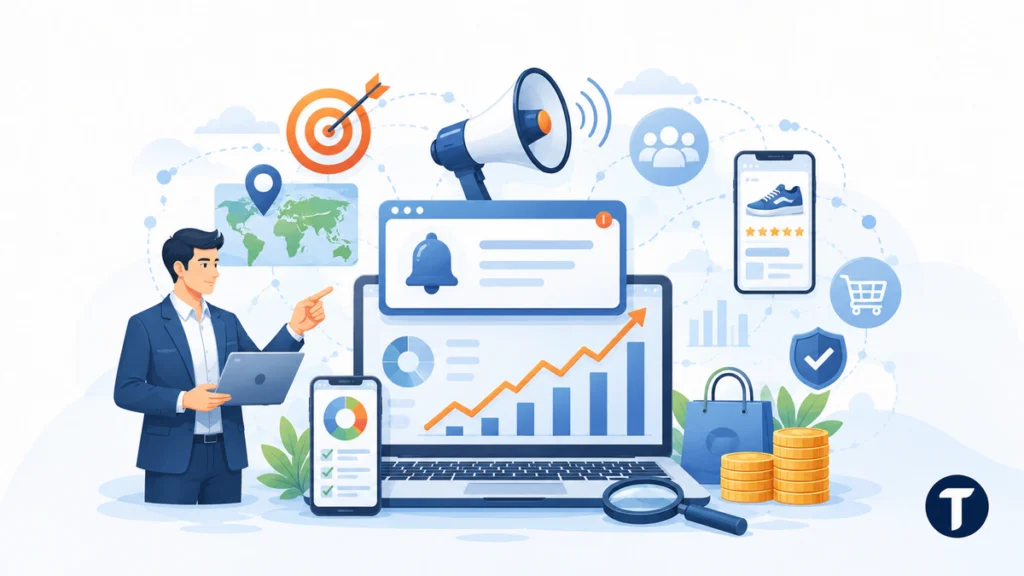
Push advertising sits between display, native, and direct response media. It does not depend on someone typing a search query at that exact moment, and it does not need a social feed to show the ad. That makes it useful for growth teams that need feedback before committing larger budgets to search, social, influencers, content, or broader media buys.
The biggest advantage is the speed of feedback. A narrow campaign can show whether a product angle, geography, device type, or landing page promise is worth further investment. Affiliate teams can validate an offer before scaling traffic. E-commerce teams can test product demand, discount hooks, seasonal messages, and cart recovery ideas.
This is also where traffic-source selection matters. Before adding budget, advertisers should compare placement types, targeting controls, pricing models, reporting depth, fraud controls, and postback support across the best push ads networks. The goal is not to chase the largest volume of clicks. The goal is to find traffic that matches the offer, funnel, location, device mix, and risk tolerance.
Push fits performance-led growth because it turns attention into data quickly. Clicks without engagement can reveal a message mismatch. Add-to-cart activity without purchases can reveal price, shipping, payment, or trust issues. Approved leads from one source and rejected leads from another can guide source-level optimization.
What Makes Push Ads Different from Other Ad Formats?
Push ads are short, direct, and action-oriented. They usually include a headline, short description, icon or image, and call to action. That limited space forces the advertiser to remove vague branding language and focus on the next step.
A good push ad answers three questions quickly: what is being offered, why it matters now, and what happens after the click. A product discovery message might highlight a specific category or discount. A cart recovery message should feel more personal and should not sound like a cold ad. An affiliate finance, software, or subscription offer may need a benefit-led angle, savings angle, or trial message.
The key distinction is format discipline. Classic push, in-page push, mobile, and desktop traffic should not be blended blindly in the same test. In-page push may behave more like display because the user sees it while browsing. Classic browser push can re-engage users outside the original page context. Separating these formats gives cleaner data.
How Push Advertising Supports Affiliate Marketing Campaigns
Affiliate marketing campaigns need fast and reliable testing loops. Affiliates often work with payout rules, caps, compliance restrictions, approval conditions, and narrow margins. A traffic source that reveals performance by source, device, geography, and creative angle can make the difference between scaling intelligently and guessing.
A strong affiliate push campaign changes one major variable at a time. If the headline, image, audience, offer, and landing page all change at once, the data becomes hard to trust. A cleaner test might compare two headlines against the same pre-lander, or two audience segments against the same offer.
Push can be useful for finance, software, shopping, subscription, app, and lead-generation offers when the promise is clear and compliant. It struggles when the landing page is slow, the claim is exaggerated, or the conversion path is difficult to track. Short ad copy can make overpromising tempting, so affiliates should avoid fake urgency, fake system-message wording, unsupported earnings claims, misleading health claims, or anything that conflicts with network and advertiser rules.
The best affiliate use case is not “buy cheap clicks.” It is controlled offer validation. If a geography or source produces clicks but no qualified actions, cut it. If a source produces fewer clicks but higher approval rates, protect it. The real value of push is the ability to identify profitable pockets of traffic.
How Push Advertising Helps E-commerce Advertising Campaigns Scale
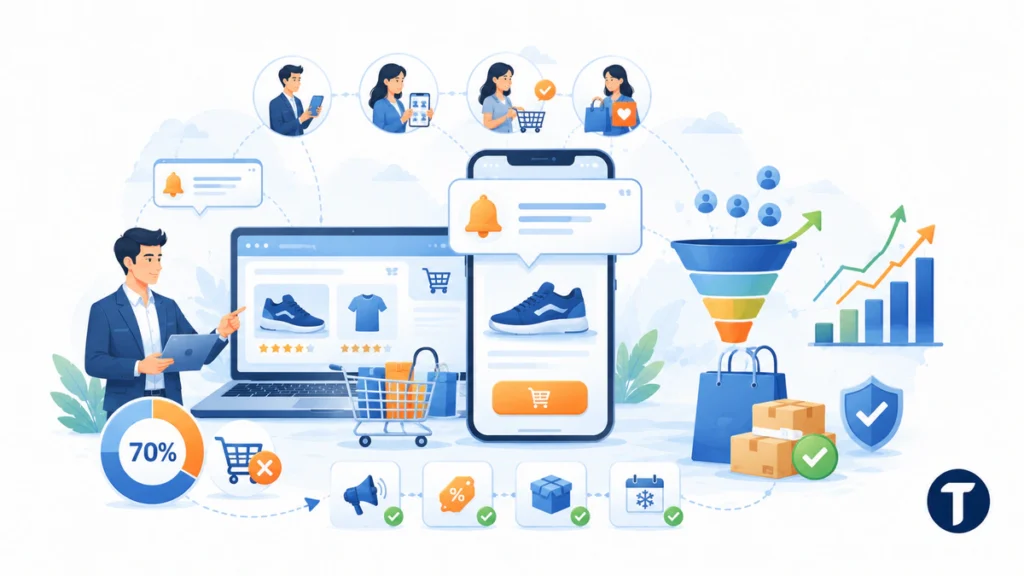
E-commerce campaigns often fail because marketers treat all visitors as one audience. Push advertising works better when it matches the message to the buyer’s stage. A new visitor browsing a category needs a different message from a shopper who viewed a product, added it to cart, or bought once before.
Baymard Institute’s cart abandonment research has long shown that most online carts are abandoned, with the average sitting around 70%. That context matters because many stores do not only need more traffic. They also need practical ways to bring interested shoppers back after they leave.
Push can support product discovery, limited-time offers, cart recovery, back-in-stock alerts, and seasonal campaigns. The strongest messages are specific. “New running shoes under $80” is clearer than “Shop now.” “Still thinking about this pair?” is more appropriate for cart recovery than a generic discount blast.
Push traffic can also expose problems in the funnel. Strong click-through but weak product-page engagement may mean the ad promise is mismatched. Good add-to-cart activity with weak checkout completion may point to shipping costs, payment friction, missing reviews, or poor return-policy visibility.
How Push and Pull Marketing Work Together
Push advertising works best when it supports a wider digital marketing strategy. Pull marketing channels such as SEO, brand content, social media, video, and helpful product pages attract people who are already searching or browsing with intent. Push does the opposite. It brings a focused message to a user before they actively search again.
That makes push useful for reconnecting parts of the funnel. SEO may capture initial demand, social content may build familiarity, email may nurture subscribers, and push ads may re-engage users who left a product page or pre-lander. It can also validate whether an offer, product, or promotion deserves broader budget.
What Campaign Setup Makes Push Ads Work?
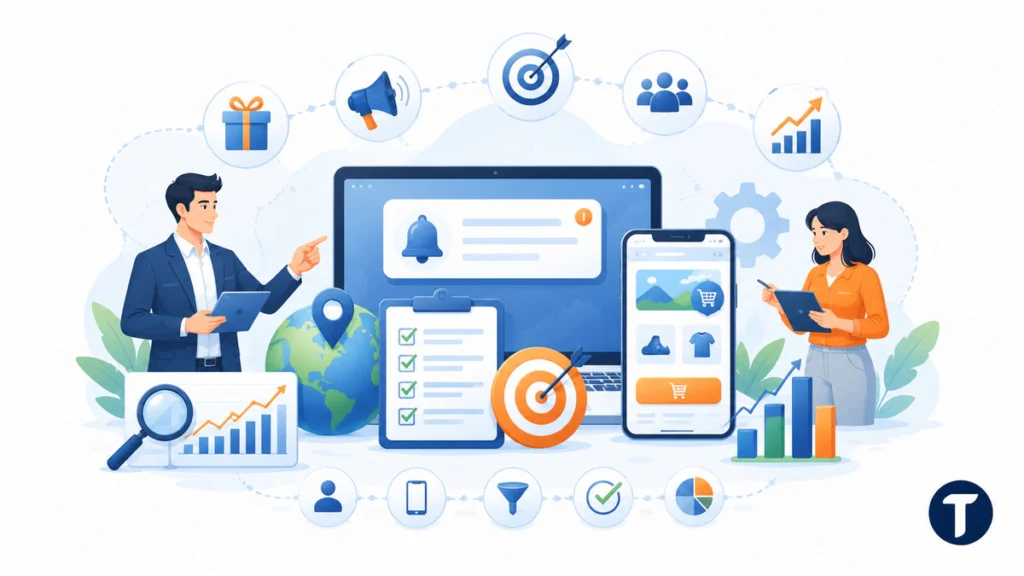
Push campaigns need a clean structure from the start. Begin with the offer. If the value cannot be explained in one sentence, the push headline will probably become vague. Then check the landing page. It should load quickly, work well on mobile, and continue the same promise made in the ad.
Next, define the conversion event. For affiliate campaigns, that may be a lead, install, trial, deposit, or purchase. For e-commerce, it may be product view, add-to-cart, checkout start, completed order, or repeat purchase. Tracking must be ready before the campaign goes live. If conversions are delayed, missing, duplicated, or attributed to the wrong source, optimization becomes guesswork.
If the funnel needs tailored checkout flows, account logic, or integrations that a standard site cannot handle, a custom web app development guide can help teams scope the build before scaling paid traffic.
A practical first test might use one offer, one main conversion goal, two to four creative angles, separate campaigns for major geographies or devices, and daily source-level review. The pause rule should be decided before launch. For example, a source with spend above the target cost per action and no meaningful engagement may be blacklisted, while a source with qualified conversions may be isolated and scaled slowly.
Creative testing should stay grounded. Benefit-led headlines, specific product messages, and honest urgency usually outperform vague hype. Urgency should only be used when the offer genuinely supports it. A real seasonal sale is fine. A fake countdown or misleading system-style warning can damage trust and violate advertising rules.
Common Mistakes That Stop Push Campaigns from Scaling
The most common mistake is confusing cheap clicks with profitable traffic. A low cost per click looks attractive, but it means little if users bounce, abandon the page, or generate rejected affiliate leads.
Another mistake is using the same message for every audience. Cold prospects need a reason to care. Returning visitors need a reason to continue. Cart abandoners need reassurance, relevance, or a better reason to complete the purchase.
Scaling too early is also risky. A campaign with a small number of conversions may not have enough data to prove stable performance. Scaling before you understand the winning sources can increase spend faster than revenue.
Compliance is another weak point. Push copy is short, so every word carries weight. Misleading claims, fake alerts, unsupported promises, and unclear landing pages can cause problems with ad networks, affiliate programs, customers, and regulators. Clean copy may feel less aggressive, but it usually produces more durable results.
The final mistake is judging push only by last-click return. Some campaigns assist conversions through email follow-up, remarketing, or later direct visits, so teams should understand where push sits in the funnel before cutting or scaling spend.
When Push Advertising Is Not the Right Channel
Push advertising is not always the best traffic source. If the offer requires a long consultation, enterprise buying committee, or high-trust sales process, push may be better for awareness or retargeting than direct conversion.
It can also struggle when the audience is too narrow, the product is hard to explain quickly, or the landing page is slow. If the unit economics are weak, push will not fix them. More traffic cannot solve an offer where the average order value, commission, or lifetime value cannot support paid acquisition.
Use push when the audience, message, offer, and conversion path are clear. Avoid relying on it when positioning is still unclear or when the campaign cannot track quality beyond click volume.
How to Measure Push Advertising Performance
The right metrics depend on the campaign goal. A prospecting campaign should not be judged like a cart recovery campaign. For affiliate campaigns, track cost per qualified action, approval rate, payout, return on ad spend, and source-level quality. For e-commerce campaigns, track click-through rate, add-to-cart rate, conversion rate, revenue per visitor, average order value, and repeat purchase signals.
Leading indicators matter too. Strong clicks with weak engagement can reveal a message mismatch. Good product engagement with weak checkout completion can reveal trust, pricing, shipping, or payment problems. A source with lower click volume but higher conversion quality may be more valuable than a source that sends cheap traffic at scale.
Push advertising becomes more powerful when it is used as a measurement system, not just a traffic source. It helps teams learn which messages earn attention, which segments convert, and which parts of the funnel need improvement.
What this means in practice
Push advertising is a secret weapon for scaling affiliate marketing campaigns and e-commerce advertising campaigns because it gives marketers a fast, measurable way to test demand, recover attention, and grow beyond crowded search and social feeds. Its value comes from discipline, not shortcuts.
Start small, separate traffic types, measure conversion quality, protect the user experience, and scale only what the data supports. When the offer, tracking, landing page, and funnel are ready, push advertising can turn qualified attention into measurable growth.