How Can Leaders Build Team Trust Around AI Implementation?
Table of Contents
AI implementation can improve decisions, reduce repetitive work, and help employees focus on higher-value problems. However, the business case will weaken if leaders treat team trust as a communication task that begins after the technology has already been selected.
Strong AI governance gives people clear rules, but policies alone do not create confidence. Employees need honest answers about job changes, data use, human oversight, and how they can challenge an AI-assisted decision before AI implementation becomes part of daily work.
In brief
Leaders build team trust around AI implementation by explaining the purpose of the change, involving employees early, addressing job concerns honestly, teaching the system’s limits, protecting human decision rights, and publishing practical AI governance rules. Trust grows when employees can question outputs, report problems, and see leaders follow the same standards.
A trustworthy rollout should:
- Connect the AI project to a real business and employee need.
- Explain what the system will and will not do.
- Invite employee input before major decisions are final.
- Define where human review is mandatory.
- Protect privacy, fairness, and data security.
- Measure employee confidence alongside technical performance.
Why Team Trust Determines AI Results
AI can be technically accurate and still fail inside an organization. Employees may avoid the tool, create workarounds, enter poor-quality data, or continue using familiar processes if they do not understand the purpose or trust the people managing the change.
Trust matters because adoption requires more than access. People need to believe that leaders are telling the truth about the system, listening to concerns, and willing to change course when evidence shows harm or poor performance.
Leaders also need enough AI literacy to answer practical questions without hiding behind technical teams. Programs focused on AI for Leaders can help executives connect technology choices with communication, risk, workforce planning, and responsible use.
| Leadership Action | What Employees Need to Understand | Evidence Leaders Should Provide |
|---|---|---|
| Explain the purpose | Why AI is being introduced now | The problem, expected benefit, and success metric |
| Define the limits | What the system cannot decide alone | Human review rules and escalation paths |
| Address role changes | How tasks and responsibilities may change | Updated workflows, training plans, and timelines |
| Protect employee voice | How concerns can be raised safely | Feedback channels and named decision owners |
| Govern the system | How privacy, fairness, and accuracy are managed | Policies, testing records, and review schedules |
| Measure trust | Whether people feel informed and supported | Surveys, adoption data, incident trends, and follow-up actions |
Explain the Purpose, Scope, and Limits
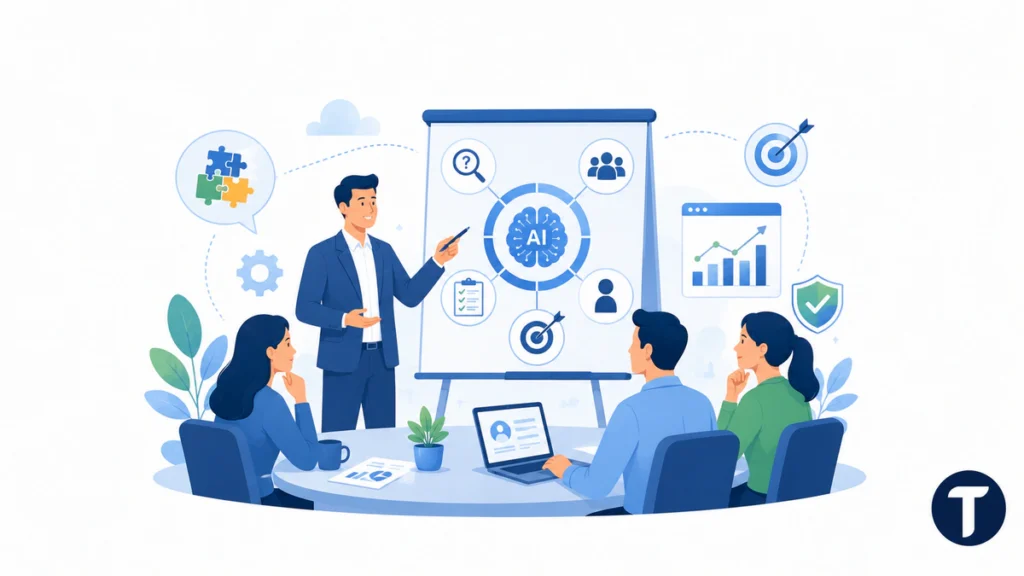
The first trust-building step is to explain why the organization is considering AI. Leaders should name the problem in plain language before discussing the product, model, or vendor.
A useful explanation answers five questions:
- What problem are we trying to solve?
- Why is the current process no longer sufficient?
- Which tasks will the AI system support?
- Which decisions will remain with people?
- How will the organization know whether the rollout is working?
Avoid vague claims about innovation or transformation. Employees are more likely to support AI implementation when they can see a practical connection to workload, service quality, safety, customer needs, or decision speed.
Leaders should also state what is outside the project’s scope. A structured AI for Leader Course may help managers learn how to discuss capabilities and limits without overstating what the technology can deliver.
Address Job Security and Role Changes Honestly
Employees often ask whether AI will remove positions, reduce hours, change performance expectations, or move important decisions away from people. Leaders should not dismiss these concerns as resistance to change.
A credible response separates what is known from what is still being decided. For example, leaders can explain which tasks may be automated, which roles may be redesigned, what training will be offered, and when workforce decisions will be reviewed.
Do not promise that no role will ever change unless the organization can support that promise. False reassurance may create short-term calm, but it damages team trust when the workflow changes later.
Leaders should also explain how productivity gains will be used. Employees will interpret AI implementation differently if efficiency means less repetitive work and more development opportunities rather than hidden head-count targets.
Involve Employees Before the System Is Final
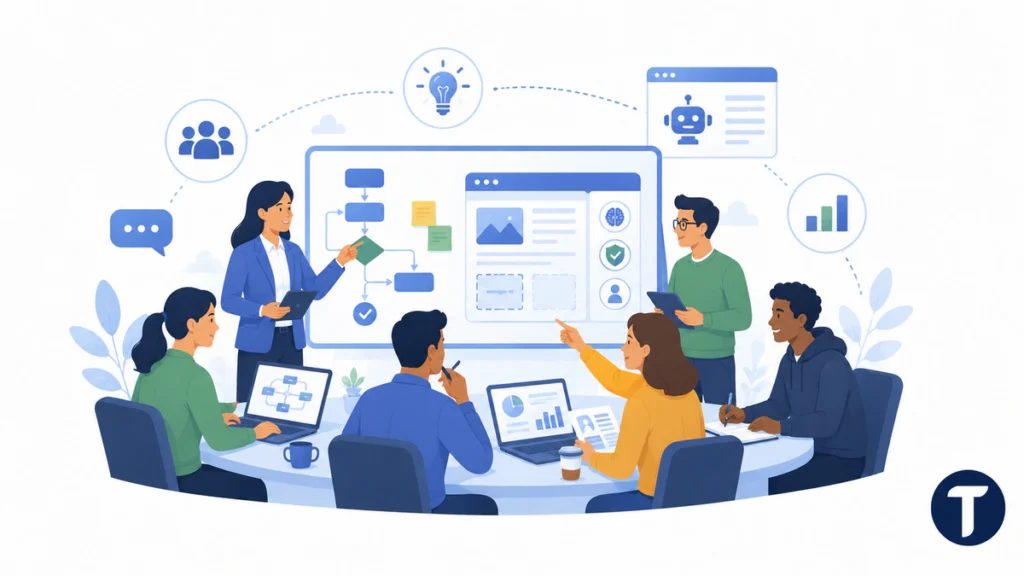
Employees understand the exceptions, workarounds, customer needs, and quality problems inside a process. Their knowledge can reveal risks that executives, vendors, and technical teams may miss.
Participation should begin before the organization locks in the final workflow. Leaders can invite employees to map the current process, identify high-friction tasks, test prototypes, review sample outputs, and define situations that require human judgment.
A representative pilot group should include people who perform the work, people affected by the output, managers, data owners, security staff, and accessibility or compliance specialists when relevant.
Involvement does not mean every suggestion must be accepted. It means leaders explain how feedback influenced the decision. Closing the loop is essential. When employees submit concerns and hear nothing, participation feels performative rather than meaningful.
Teach Teams What AI Can and Cannot Do
Fear often grows when people cannot distinguish an AI system’s actual capabilities from marketing claims. Training should make the tool understandable without requiring every employee to become a data scientist.
Employees need to know:
- What data the system uses
- What type of output it produces
- Where errors or bias may appear
- How confident the organization is in the output
- What information should never be entered
- When a person must verify or override the result
- How to report an unsafe, inaccurate, or unfair outcome
Training should use examples from the employee’s real workflow. A generic explanation of machine learning will not help a customer support agent decide when to reject a suggested response or help a recruiter recognize a questionable ranking.
Education also needs to continue after launch. Models, prompts, vendors, data sources, and business rules can change. Refresher training keeps AI implementation aligned with the work people are actually doing.
Design Work Around Human-AI Collaboration
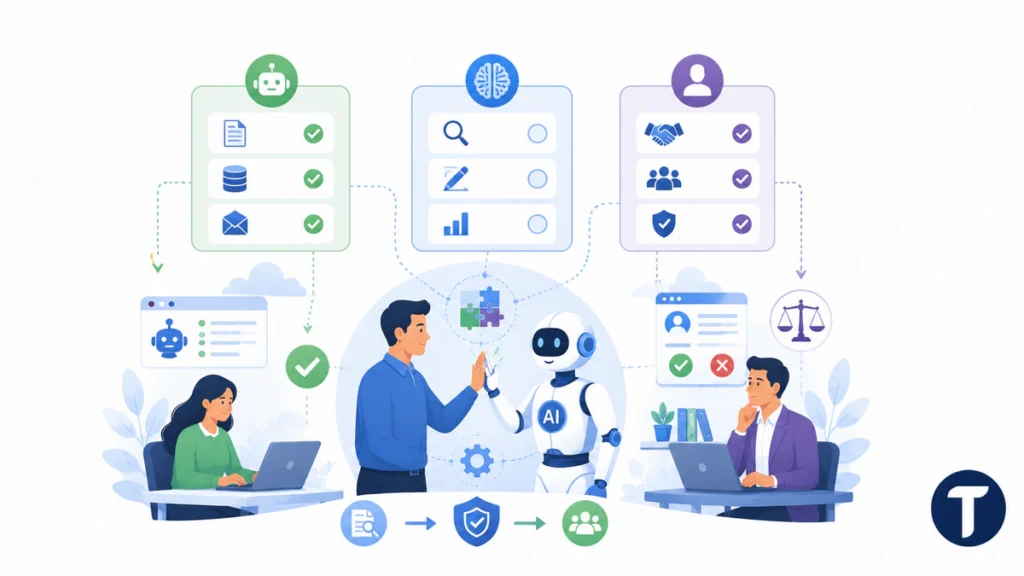
Leaders can reduce fear by showing how the system supports human capability instead of describing AI as an independent replacement for judgment.
Start by separating tasks into three groups: tasks AI can handle with limited review, tasks AI can assist but not own, and tasks that should remain human-led. This makes the operating model more concrete than a general promise that people will stay “in the loop.”
AI may summarize documents, detect patterns, draft routine content, or prioritize cases. People may still need to interpret context, handle exceptions, make sensitive decisions, build relationships, and accept accountability for the final outcome.
The best human-AI collaboration also protects employee discretion. Workers should know when they can ignore a recommendation, what evidence they should record, and whether an override will be treated as responsible judgment rather than poor compliance.
Define Human Oversight and Appeal Paths
Human oversight must be more specific than placing a person near the process. Leaders should define who reviews the output, what triggers review, what authority that reviewer has, and how disagreements are resolved.
High-impact decisions may need mandatory review before action. Lower-risk tasks may use sampling, thresholds, or post-decision monitoring. The level of oversight should match the potential harm to employees, customers, finances, safety, or legal rights.
Employees also need a way to challenge an AI-assisted decision. That may involve a supervisor review, a specialist escalation, a documented appeal, or an incident channel. The process should identify a named owner and a response timeframe.
An appeal route is only usable if someone can say why the system produced the result. That expectation is not organisation-specific: UNESCO’s recommendation on the ethics of AI, agreed across its member states, treats transparency and the ability to contest an AI-informed outcome as core commitments rather than optional extras. Naming an owner is how an organisation makes that commitment operational.
Clear appeal paths strengthen confidence because they show that the organization does not treat the system as automatically correct. They also create useful evidence about recurring errors and weak workflow design.
Establish Practical AI Governance and Ethics
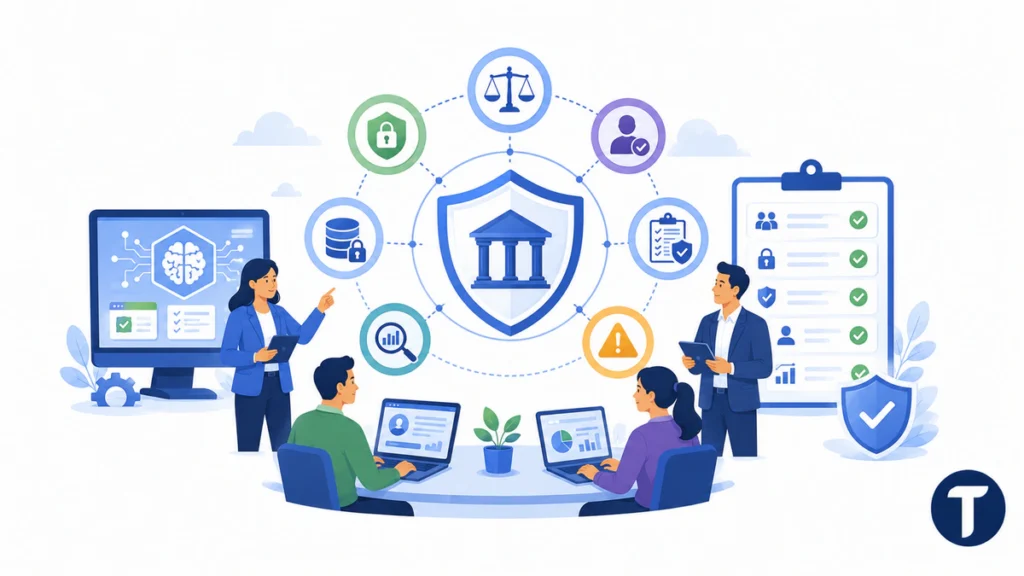
AI governance should turn values into rules employees can use. A policy that promises fairness, transparency, and accountability is not enough unless teams know what those principles require during procurement, testing, daily use, and incident response.
The NIST AI Risk Management Framework offers a reliable structure for incorporating trustworthiness into the design, development, use, and evaluation of AI systems. Its govern, map, measure, and manage functions can help leaders connect executive responsibility with practical risk controls.
At a minimum, the organization should document:
- Approved and prohibited AI uses
- Data access and retention rules
- Privacy and security requirements
- Testing for accuracy, bias, and harmful outcomes
- Human review requirements
- Vendor responsibilities
- Incident reporting and escalation
- Monitoring and reassessment schedules
Leaders who need a broader operating model can also review TechBonna’s guide to building an AI governance framework for organizational transformation. That resource moves the conversation from employee confidence to decision rights, risk ownership, monitoring, and board-level accountability.
Visible governance helps employees see that AI implementation is controlled by repeatable standards rather than informal executive enthusiasm.
Lead by Example Without Pretending AI Is Perfect
Employees watch how leaders behave when a new system produces a weak result. A leader who promotes AI publicly but avoids using it personally will struggle to build credibility.
Leaders should test the tools, follow the approved data rules, disclose when AI assisted their work, and share lessons from both useful and disappointing results. They should also correct their own mistakes without blaming the employee who identified them.
Curiosity is valuable, but certainty is not required. A leader can say, “We do not know yet, so we are testing it,” or “The pilot did not meet the standard, so we are changing the process.” Honest uncertainty can strengthen confidence because it shows that evidence matters more than defending a prior decision.
Measure Trust and Improve the Rollout
Technical metrics alone cannot show whether employees feel safe, informed, and capable of using the system responsibly. Leaders should measure human outcomes alongside speed, cost, accuracy, and adoption.
Useful indicators include:
- Employee understanding of the AI system’s purpose
- Confidence in reporting errors or unfair outcomes
- Training completion and practical assessment results
- Voluntary adoption and repeated use
- Override rates and reasons
- Help-desk questions and recurring confusion
- Incidents involving privacy, security, bias, or incorrect output
- Workload, quality, and employee experience after rollout
Survey results should lead to visible action. If employees report that escalation is confusing, leaders should simplify the process and explain the change. If one team has a high override rate, the organization should investigate the model, data, instructions, or use case before blaming users.
Trust is not a launch milestone. It is an operating condition that must be maintained throughout AI implementation.
Common Leadership Mistakes That Weaken Trust
The fastest way to create resistance is to make employees feel that important decisions are being hidden or that participation is only symbolic.
Common mistakes include:
- Announcing the tool before explaining the problem
- Calling every concern “fear of change”
- Promising that jobs will not change without evidence
- Using employees as testers without acting on feedback
- Training people only on buttons and features
- Treating an AI score as objective or final
- Collecting more employee or customer data than necessary
- Hiding errors to protect the project
- Measuring usage without measuring harm or confidence
Leaders should correct these mistakes early. A delayed rollout with stronger safeguards is often less damaging than a rushed launch that employees learn not to trust.
Follow-up questions
Why Do Employees Distrust AI Implementation?
Employees may distrust AI implementation when leaders do not explain the purpose, minimize job concerns, hide data practices, or fail to define human oversight. Distrust can also grow after employees see inaccurate outputs, unfair decisions, inconsistent rules, or feedback that receives no response.
How Can Leaders Discuss Possible Job Losses?
Leaders should share confirmed information, identify unresolved decisions, explain which tasks may change, and provide realistic training or transition plans. They should avoid unsupported promises and explain when workforce decisions will be reviewed.
What Is the Role of AI Governance in Team Trust?
AI governance defines who owns decisions, what data can be used, how systems are tested, when human review is required, and what happens after an incident. These controls make leadership commitments visible and give employees a predictable way to raise concerns.
How Should Employees Be Involved in AI Projects?
Employees should help map workflows, identify exceptions, test prototypes, review outputs, define escalation rules, and evaluate whether the system improves real work. Leaders should explain which recommendations were adopted and why.
How Can Leaders Tell Whether Trust Is Improving?
Leaders can compare employee surveys, training assessments, adoption patterns, override reasons, support requests, incident reports, and workflow outcomes over time. Improvement should appear in both confidence and responsible behavior, not only higher tool usage.
The takeaway
Building confidence around workplace AI requires more than a launch presentation. Leaders must explain the purpose, involve employees early, teach the limits, define human authority, protect data, and respond visibly when the system creates problems.
Successful AI implementation depends on team trust, while durable team trust depends on AI governance that employees can understand and use. Leaders who connect AI implementation, team trust, and AI governance can turn uncertainty into responsible participation and make technology adoption more useful, fair, and sustainable.