Why Use AI Search Monitoring Tools in 2026
Table of Contents
AI search monitoring tools are becoming part of brand visibility work because customers now ask AI search engines, AI agents, and answer platforms for recommendations before they visit a website. AI search visibility tracking, brand monitoring, and traditional search data now need to work together.
This guide explains AI search monitoring with practical detail. It compares AI visibility tools, data sources, limits, and a simple evaluation matrix so teams can turn AI visibility findings into clearer content, stronger trust signals, and better digital marketing decisions.
The short explanation
AI search monitoring tools track how a brand, product, page, competitor, or source appears in AI-generated answers across AI search platforms. They test selected prompts, record brand mentions, capture cited URLs, compare competitors, and show whether AI responses describe the business accurately.
The best AI search monitoring tools are useful when they show the actual prompts, the actual answers, the cited pages, the platform tested, the competitor set, and the change history. A vague AI visibility score without evidence is not enough for serious SEO, PR, or product marketing work.
What AI Search Monitoring Means
AI search monitoring is the practice of checking how AI search engines and AI answer platforms describe a brand. It is different from rank tracking because an AI answer is not a fixed list of blue links. The answer may include a summary, a recommendation, a citation, a comparison, a local result, or a product mention.
A useful monitoring tool records evidence, not just a score. It should show whether the brand appeared, how the brand was framed, whether competitors appeared, what sources were cited, and which prompt created the answer.
That matters because AI search visibility can shape discovery before a user reaches your site. A buyer may ask Perplexity for the best AI search monitoring tools, ask Google AI Overviews about a category, or ask an AI agent to shortlist vendors. If your public evidence is weak, missing, or outdated, the answer may favor another source.
Real AI Visibility Tools and Platforms to Compare
The market now includes dedicated AI visibility tools and broader SEO platforms. Sight AI focuses on tracking brand visibility across AI answers. Enterprise and SEO platforms such as BrightEdge, Semrush, Authoritas, Conductor, seoClarity, Alli AI, and Ahrefs can also support AI visibility, traditional search, content research, keyword discovery, or competitive analysis.
Dedicated AI visibility tools may track prompts across AI platforms like ChatGPT, Perplexity, Gemini, Microsoft Copilot, and Google AI Overviews. Broader SEO tools may connect AI search monitoring with keyword data, backlinks, content audits, and reporting. The best choice depends on whether you need a pure visibility tracker or a wider SEO operating system.
AIDA matters here too. AI visibility sits near the awareness and interest stage because it shapes what a buyer sees before they compare vendors. That is why this work should sit inside the wider digital marketing programme, not as a side dashboard no one acts on.
Data Sources Every Monitoring Tool Should Show
A strong AI search monitoring tool should reveal how it gets its data. If the method is hidden, the dashboard may look clean but still be hard to trust.
- Prompts: The exact customer questions, comparison prompts, and problem prompts tested.
- AI platforms: Separate views for Perplexity, Google AI Overviews, Gemini, ChatGPT-style AI search, and other surfaces when available.
- Mentions: Brand, product, executive, feature, and competitor references inside AI responses.
- Citations: The URLs, domains, review pages, directories, articles, documentation, and product pages cited by the AI platform.
- Answer snapshots: Stored copies of AI responses so changes can be reviewed.
- Exports: CSV, API access, or report feeds for content, PR, SEO, and leadership teams.
Prompt transparency is the first trust test. A visibility platform that hides prompts, citations, and AI responses is closer to a black-box brand monitoring tool than a reliable measurement system.
Best AI Search Monitoring Tools by Use Case
The best AI search monitoring tools depend on the job. Profound, Peec AI, Scrunch AI, Otterly AI, Knowatoa AI, Nightwatch, Rankability, LLMrefs, Writesonic GEO, AthenaHQ, AirOps, SE Ranking AI Search, Surfer AI Tracker, ZipTie, Promptwatch, Gumshoe AI, Trakkr, Searchable, and Geneo all point to the same buyer need: clearer visibility across AI search engines.
Choose a monitoring tool by use case, not by the longest product list. A startup may need budget-friendly AI monitoring tools with a small prompt set. An agency may need client workspaces, exports, and white-label reports. An enterprise team may need API access, legal review, role permissions, and coverage across AI platforms like ChatGPT, Perplexity, Gemini, Claude, Copilot, Grok, Google AI Mode, and Google AI Overviews.
The most accurate AI search tool is the one that matches your prompts, market, sources, and reporting needs. Accuracy comes from a realistic prompt set, clean brand and competitor inputs, visible citations, and repeatable collection.
Look for in an AI visibility platform: AI visibility features, AI tracking, AI mentions, track brand options, content optimization workflows, and visibility insights that help SEO teams act. Semrush AI Visibility, Ahrefs Brand Radar, Peec AI, Scrunch AI, Otterly AI, Knowatoa AI, and similar tracking tools all show different ways to monitor AI search results, LLM visibility, AI brand mentions, and presence across AI platforms.
Many AI engines create different answers, so monitoring across multiple AI surfaces matters. AI search engines like ChatGPT and Perplexity can cite different sources AI systems find elsewhere. The best AI visibility tracker gives you visibility into citations, helps see how AI responses change, and shows where improving AI source material supports AI SEO, AI voice, and brand visibility across AI search.
Original Evaluation Matrix for AI Visibility Tools
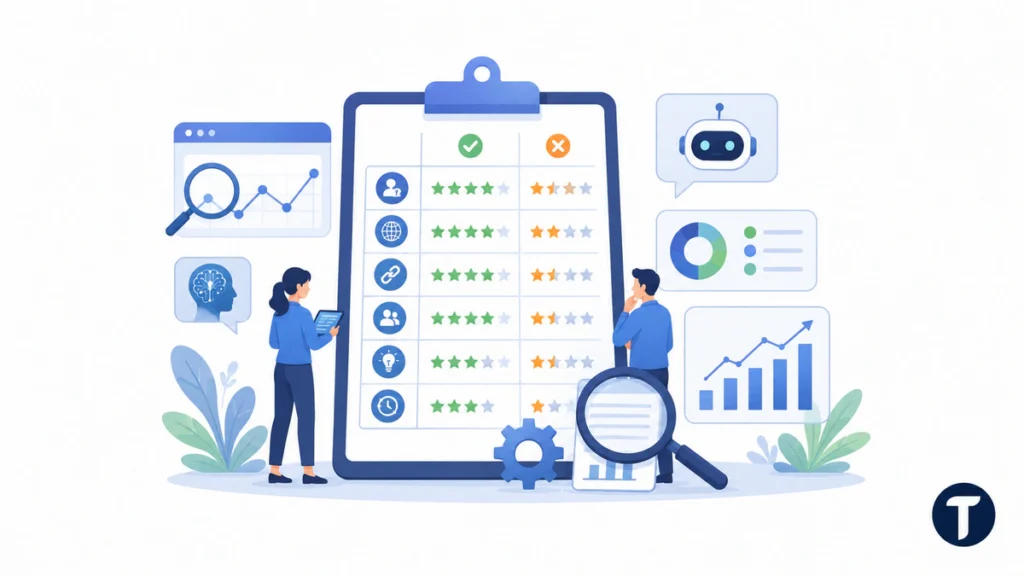
Use this matrix before buying or renewing AI visibility software. Score each area from one to five, then add notes from a real trial.
| Criterion | Strong Monitoring Tool | Weak Monitoring Tool |
|---|---|---|
| Prompt Realism | Uses real customer questions, comparison prompts, and buying prompts. | Uses generic prompts that do not match the market. |
| Platform Coverage | Separates Perplexity, Google AI Overviews, Gemini, ChatGPT, and other AI platforms. | Blends every AI platform into one unclear score. |
| Citation Evidence | Shows cited pages, cited domains, source types, and answer snapshots. | Mentions citations without showing URLs. |
| Competitor Tracking | Compares named competitors across the same prompts. | Tracks only one brand in isolation. |
| Action Guidance | Connects findings to content, PR, documentation, schema, and product pages. | Gives generic advice such as “improve visibility.” |
| Repeatability | Stores history and shows how results change across AI search surfaces. | Shows only the latest scan. |
A simple scoring rule works well: do not buy a monitoring tool unless it gives enough evidence for a content action. If the tool cannot tell you which source, page, competitor, or prompt created the issue, the team may not know what to fix.
How AI Search Monitoring Fits Standard SEO
AI search monitoring does not replace SEO tools. It complements traditional search, Google Search Console, rank tracking, backlink analysis, content audits, and conversion data. Classic SEO shows how pages perform in search results. AI visibility tracking shows how answer systems mention and cite the brand across AI search.
The strongest signal comes when multiple sources agree. If AI responses omit your brand, branded search is weak, competitors have more citations, and sales calls show the same confusion, you have a positioning problem worth fixing.
This is also where AI governance matters. The NIST AI Risk Management Framework stresses measurement, monitoring, documentation, and risk management for AI systems. Marketing teams can borrow that mindset: define what you monitor, keep evidence, explain limits, and avoid overclaiming certainty.
For teams building a wider AI operating model, TechBonna’s guide to an AI governance framework explains how policy, ownership, and risk controls support safer AI adoption.
What To Track Inside AI Responses
Good AI search monitoring should track more than brand mentions. A brand can appear in an answer and still be described in a weak, outdated, or misleading way.
- Presence: Does the brand appear for category, problem, comparison, and purchase prompts?
- Positioning: Does the AI answer describe the product, audience, pricing, features, or strengths correctly?
- Competitors: Which companies appear in the same prompts, and what claims are attached to them?
- Citations: Which pages, directories, reviews, help docs, or articles are cited?
- Source Control: Are cited sources controlled by the brand, earned from trusted third parties, or owned by competitors?
- Sentiment: Does the answer sound positive, neutral, cautious, or negative?
- Gaps: Which product pages, comparison pages, documentation pages, or reviews need improvement?
AI search monitoring tools become useful when the output maps to work. A missing feature mention may call for a better product page. A weak citation pattern may call for review profile cleanup. A competitor comparison gap may call for a clearer alternative page.
Common Limits of AI Search Visibility Tracking
AI search visibility tracking is directional evidence, not a perfect market share report. AI responses can vary by prompt wording, model, location, account context, personalization, available sources, and retrieval method. Perplexity may cite one set of pages, while Google AI Overviews may surface another.
A single AI answer is not a ranking. Treat one answer as a sample. Treat repeated patterns across prompts, AI platforms, citations, and competitor sets as a stronger signal.
Sampling is the second limit. A monitoring tool can only test the prompts it uses. If those prompts do not match real customer questions, the visibility score may be precise but still useless. Build prompts from sales calls, support tickets, paid search queries, site search terms, review language, and actual customer objections.
Attribution is another limit. AI visibility may influence awareness, but it can be hard to connect one AI answer to one sale. Use AI visibility data with referral traffic, branded search, CRM notes, surveys, and conversion tracking rather than treating the monitoring platform as the only source of truth.
How To Build A Practical Prompt Set
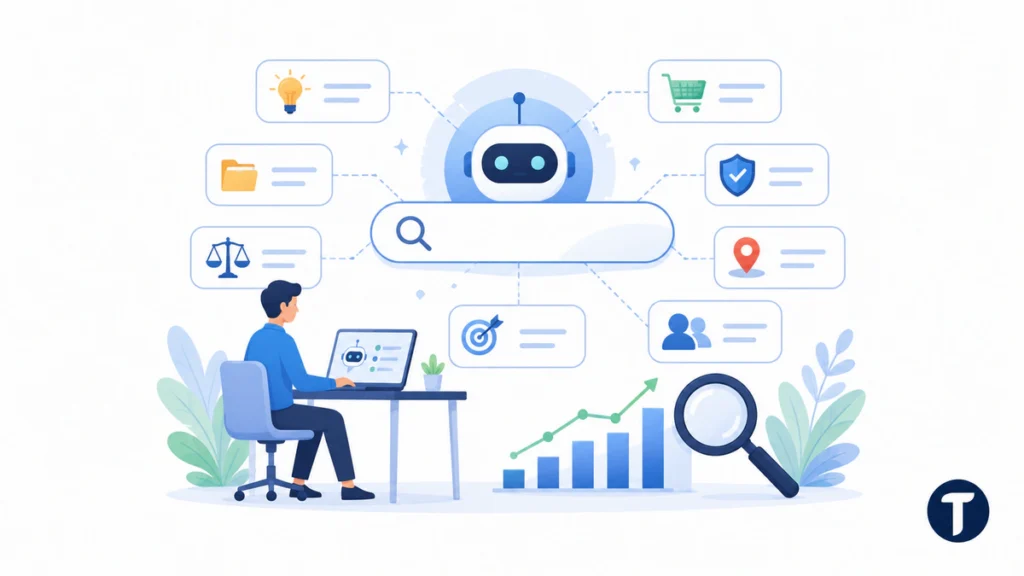
Start with prompts that mirror the customer journey. Use discovery prompts, category prompts, comparison prompts, risk prompts, pricing prompts, integration prompts, local prompts, and alternative-brand prompts.
A practical prompt set might include:
- Best AI search monitoring tools for a B2B SaaS team.
- What is the best AI visibility tracking tool for brand visibility?
- Which AI visibility tools track citations in Perplexity and Google AI Overviews?
- How do AI search monitoring tools compare with brand monitoring tools?
- Which companies are recommended for AI visibility monitoring?
- What sources does an AI search engine cite for this category?
Keep the set balanced. A prompt list made only from branded questions will flatter the brand. A set made only from generic category terms may miss real purchase behavior. Mix broad, narrow, branded, competitor, and problem-led prompts.
Turning AI Visibility Findings Into Work
The right workflow is simple: monitor AI, find gaps, improve sources, and check whether the pattern changes. Do not try to manipulate AI search engines directly. Improve the public evidence those systems can read and cite.
That advice is not just caution. Google’s own documentation on how pages appear in AI features states that there is no separate optimisation track for AI surfaces and that eligibility follows ordinary Search technical requirements and indexing. A team chasing an AI-specific trick is working against the only lever it actually has.
Every AI visibility finding should become one of five work types:
- Content: Create or improve a category, feature, comparison, FAQ, or troubleshooting page.
- Documentation: Update product docs, pricing explanations, integrations, support pages, and help center copy.
- PR: Earn coverage from trusted publishers, analyst lists, reviews, and industry resources.
- Reputation: Improve review profiles, directory pages, partner listings, and social proof.
- Technical SEO: Fix indexability, schema, internal links, page titles, and crawl access.
This is where AI search monitoring tools can outperform generic brand monitoring. They show not only whether the brand is mentioned, but why the answer may have chosen one source over another.
Reporting AI Visibility To Leadership
Leadership reports should be short and evidence-led. Avoid vanity charts that say AI visibility improved without explaining what changed.
Use a report format like this:
- Top prompts tested.
- AI platforms covered.
- Brand mentions and competitor mentions.
- Cited domains and cited pages.
- Inaccurate claims or missing strengths.
- Recommended content, PR, SEO, or product marketing actions.
A good report might say: “The brand appeared in eight of 40 category and comparison prompts. Two competitors appeared more consistently. The most cited pages were third-party review lists and product documentation. The next action is to improve comparison content and update review profiles.”
Related questions
Do AI Search Monitoring Tools Replace SEO Tools?
No. AI search monitoring tools support SEO tools, but they do not replace keyword research, technical SEO, backlinks, content quality, analytics, or conversion tracking. Use both views together.
What Is the Difference Between AI Visibility and Brand Monitoring?
Brand monitoring tracks mentions across the web, media, reviews, or social channels. AI visibility tracks how AI responses mention, cite, summarize, and compare the brand across AI search platforms.
Which AI Platforms Should a Monitoring Tool Cover?
A strong visibility tool should separate major AI search surfaces such as Perplexity, Google AI Overviews, Gemini, ChatGPT-style answer systems, and Microsoft Copilot where data access allows it.
Can AI Search Monitoring Guarantee More Mentions?
No. AI search monitoring can reveal visibility patterns, citation gaps, and content opportunities. It cannot force an AI platform to mention a brand.
How Much Do AI Search Monitoring Tools Cost?
Costs vary by prompt volume, platform coverage, seats, exports, API access, and reporting needs. Budget-friendly AI visibility tools may suit a small team, while enterprise AI monitoring software costs more because it needs permissions, integrations, and repeatable reporting.
What Is the Most Accurate AI Search Monitoring Tool?
The most accurate AI search monitoring tool is the one with transparent prompts, visible answer snapshots, clean competitor tracking, citation data, and coverage for the AI platforms your customers use.
How Many Prompts Should a Team Track?
Start with a focused set of 25 to 100 prompts tied to customer questions. Expand only when the team can review results and act on the findings.
What this means in practice
AI search monitoring tools are worth using when buyers rely on AI search, AI visibility, and brand monitoring before they visit a website. The best tools show prompts, AI responses, citations, competitors, and practical fixes instead of hiding behind a single score.
Use AI search monitoring as a disciplined part of digital marketing: monitor AI search, improve public sources, strengthen brand visibility, and connect AI visibility tracking with SEO, PR, documentation, reviews, and product marketing. That is how AI search monitoring tools become a practical growth signal instead of another dashboard.