
Does Kling AI Allow NSFW Content in 2026? Rules, Limits, and Safe Use
Table of Contents
AI video tools are now part of everyday creative work, but Kling AI NSFW rules matter if you use prompts, image uploads, or image-to-video features for client projects. Clear Kling AI content moderation and safe AI video generation practices help keep a creative workflow predictable, public-friendly, and suitable for client review.
This guide explains how safe AI video generation works in Kling AI, what the platform blocks, and what creators should do before they upload sensitive source material. It also explains how Kling AI NSFW limits affect prompts, uploads, and final videos.
Last reviewed: July 2026. Platform rules can change, so creators should check Kling AI’s current policy pages before using sensitive source assets.
Where things stand
Kling AI does not allow NSFW content. Its rules restrict sexually explicit material, sexual services, sexual language or implications, violent or gory material, hate speech, harassment, and content that harms minors. For creators, the safest approach is to keep prompts, uploads, and final videos suitable for a general audience, then use another compliant workflow if a project needs age-restricted review.
Kling AI NSFW Rules at a Glance
Kling AI is built for AI video generation, image generation, and creative editing. That makes Kling AI content moderation more complex than a simple text filter because the platform may review the prompt, uploaded material, generated output, or account behavior.
The practical rule is simple: if the request would not be safe to show in a professional or public setting, do not put it into Kling AI.
| Content Type | Likely Outcome in Kling AI | Safer User Action |
|---|---|---|
| Sexual prompts or imagery | Blocked, filtered, or flagged | Rework the scene as non-explicit creative direction |
| Graphic violence or gore | Blocked or restricted | Describe conflict without gore or shock detail |
| Hate or harassment | Removed or moderated | Keep prompts neutral and non-abusive |
| Minor-related sensitive content | Strictly restricted | Avoid any sexual, exploitative, or harmful framing |
| Professional product or marketing videos | Usually suitable | Keep source assets licensed and workplace-safe |
Kling’s own Community Guidelines say comments can violate the rules if they contain “sexually explicit material, promoting sexual services, or containing sexual language or implications.” They also list violence, gore, self-harm, hate speech, threats, harassment, and harm involving minors as restricted areas. For most creators, those categories are the clearest basis for understanding Kling AI NSFW rules.
What Counts as Kling AI NSFW in AI Video Generation
In this context, NSFW means content that is not safe for work, school, public platforms, or general audiences. Kling AI may not use NSFW as the only policy term, but Kling AI NSFW is a useful shorthand for restricted adult, violent, abusive, or unsafe content.
A prompt may be flagged if it asks for nudity, sexualized framing, explicit roleplay, fetishized scenes, graphic injury, exploitation, threats, or hateful treatment of protected groups. An upload can also be risky if the source image already contains suggestive, violent, private, or rights-sensitive material.
This matters because AI video tools can amplify small details. A normal portrait can become suggestive if the prompt pushes the generator in that direction. A fantasy action scene can become too graphic if the prompt asks for gore, wounds, or realistic harm. That is why Kling AI NSFW rules apply to more than obvious adult prompts.
How Kling AI Content Moderation Works in Practice
Kling AI does not publish every detail of its filter. If platforms reveal exact moderation triggers, users can try to bypass them. Still, creators should assume that prompts, uploads, outputs, and account activity may be reviewed when safety rules are involved.
According to an Ofcom-commissioned study on AI content moderation, automated systems can help review large volumes of content, but they still face limits around context, accuracy, and false positives. Kling AI’s Privacy Policy also says the platform may scan, analyze, and review user content to detect and combat harmful activity and content.
| Moderation Layer | What It May Check | Why It Matters |
|---|---|---|
| Prompt scan | Text instructions before generation | Stops risky requests early |
| Upload scan | Images or other source files | Prevents unsafe source material entering the workflow |
| Output review | Generated image or video | Catches unsafe results before download or sharing |
| Account enforcement | Repeat violations and abuse patterns | Protects the broader creator community |
A blocked prompt does not always mean the user did something malicious. It can also mean the wording, source image, or intended scene was too close to a restricted category. In practice, Kling AI content moderation should be treated as a guardrail across the whole creation process.
For teams building their own safety systems, this broader guide to moderating sensitive content online explains how AI triage, human review, reporting, appeals, and privacy controls work together.
How Kling AI NSFW Rules Affect Video Creation Features
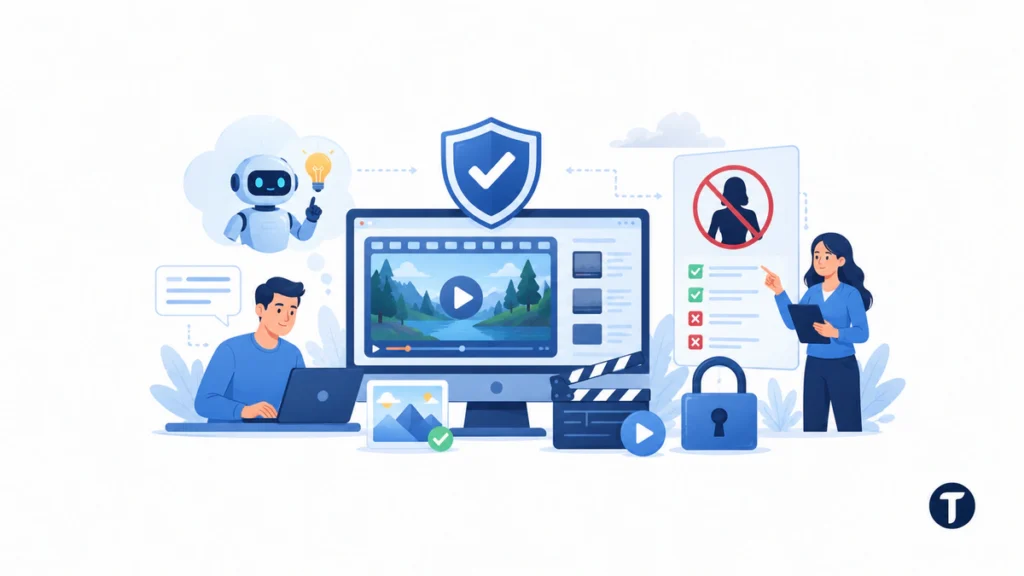
Kling AI NSFW rules apply across the parts of the product creators are most likely to use, including text-to-video and image-to-video generation. A clean text prompt, a compliant reference image, and a safe final output all matter.
This is also why search results around NSFW Kling tools can be misleading. Some pages compare Kling with Sora, ComfyUI, Wan 2.6, but the practical question is not whether another tool can generate content with fewer limits. The safer question is whether your video creation process can enforce consent, privacy, age safety, and platform rules.
| Feature | Content Safety Check |
|---|---|
| Text-to-video | Avoid explicit content, threats, and sexualized wording |
| Image-to-video | Check the source image before adding motion |
| Reference images | Do not use private, suggestive, or copied photos without rights |
| Final output | Review the clip before download, client review, or posting |
A stricter filter may occasionally block a harmless idea or distort the creative direction. When Kling AI NSFW rules block a scene, the better response is to reframe the idea rather than force the same request.
Kling AI NSFW Checks Before Uploading Sensitive Images
Uploads deserve extra care because image-to-video tools can transform private, branded, or recognizable source material. Before using a reference image, confirm that you have permission to use it, that it does not include private or exploitative material, and that it is suitable for an AI platform workflow.
For client work, avoid uploading unpublished campaign assets, private portraits, internal product shots, or images of minors unless the client has approved that exact use. If the asset includes a recognizable person, document consent and keep the prompt neutral. If the asset is copied from another creator, brand, or platform, confirm the usage rights before turning it into a video.
This is not only about NSFW content. A source image can be workplace-safe but still create privacy, copyright, or client-approval problems. Kling AI NSFW checks should be part of a broader review for consent, licensing, and client suitability.
Can You Bypass Kling AI NSFW Filters?
You should not try to bypass Kling AI filters. Workarounds, coded language, misleading prompts, or repeated attempts to force restricted output can put your account at risk and may create legal, privacy, or platform-safety problems.
Kling AI’s Terms of Service prohibit users from bypassing measures used to prevent or restrict access to the services. That makes filter evasion a poor workflow, even when the user believes the original idea is harmless.
Creators sometimes look for an alternative, an uncensored model, or free alternatives when a filter blocks a scene. That may be tempting, but it does not remove responsibility. Adult content, private images, or sensitive people still require consent, age checks, storage controls, and clear publishing rules.
For marketing explainers, product visuals, tutorials, social clips, and software demos, there is no reason to fight the filter. The better move is to rewrite the prompt so it explains the scene, mood, camera angle, and motion without risky content. Kling AI NSFW rules are easier to follow when the prompt focuses on story, camera movement, setting, and product detail.
Kling AI NSFW Safe Prompting Tips for Creators
Safe prompting helps you get better output with fewer failed generations. It also keeps your credits, workflow, and client review process cleaner.
Use this checklist before you generate a Kling AI video:
- Describe the business goal before the visual effect.
- Keep people fully clothed and non-sexualized.
- Avoid gore, realistic injury, self-harm, or threats.
- Do not upload private photos unless you have permission.
- Replace risky wording with neutral creative direction.
- Review the output before sharing it with a client or team.
| Risky Prompt Direction | Safer Prompt Direction |
|---|---|
| “Make this model look seductive” | “Create a confident fashion look with studio lighting” |
| “Add bloody injury after a fight” | “Show a dramatic action aftermath without gore” |
| “Make the scene unfiltered” | “Use cinematic lighting and realistic motion” |
| “Push the filter as far as possible” | “Keep the result suitable for public social channels” |
Focus on lighting, movement, setting, product detail, and story instead of adult or shock content. This keeps Kling AI NSFW risk lower without weakening the creative brief.
What to Do If Kling AI Content Moderation Flags Your Prompt
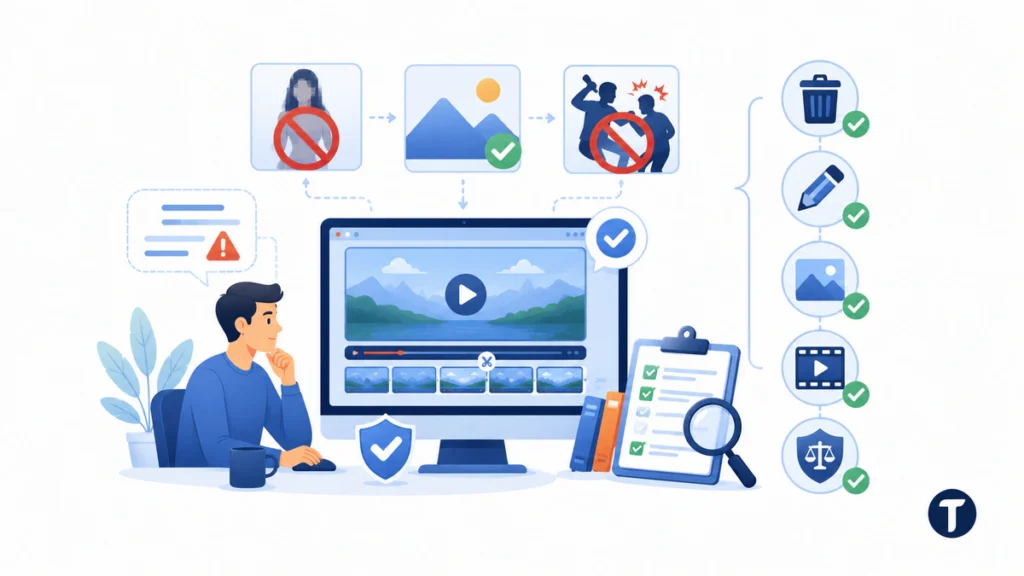
A flag usually means the platform found a policy risk in your prompt, upload, or expected output. Do not keep resubmitting the same request with minor spelling changes.
Try this cleaner workflow instead:
- Remove sexual, violent, hateful, or private details.
- Replace body-focused wording with style, setting, or camera terms.
- Use a less sensitive source image.
- Split a complex scene into simpler shots.
- Check Kling AI’s Terms of Service and Community Guidelines before trying again.
If the project still cannot fit the rules, treat that as a sign the work needs a different compliance process, not just a different AI video generator. For most creators, Kling AI content moderation works best when they revise the concept instead of testing the edge of the filter.
Questions this raises
Does Kling AI Allow NSFW Prompts?
No. Kling AI does not allow NSFW prompts that request explicit sexual content, sexual services, graphic violence, hate speech, harassment, or content that harms minors.
Does Kling AI Have an NSFW Mode?
No. Kling AI is not positioned as an adult video generator, and creators should not look for an NSFW mode, workaround, or bypass method inside the platform.
Can Kling AI Generate Adult Images or Videos?
No. The platform’s rules and moderation system are designed to block adult content and other restricted output.
Can Kling AI Generate Nudity?
Kling AI should not be used to request nudity, sexualized body framing, explicit roleplay, or adult scenes. Keep people fully clothed and frame the creative direction around setting, motion, camera style, and mood.
Can I Use Kling AI for Swimsuit, Fashion, or Fitness Videos?
Possibly, if the prompt and source image are non-explicit, non-exploitative, and suitable for public platforms. Keep the direction focused on clothing, lighting, movement, product detail, or athletic context rather than sexualized body emphasis.
Does Kling AI Allow Gore or Horror Content?
Horror style may be possible when it stays atmospheric, but graphic violence, gore, realistic injury, self-harm, threats, or shock content can be blocked or restricted.
Is Kling AI Safe for Work?
Kling AI is best used for safe-for-work creative tasks such as product videos, marketing clips, explainers, concept visuals, and social content. Creators should still review every output before using it in client work, ads, social posts, or public campaigns.
Will a Flag Get My Account Banned?
One accidental flag may simply mean you need to rewrite the prompt. Repeated bypass attempts, abusive requests, or serious policy violations can lead to enforcement.
What happens now
Kling AI NSFW rules are not just a limitation. They are part of safer Kling AI content moderation for a tool that can turn text, images, and motion into realistic media. If you want safe AI video generation in 2026, keep prompts public-friendly, use compliant source assets, and treat the filter as a guardrail rather than something to defeat. A simple Kling AI NSFW review before publishing can prevent avoidable problems in client work, social posts, and public campaigns.