How Small Companies Create Products That Compete With Tech Giants
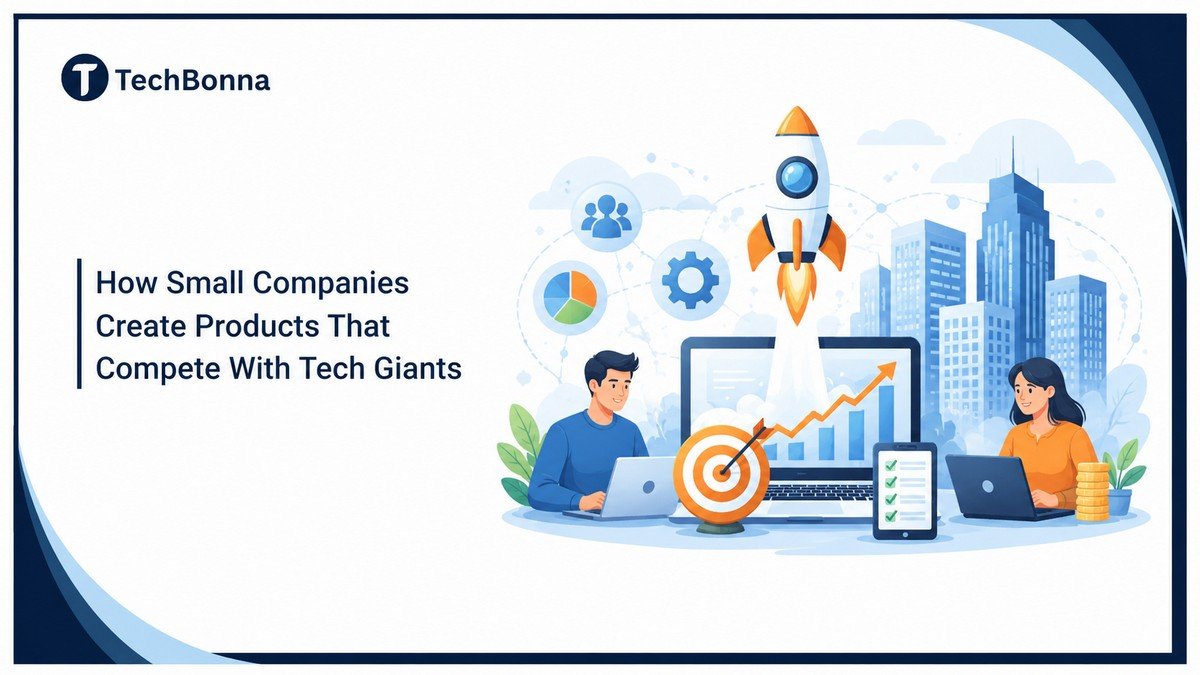
Table of Contents
A small team can feel outmatched when a tech giant enters the same market. The bigger brand has more cash, more staff, more data, and more reach, but that does not mean the smaller company has already lost.
Small companies compete with tech giants by choosing sharper problems, moving faster, and building products that feel more useful to a specific group of users. With the right focus, customer insight, and technical support, a smaller business can turn its size into an advantage.
What it means
Small companies compete with tech giants by focusing on a specific customer problem, moving faster, and building products that are easier to use. Instead of copying big platforms, they win by using customer insight, practical AI, and specialist support to create sharper products for a clear audience.
The US Small Business Administration market research guidance separates finding customers from analysing competitors to create an advantage. For a small product team, that supports testing a narrow customer problem before copying the feature list of a much larger platform.
They build products that feel more useful, more personal, and less bloated for a specific user group. That means using a clear business strategy, strong customer insight, and the right technical partners. A smaller company can compete when it turns focus into speed.
Pick a Problem the Giant Will Treat as Too Small
Tech giants need large markets. Their product teams have to justify big roadmaps, large sales targets, and global support needs.
Small companies can compete by targeting a problem that seems too narrow for big tech but feels urgent to customers.
Think about a small health device maker, a specialist industrial tool, or a niche SaaS platform. The market may not interest a giant at first. Yet the users still need a better product.
Specific pain beats broad ambition.
A small company should ask:
- What job does the customer need to finish faster?
- Where do current tools feel clumsy or overbuilt?
- What data does the customer need but cannot see yet?
- Which workflow still depends on email, spreadsheets, or manual checks?
- What would make the product feel made for this exact user?
This kind of focus gives smaller companies room to build loyalty before big tech notices the gap.
Use AI to Move Faster, Not to Sound Bigger
AI can level the playing field, but only when it solves a real task. Small businesses should not add AI because the homepage needs a trend word.
Use AI when it saves time, improves decision-making, or eliminates repetitive work.
For example, AI can help a small team:
- Summarize user feedback from support tickets.
- Spot patterns in product analytics.
- Draft test cases for common user journeys.
- Automate routine customer service replies.
- Personalize onboarding based on user behavior.
AI works best when it supports a sharp product idea, not when it replaces one.
A startup can use AI tools to research faster, test ideas, and optimize small parts of the customer journey. A small team can also use generative AI for prototypes, documentation, and internal planning.
The risk is trying to compete with tech giants by chasing every AI feature at once. That creates a product with no center.
A better approach is simple: choose one workflow, make it faster with AI, and prove that users care.
Build Around Speed and Customer Closeness
A tech giant has process. A small company has closeness.
That matters. When customers ask for a change, smaller companies often hear the request straight from the person using the product. They can ship, test, and refine without months of internal approval.
Speed is not just about coding faster. It is about learning faster.
Small companies compete by keeping the feedback loop short:
- Talk to users every week.
- Watch how people use the product.
- Measure where they drop off.
- Remove features nobody touches.
- Improve the one feature users mention most.
This creates a product that feels alive. Big tech companies may have deeper analytics, but they can still miss small frustrations in a local market or niche industry.
Small companies can turn those frustrations into product decisions.
Partner Where Deep Technical Skill Matters
A small company does not need every skill in-house. It needs access to the right skill at the right time.
This matters most when the product includes connected devices, firmware, sensors, hardware control, or performance-sensitive systems. In those cases, a weak technical foundation can slow scaling, erode trust, or lead to costly rework.
A specialist partner can help a smaller company move faster without having to build a large engineering department from day one. For example, working with an embedded software development company can support product teams that need dependable software running on the device, IoT features, firmware integration, or connected product architecture.
The goal is not to outsource the product vision. The goal is to protect it with stronger execution.
This is where many small businesses can compete with tech giants. They keep the customer insight, the brand, and the product direction. They bring in outside depth for the parts that need specialist knowledge.
That mix can beat a larger company that moves slowly or treats the product as just one feature within a much larger platform.
Design a Product Customers Can Understand Quickly
A giant can afford complexity. A smaller company should avoid it.
Many big platforms become hard to learn because they serve too many users. They add dashboards, menus, settings, and permissions for every possible team.
A small company can win by making the first product experience clear.
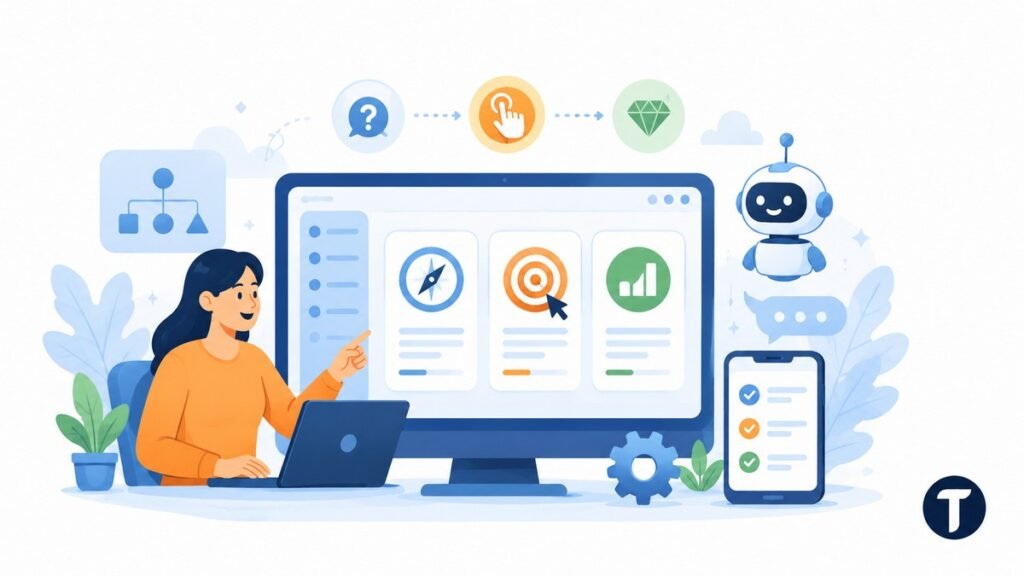
Good product design should answer three questions fast:
- What is this for?
- What should I do first?
- What value will I get today?
A simple product is not a basic product. It is a product with fewer distractions.
This is one of the best ways smaller companies compete with larger companies. They remove the friction that big platforms accept as normal.
AI can support this too. AI-powered setup, smart defaults, chatbots, and guided onboarding can help users reach value faster. The product still needs a strong core. AI should make that core easier to use.
Use Data Without Becoming Data-Obsessed
Big tech has huge data sets. Small companies rarely do.
That can feel like a disadvantage, but smaller companies do not need the most data. They need the right signals.
A data-driven product team should track a few useful metrics:
- Activation: Did the user reach the first clear win?
- Retention: Did they come back after the first week?
- Task success: Did they finish the job they came to do?
- Support demand: Where do users get stuck?
- Revenue fit: Which customers value the product enough to pay?
The right analytics can show what to fix before the roadmap gets crowded.
Small companies can use predictive analytics, customer interviews, and simple usage reports to guide decisions. They should not copy the giant’s dashboard culture.
The best product teams use data to make better choices, then talk to real people to understand why those numbers changed.
Attract and Retain Talent With a Better Mission
Small companies may struggle to compete with industry giants on salary, perks, or brand status. That does not make hiring impossible.
Many strong people want ownership, impact, remote work, and a product they can shape.
A smaller company can attract and retain better talent by offering:
- Clear responsibility.
- Direct access to customers.
- Less internal politics.
- Flexible working habits.
- A visible link between work and product progress.
People stay when they can see their work matter.
This can be a real differentiator. At a giant, one engineer may own a tiny piece of a huge system. At a startup or mid-sized business, that same person may shape the whole product experience.
That sense of ownership can help smaller companies build better products with fewer people.
Keep the Roadmap Ruthless
The biggest danger for a small product team is pretending to be big.
A small company should not build every integration, every AI feature, every enterprise setting, and every reporting tool before launch. That slows learning and drains focus.
A better roadmap has three layers:
- Must-have: the core value users came for.
- Trust-builders: security, reliability, support, and clear onboarding.
- Growth bets: automation, AI services, integrations, and new workflows.
This keeps scaling under control. The product can grow without losing the reason people liked it in the first place.
Small companies compete when they protect the core product. They can add more once the first group of users gets clear value.
The takeaway
Small companies do not beat tech giants by becoming smaller versions of them. They win by choosing the right fight.
They find a painful customer problem. They use AI where it saves time. They bring in specialist help where technical depth matters. They build a product that feels clean, fast, and practical.
That is how small companies create products that compete with tech giants: not through size, but through focus.