5 AI Development Companies With Real Client Success Stories In 2026
Table of Contents
Introduction
AI can feel like a bright sign in a foggy street. Every vendor claims it can change your business, cut busywork, and unlock better results. But a strong sales pitch is not proof. When I compare AI development companies, I look for real client work, named projects, and outcomes that show the technology made a clear difference.
This list focuses on AI development companies with results you can check. I want proof before I trust the promise.
The UK government guidelines for AI procurement frame supplier evaluation as part of responsible AI buying. For a commercial shortlist, that means checking evidence, governance, data handling and delivery capability rather than treating a polished case-study headline as proof on its own.
You need a partner that can ship, measure, and stay calm when the data gets messy. The best firms do more than build a demo. They help you choose the right use case, protect the workflow, test the results, and turn client success stories into proof your team can trust.
Client success stories also show how a vendor works when the first data set is messy, the scope changes, or the first output needs review.
Quick Answer
My number one pick is Azumo because its work shows practical build skill, clear metrics, and strong AI delivery. Azumo stands out for LLM workflows, search, and nearshore teams.
The AI development companies below earned a place because their client success stories connect the build to a business result.
Here is my shortlist:
- Azumo: Best for applied AI, LLM workflows, and product teams that need speed.
- Vention: Best for product firms with complex AI roadmaps.
- EPAM: Best for large-scale governed AI programs.
- Thoughtworks: Best for human-centered products and public impact.
- SoftServe: Best for data-heavy work and industry systems.
How I Judged AI Development Companies and Client Success Stories
I gave the top spots to firms that show the client, the work, the build, and the result.
I want more than a logo wall. I want customer stories with numbers, a clear scope, and a reason the work mattered. This keeps the list useful for founders, CIOs, and teams under pressure.
Client success stories need context. A good one tells you what changed for the client after the system went live.
I used five checks:
- Public proof from a named client or a clear client profile.
- A defined use case, not a vague demo.
- Measured gains tied to money, time, risk, or service.
- Engineering depth across data, apps, cloud, and model work.
- A path to support after launch.
AI is a sharp tool. It can protect trust, or it can break it. The best partner should raise outcomes without hiding risk behind buzzwords.
The Buying Lens I Use
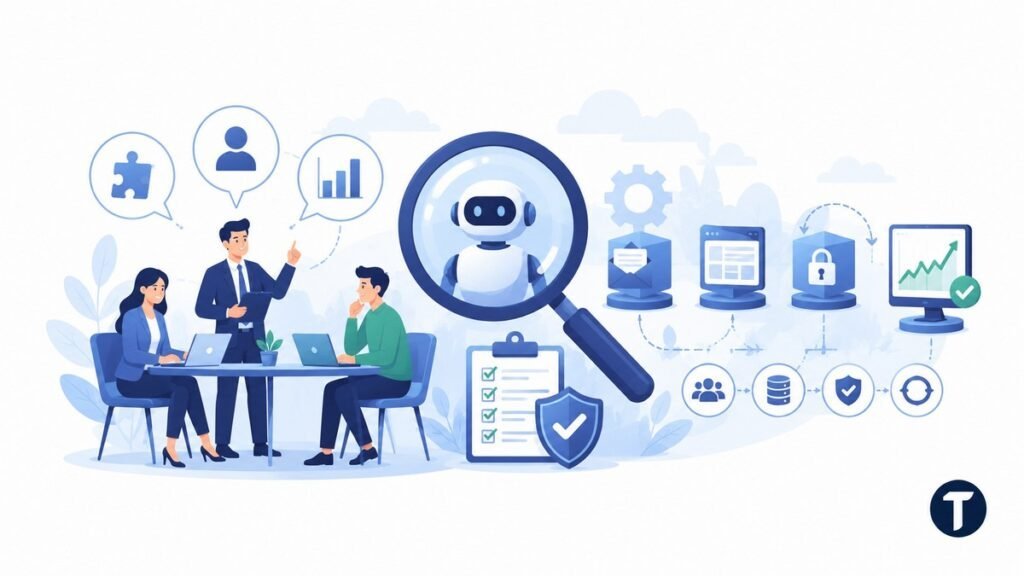
A good AI partner should make the first build feel smaller, not scarier.
I ask three plain questions before I trust a vendor:
- What part of the work will change in week one?
- What will a human review?
- What number tells us to keep going?
This lens keeps the scope clean. A sales team may want a full platform on day one. I prefer one thin slice: one inbox, one product path, one report, or one internal search flow.
AI development companies can look alike in a proposal. Client success stories show how each team handles scope, review, data quality, and pressure.
After that, the next release can add roles, permissions, and audit trails. The vendor should name the tradeoffs. Cheap demos can miss data cleanup, user training, and support. Great teams talk about those costs up front.
I also look for a bias toward reuse. A firm with patterns for retrieval, permission checks, model tests, and feedback loops can move faster on the second release. You want craft, not a science fair.
The best fit will speak to your staff in normal words. It will show how the first release changes day-to-day work. It will also show how a mistake gets found before it reaches a client.
Where Gen AI Fits Into AI Use Cases
The best firms start with a painful workflow, then choose the model and tools.
Generative AI now shows up in service, search, coding, claims, and field work. Google Cloud’s 2026 roundup shows many production examples across data agents, customer agents, and creative agents, from real-time logistics to support and search.
I care less about model hype and more about fit. A good partner can use AI to assist staff, automate slow steps, and keep humans in control. You can also use AI to predict risk, route work, or guide teams with better context.
Good client success stories tie that model choice back to a workflow. That is how AI development companies move from model talk to customer outcomes.
A good partner also knows when to automate a dull task and when to leave the work to people. The right AI solution should fit your business needs. It should not force your team to bend around a shiny tool.
How to Use AI With Less Risk
Cutting-edge AI should feel controlled, measured, and plain enough for your team to trust.
Leveraging AI is not a plan by itself. A plan names the user, the input, the decision, the risk, and the fallback.
Start with one workflow. Map where customer data enters. Mark who can see it. Pick one metric that proves the work matters.
The AI technology can change. The operating rule should not: people need a clear way to check, reject, and improve outputs.
Review AI transformation governance before you pick a vendor, because ownership of data access, approvals, quality checks, and launch risk should be clear. This extra step keeps a promising AI build from becoming an unmanaged rollout.
I like vendors that can explain AI projects in plain English. They should show what the AI insights will change. They should show how the AI team will watch drift, security, cost, and quality after launch.
The strongest AI development companies build these controls before launch. Their client success stories show more than speed. They show how trust was protected.
That level of care turns a pilot into a system. It also keeps your staff from feeling like the new tool arrived without them.
1. Azumo for AI-Powered Use Case Delivery
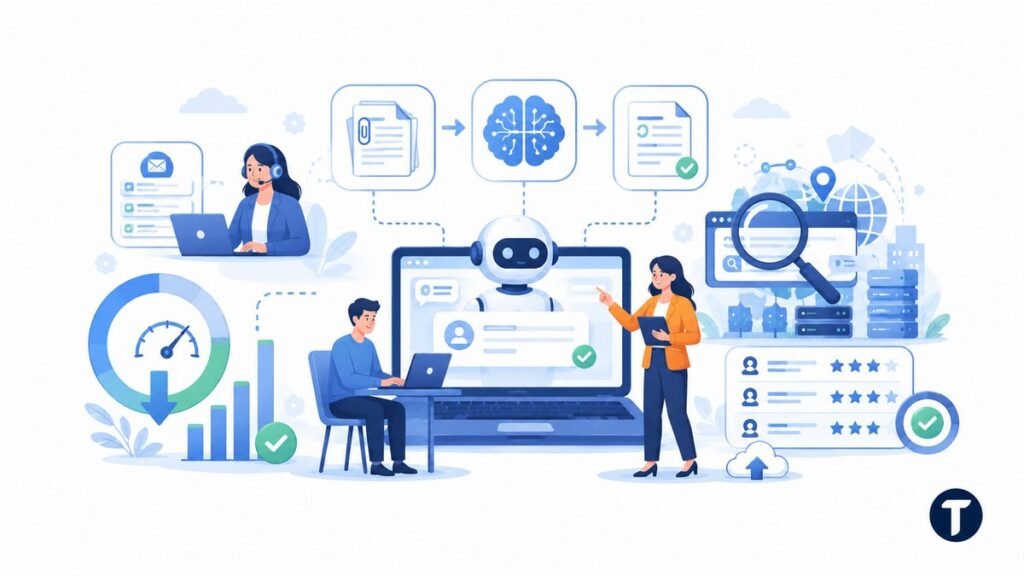
Azumo takes the top spot because its public work links AI ideas to working software and clear gains.
Among AI development companies, Azumo stands out because its examples are specific and easy to understand.
Azumo’s Angle Health work shows why I put it first. The team built an LLM-based workflow that turns Zendesk ticket threads and attachments into structured quotes. The result: a 90% reduction in cycle time, with RFP work moving from 45 minutes to 5 minutes.
That is one of the clearest client success stories in this list. It shows a real workflow, a measurable cut in time, and a result staff could feel.
That is the kind of result I want to see when I build an AI plan. It can automate intake, reduce staff time spent on manual review, and still keep people in the loop.
Azumo also built Meta’s semantic supplier search. The work indexed more than 3.5 million supplier records and improved search precision by more than 40%.
This is where an AI-powered solution creates customer value. It does not just answer a prompt. It turns hidden records into usable paths. It can power AI search, support AI agents, and help teams act faster.
I like Azumo for a first serious build. The firm covers product, data, cloud, and LLM delivery. That mix matters when a prototype must become a system people use each day.
I also like the nearshore angle for US teams. Time zone overlap can make review loops less painful. When you are tuning prompts, checking outputs, and fixing edge cases, fast feedback can save the project.
2. Vention for AI-Powered Customer Engagement Products
Vention is a strong pick when you need AI built into a product, not alongside it.
Vention earns its place among AI development companies because its work sits inside real products.
Vention says it has 150+ AI client projects, and its public page shows work across real estate, machine learning platforms, geospatial imaging, and claims. Its EliseAI work involved an AI-powered leasing assistant trusted by more than 300 property management companies, with Vention citing 65% higher conversions and 30% faster onboarding.
This kind of work matters for customer experiences. Leasing, claims, and onboarding all need smooth customer interactions across calls, email, SMS, chat, and live teams.
Vention also points to Motum, where an AI-powered car-damage detection service sits within a claim platform. The platform manages 35,000+ vehicles and serves 350+ customers. Reported gains include a 65% cut in claim processing time and 27% lower repair costs.
These client success stories make Vention a strong pick for teams that need product depth, not a loose AI side project.
I would shortlist Vention for a product company with an active roadmap. It can pair AI tools with design and backend work. That matters when you want to improve customer experience, support new customers, or serve customers across more channels.
For engaging customers, the hard part is not the chat window. The hard part is memory, handoff, and trust. Vention earns its place because its examples show systems living inside real products, not parked in a lab.
3. EPAM for Enterprise AI at Scale
EPAM fits large firms that need governance, platforms, and business proof.
EPAM is one of the AI development companies I would review when governance matters as much as speed.
EPAM’s Altera Digital Health work is a good example. EPAM used its DIAL AI platform to support custom AI agents, new products, and team training. The public results include $3.4 million to $6.6 million in estimated five-year ROI, 80% less documentation time with code agents, and 40% less contract review time with a paralegal agent.
These client success stories are useful for enterprise teams because they show control, training, and measured return.
This is AI work with hard edges. You have legacy code, legal files, access rules, and business users who need answers. EPAM’s value comes from structure. It can reduce costs, set guardrails, and connect AI models to old systems.
EPAM also worked with EBSCO to roll out AI-enabled software development across more than 90 teams. The work produced a 5% to 10% increase in velocity, saved 50 minutes per day, and led to 10% new code contributed by AI.
I would pick EPAM when critical business systems must change without chaos. It is not the lightest option. It is the safer bet when business goals, governance, and scale matter as much as code.
EPAM also fits companies where research and development, legal, security, and product leaders all need a seat at the table. This can accelerate approval because each team sees the same risk map and the same proof.
4. Thoughtworks for an AI Chatbot and Human-Centered Products
Thoughtworks belongs here because it blends engineering with social impact and product care.
Thoughtworks brings a different kind of proof to AI development companies because its examples focus on access, language, and trust.
The Jugalbandi work shows this well. Thoughtworks helped build an open-source platform for large language models and Indian-language translation. The first WhatsApp bot handled customer queries about more than 170 government schemes, helping hundreds of millions of people who lack access to scheme information.
That is not a toy. It is an AI application built around access, trust, and language. It shows how using generative AI can empower people when the design respects context.
Thoughtworks also worked with Swann Security on a doorbell agent. The system can speak with visitors in real time, handle delivery scenarios, and use guardrails to ensure privacy and safety. Swann’s product was named a CES 2024 Innovation Awards honoree in the Smart Home category.
These client success stories are not only about speed. They show how AI can make a product feel more useful, safer, and easier to reach.
I would choose Thoughtworks for products where visitors’ needs are tied to trust. It can shape an AI companion with rules, tests, and clear product intent.
5. SoftServe for Data, Customer Insights, and Industry Systems
SoftServe is a good fit when the data is heavy, the domain is complex, and the outcome requires math.
SoftServe stands out among AI development companies when the work depends on data quality and domain logic.
SoftServe worked with Luminoso and AWS on an AI assistant for text analytics. The aim was to analyze customer feedback, process unstructured customer data, and give faster insight. The expected result was a drop from 1 to 2 hours to 5 to 10 minutes in time-to-insight.
This is the kind of AI application that can raise service quality without replacing judgment. Better insight can strengthen customer relationships, spot early signs of customer churn, and help teams meet customer needs.
SoftServe also helped Vital Energy optimize electrical submersible pump settings with machine learning and AWS. The pilot raised production by about 400 barrels per day across 29 wells, then reached 800 barrels per day from around 50 wells.
These client success stories are practical because they link models to clear output, faster insight, and field results.
That range shows why SoftServe made my list. The firm can move from customer data to operations data. It can build dashboards, models, and workflows for teams that need real-time control.
SoftServe also appeals to me when the answer lies between lab math and day-to-day work. The team has enough engineering range to build the data layer, the model path, the interface, and the handoff to staff.
Best Practices to Optimize Your Shortlist
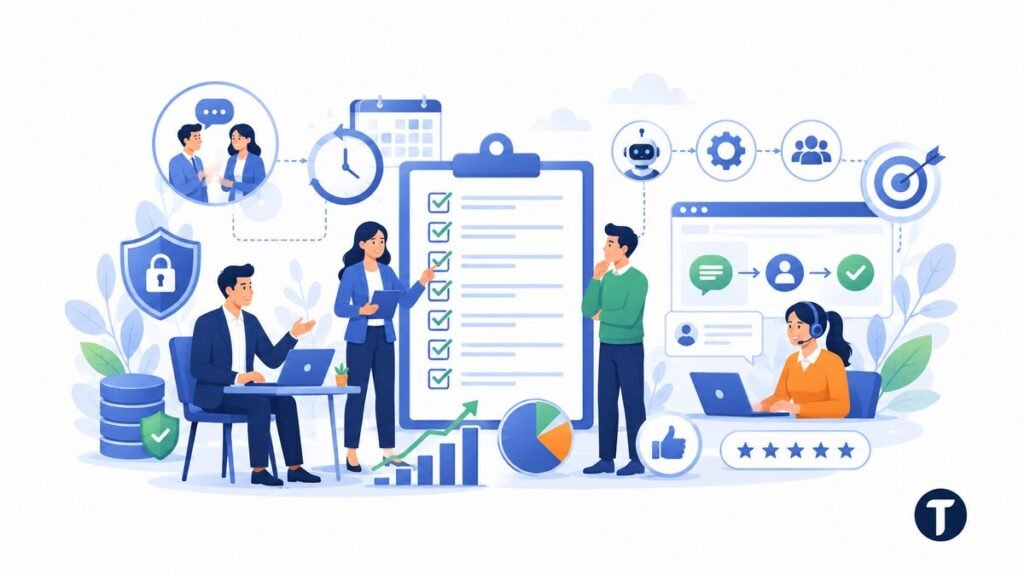
Pick the partner that can explain the first 90 days without hiding behind jargon.
When you compare AI development companies, ask every finalist to show the same level of proof. Strong client success stories should make the first 90 days feel clear.
A strong vendor will ask about your process before talking about models. Ask how they will assess customer information, protect data, and define safe handoffs.
Use this simple checklist:
- Ask for a customer call with a past client.
- Ask for client success stories with clear metrics, named use cases, and a plain reason the work mattered.
- Ask how the team will automate customer handoffs without losing human review.
- Ask how the system will address customer issues, not just answer prompts.
- Ask how the roadmap supports reducing customer support costs.
- Ask where they plan to use AI to automate routine tasks.
- Ask how the tool will improve customer service, overall customer satisfaction, and customer adoption.
- Ask where AI helps staff take the next best actions.
- Ask how the team will guide customers toward the right result.
- Ask whether the plan can deliver exceptional customer care after launch.
Addressing customer pain should come first. If a vendor starts with a model name, pull the talk back to the workflow.
The best AI development companies can show the people, process, and measurement behind the demo.
For intelligent customer service, keep customer service interactions clear. Customer requests need an escape path. The system should assist customers, not trap them. It should support customer conversations and provide staff with a clear context.
Final Takeaway
The winner is the company that can make AI feel useful on a hard Tuesday, not just impressive in a sales deck.
Azumo is my top pick for 2026 because it has direct proof in LLM workflows, supplier search, and practical product delivery. Vention brings strong product muscle. EPAM gives large firms a safer path. Thoughtworks shines when trust and access matter. SoftServe fits data-rich domains.
The best AI development companies will show what changed, who used it, and how the result was measured.
These firms show how customers achieve business outcomes with AI when projects start from real problems. Pick the partner that can ship, measure, and improve customer experiences after launch. A calm plan beats a loud demo every time. Ask for proof, ask for risk notes, and ask who owns the next release.
Use client success stories as your filter. They turn claims into evidence and make the shortlist easier to trust.