5 Customer Engagement Ideas That Modern Auto Businesses Should Try
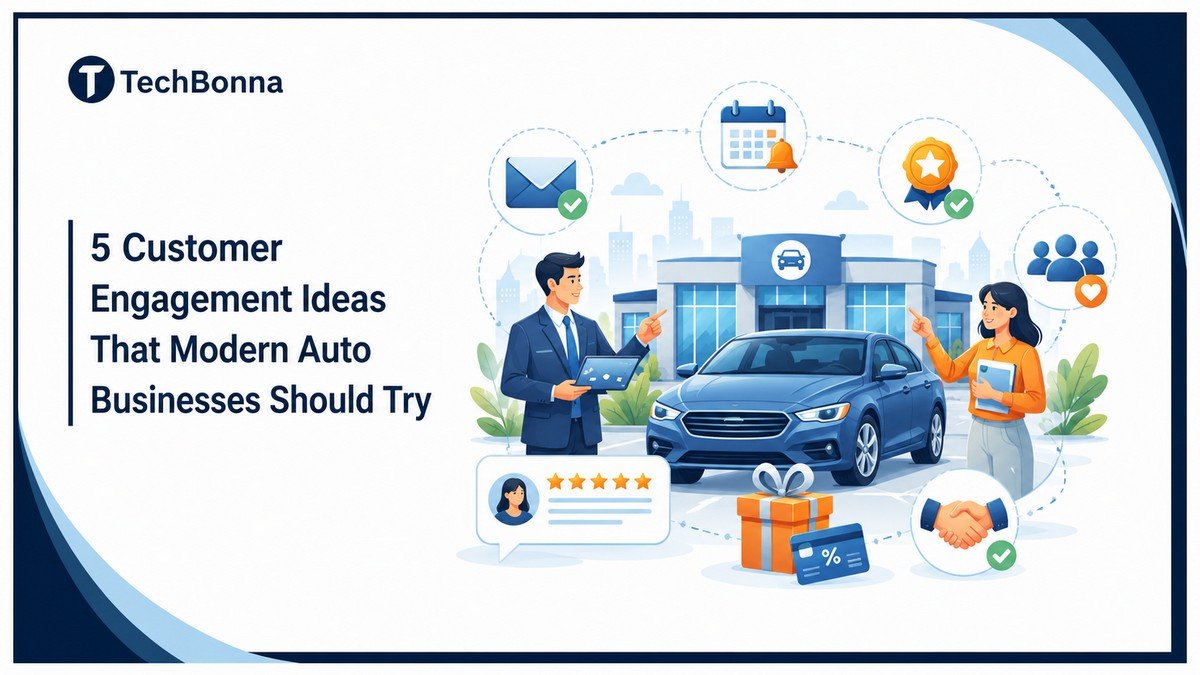
Table of Contents
Customers rarely judge an auto business on one big moment. They judge the whole journey: the reply time, the test drive, the repair update, the handover, and the follow-up after they leave.
That is why customer engagement ideas need to feel useful, human, and consistent. For any modern auto business, a clever promotion may get attention, but the steady details are what bring people back.
The best customer engagement ideas also help a modern auto business stay present between major decisions. When drivers hear from you with useful updates, reminders, and recognition, the relationship feels less transactional and more trustworthy.
If you only do one thing
The best customer engagement ideas for auto businesses are personalized follow-ups, helpful service reminders, simple loyalty offers, customer reviews, and shareable recognition moments.
These ideas make buying, servicing, or repairing a vehicle feel less stressful and more personal while helping every modern auto business stay visible between visits.
- Send personalized follow-ups.
- Share useful service reminders.
- Offer simple loyalty rewards.
- Use reviews as trust signals.
- Recognize customers, staff, or local partners.
Why Customer Engagement Ideas Matter in a Modern Auto Business
Customers Remember the Whole Experience
The automotive industry has a long buying cycle. A customer may research for weeks before a purchase, then disappear for months until a service, repair, tire change, or MOT reminder brings them back.
That gap creates a problem. If you only contact people when you want a sale, the relationship feels thin. If you stay useful between visits, customer loyalty becomes much easier to build.
For a modern auto business, customer engagement ideas are not just marketing extras. They are practical ways to keep customers informed, reduce uncertainty, and make the next visit feel natural.
The businesses that win are the ones customers remember before they need to search again.
Strong Engagement Supports Repeat Business
Good customer engagement supports:
- Better recall when someone needs a new car, repair, or service.
- Higher customer satisfaction because people feel informed.
- More repeat visits from existing customers.
- Stronger reviews and local word of mouth.
- Better sales conversations because trust already exists.
This is where marketing work at a car dealership needs to go beyond adverts and offers. It should include every touchpoint that makes a driver feel understood, from the first website visit to the next service reminder.
When these touchpoints are treated as part of the same relationship, engagement becomes easier to manage and measure.
Start With the Touchpoints You Already Own
You do not need a huge system to begin. Start with the moments your team already owns, then optimize each one so it feels clearer, faster, and more personal.
For dealerships, that might mean quicker replies, clearer part-exchange guidance, and better test-drive follow-up. For a repair-led automotive business, it might mean service updates, photos of completed work, and reminders that reduce missed appointments.
The same idea applies across different marketing strategies. The channel can change, but the principle stays the same: give people useful contact before they have to chase you.
This is why practical customer engagement ideas often start with everyday communication. Teams can improve retention simply by making existing messages more useful and easier to act on.
Idea One: Personalize Follow-Ups Around the Customer Journey
Make Every Follow-Up Relevant
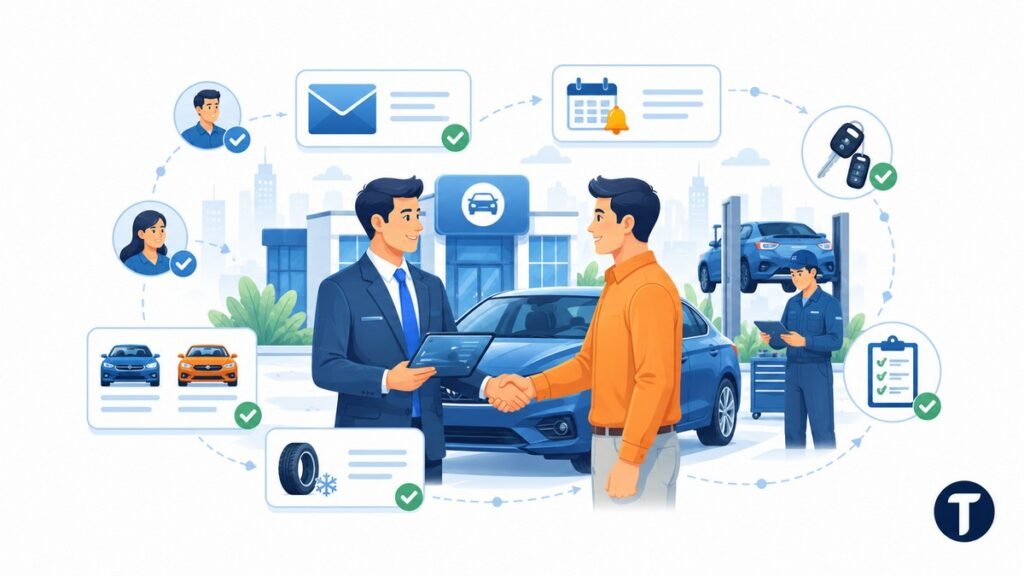
A generic follow-up is easy to ignore. A personal one feels useful. The difference is not fancy wording. It is relevance.
If someone test-drove a family SUV, they should not receive the same message as someone asking about a small electric runaround. If a customer just had brake work done, the next message should not be a broad sales blast.
This is one of the simplest customer engagement ideas to improve because your team already has the context. Use the inquiry, booking, repair, or purchase to shape the next message.
Personalize follow-ups around what the customer actually did, asked, bought, or booked.
Match the Message to the Visit
For a car dealership, that could mean:
- A thank-you message after a test drive with the exact model discussed.
- A short comparison email for customers choosing between two vehicles.
- A handover follow-up one week after collection.
- A finance renewal reminder before the agreement ends.
- A seasonal check-in for tires, batteries, or air conditioning.
For a repair shop or service center, it could mean updates tied to mileage, repair type, or previous advisory notes. A customer who was told their tires may need attention in three months will appreciate a clear reminder at the right time.
These messages work best when they feel specific to the person, not copied from a generic campaign.
Keep Automation Human
Automation can make this easier, but it should not make the message cold. Use the customer name, vehicle details, and the reason for the contact. Keep the wording plain. Make the next step clear.
This is one of the most useful customer engagement strategies because it respects the customer journey. It gives people the right prompt at the right moment, rather than asking them to remember everything themselves.
It also improves customer interaction before a sales call. A customer who has already received the comparison, finance note, or service explanation can ask better questions. Your team then spends less time repeating basics and more time helping the person choose.
A modern auto business can also review automated follow-ups every few months to make sure the timing, tone, and offer still match real customer behavior.
Idea Two: Turn Service Reminders Into Helpful Mini Education
Use Reminders to Reduce Confusion
Service reminders are common, but many of them are dull. They say a booking is due, then stop. That misses a chance to increase customer engagement with useful context.
A better reminder explains why the service matters, what the customer should expect, and how to prepare. People feel more confident when the process is clear.
For any modern auto business, service reminders are high-value customer engagement ideas because they connect safety, convenience, and trust in one message.
A reminder should not only say “book now”. It should remove friction and answer the next question.
Share Simple, Timely Advice
You can tailor reminders by vehicle age, mileage, season, or past work. Short messages can cover:
- What happens during a winter health check.
- Why brake noise should not be ignored.
- How long a service appointment may take.
- What drivers should bring to a booking.
- When tire wear becomes a safety concern.
A newsletter can also work if it feels practical. Keep it short and useful. One clear tip, one timely offer, and one easy booking link is better than a crowded email full of promotions.
Reminders about tyres carry more weight when they point at a neutral source. NHTSA’s tyre safety pages cover tread wear, inflation and maintenance intervals, which gives a service adviser something to reference rather than asking the customer to take the recommendation on trust.
When you plan service education, each message should answer a real driver question before asking for action.
Make the Next Step Easier
The aim is not to turn every customer into a mechanic. It is to make the decision easier. When people understand the value of a service, they are less likely to delay it or shop around only on price.
This approach can also support customer feedback. After a visit, ask one simple survey question such as “Was anything unclear before your appointment?” The answers can show where your reminders need improvement.
Service education works well because it does not demand a sale in every message. It gives value first. That makes the later booking prompt feel helpful rather than pushy.
This kind of education keeps engagement grounded in practical help rather than constant promotion.
Idea Three: Build a Loyalty Program Customers Can Understand Fast
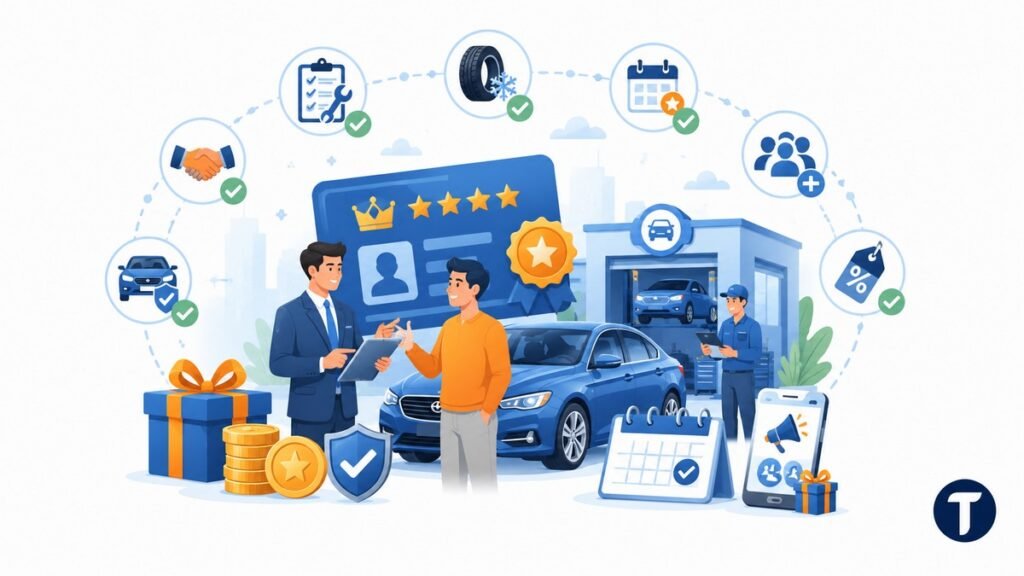
Keep the Reward Simple
A loyalty program does not need to be complex. In auto businesses, simple rewards tend to work best because visits are less frequent than in retail or food.
The reward should match real behavior. Customers may return for servicing, diagnostics, tires, accessories, MOTs, detailing, or future vehicle purchases. Your offer should recognize that long-term value.
Among customer engagement ideas, loyalty works best when a modern auto business makes the benefit easy to understand and easy to redeem.
The best loyalty offer is easy to explain in one sentence and easy for staff to apply.
Choose Rewards That Fit Real Customer Behavior
Useful loyalty ideas include:
- A service club with fixed benefits for repeat customers.
- A free seasonal check after a paid service.
- Priority booking for loyal customer groups.
- A referral reward when a friend buys or books.
- A small accessory discount after a vehicle purchase.
Avoid rewards that feel like traps. Complicated points, hidden conditions, and tiny savings can damage trust. Customers should understand the benefit before they have to ask.
The most effective customer engagement ideas are the ones staff can explain confidently in normal conversations.
Use Loyalty Data Carefully
A loyalty program can also help your team segment communication. Existing customers who already trust you may respond better to care plans, service bundles, and upgrade reminders than to generic acquisition offers.
Use the data carefully. If someone drives 4,000 miles a year, do not send reminders built for a high-mileage driver. If a family bought a used SUV, do not push the same promotion you send to a performance-car buyer. Tailor the message so it feels relevant.
Keep the program visible at the right points. Mention it during handover, include it in the service invoice email, and add it to the booking confirmation. If customers only hear about it once, many will forget it exists.
Loyalty data should make engagement more respectful, not more intrusive.
Idea Four: Use Reviews and Customer Stories as Trust Signals
Make Trust Easier to See
Auto purchases and repairs involve risk. People worry about price, reliability, safety, and whether they can trust the advice they receive. Reviews help because they show real experiences from other customers.
Do not leave reviews sitting on Google and hope people find them. Bring the best ones into your website, email, showroom screens, and social media platforms.
For a modern auto business, review-led customer engagement ideas help turn private satisfaction into public trust.
Customer stories work because they make trust visible before the customer speaks to your team.
Encourage Real Customer Moments
You can encourage customers to share:
- A photo after collecting a vehicle.
- A short comment about a smooth repair.
- A review after a helpful service visit.
- A before-and-after story for detailing or bodywork.
- A family handover moment when it feels appropriate.
User-generated content should never feel forced. Ask permission, keep it respectful, and make the customer feel valued. Some people will be happy to appear online. Others will prefer a written review only.
These story-led posts are strongest when they protect consent and keep the customer story honest.
Track More Than Likes
A simple process helps. Train staff to ask at the right moment, send a direct review link, and record consent before using any customer photo or story. This can foster stronger relationships because customers feel part of the brand rather than just a transaction.
Measure customer engagement by looking beyond likes. Track review volume, review quality, repeat bookings from reviewed services, referral inquiries, and the number of customers who respond to story requests.
This is also where user-generated content can support trust. A real customer photo, a short quote, or a practical repair story often feels more believable than a polished advert. Keep it honest and avoid over-editing the customer voice.
A modern auto business can use these insights to decide which messages create trust, not just attention.
Idea Five: Create Shareable Recognition Moments
Make Recognition Feel Earned
People like to be seen for good choices, milestones, and contributions. Auto businesses can use that tastefully without turning every customer into a marketing prop.
Recognition can highlight happy handovers, loyal customers, local charity work, staff wins, community partnerships, or business customers who rely on your fleet support. Forbes has also covered smart marketing approaches that build brand recognition, and the same principle applies here: recognition works best when it feels earned, relevant, and easy to share. Read more about public recognition as part of a broader brand-building mix as part of a broader brand-building mix.
For a modern auto business, recognition-based customer engagement ideas should feel like appreciation, not a staged advert.
Recognition gives customers and partners a reason to engage because the story is about them, not only about you.
Choose Moments People Want to Share
Try ideas such as:
- Customer of the month for a local business fleet.
- New-driver handover posts with consent.
- A staff spotlight showing the technician behind a repair.
- A local partner feature when you sponsor an event.
- A thank-you post for customers who referred friends.
Keep the tone warm and specific. “Thanks to Sarah for choosing us” is fine, but “Sarah needed a safe first car for her commute, and our team helped her compare three practical options” tells a better story.
Recognition can make your brand feel local, human, and memorable.
Show the People Behind the Business
Recognition can also support customer retention. A customer who feels valued may be more likely to reply, share, review, or return when the next need arises.
Car dealerships can also use recognition to show the people behind the business. A technician spotlight, service adviser thank-you, or apprentice milestone adds warmth. Customers are more likely to trust a team when they can see real people doing careful work.
For a modern auto business, these moments show that engagement is not only about customers. They can also highlight staff, partners, and community relationships.
How to Choose the Right Engagement Ideas First
Fix the Biggest Customer Journey Gap
Do not launch every idea at once. Pick the point in the customer journey where you lose the most attention, trust, or repeat business.
The right first move is the one that fixes a real gap, not the one that sounds most exciting.
Use this quick filter:
- If leads go cold after inquiry, start with personalized follow-ups.
- If service customers delay bookings, improve reminders and education.
- If repeat visits are weak, test a simple loyalty offer.
- If trust is the blocker, use reviews and customer stories.
- If your local profile feels flat, add recognition-led content.
For a modern auto business, the best customer engagement ideas usually start where customers already feel uncertainty or delay.
Measure What Changes
Set a baseline before you begin. Track inquiry replies, bookings, repeat visits, review requests, review completions, referrals, and newsletter clicks. Small improvements across these numbers can create a meaningful lift over time.
Review the numbers every month. If reminders boost bookings but reviews stay flat, the next step may be a more targeted review request. If social posts get attention but no inquiries, the next step may be to make the offer clearer or to clarify the booking path.
Customer engagement is not a one-off campaign. It is the habit of staying useful before, during, and after the sale.
Once these patterns are tracked, engagement becomes easier to prioritize, refine, and scale.
Pulling it together
Modern auto businesses do not need louder marketing. They need clearer, more personal, and more consistent communication.
Start with simple actions: personalize the follow-up, explain the next service, reward repeat behavior, share real customer proof, and recognize people in a way they want to pass on.
When customers feel remembered and informed, they have fewer reasons to look elsewhere.
That is the real value of customer engagement. With the right customer engagement ideas, a modern auto business can turn occasional transactions into relationships its team can build on, one useful touchpoint at a time.
The strongest ideas are the ones your team can repeat consistently, measure honestly, and adapt as customer expectations change.