
Business Plan for IT Consulting: The Complete 2026 Guide
Table of Contents
A business plan for IT consulting is strongest when it proves demand, delivery capacity, pricing logic, and risk control instead of filling pages with generic startup language. It should show exactly which client problems the firm solves and why clients should trust the offer.
This guide shows how to build an IT consulting business plan around real IT consulting services, service packages, financial assumptions, KPIs, and risk scenarios. Use it as a practical framework for planning a consulting firm that can sell, deliver, measure, and improve.
What it means
A strong business plan for IT consulting explains the target market, service packages, pricing model, delivery process, marketing channels, operating costs, financial assumptions, KPIs, and risk scenarios. It should connect every service to a buyer problem, show realistic revenue and margin assumptions, and define the milestones that prove the consulting firm is becoming profitable and reliable.
Build the Consulting Positioning First
Choose a Narrow Starting Market
Start by defining who the firm serves. A broad offer such as “technology consulting for small businesses” is hard to price, market, and deliver. A focused offer such as “secure Microsoft 365, endpoint management, and cloud support for regional law firms” gives the plan a clearer buyer, pain point, sales message, and delivery method.
Connect Niche to Commercial Strategy
If you are still defining the market, review TechBonna’s guide to business vertical classification categories before finalizing your offer. Clear positioning helps the business plan for IT consulting explain why a specific buyer needs your firm instead of a freelancer, MSP, agency, or in-house hire.
Write the Market Analysis and Ideal Client Profile
Define the Ideal Client and Client Base
Market research should describe the ideal client, potential clients, the client base you want first, and the business needs that create urgency. Include company size, budget authority, current technology stack, compliance pressure, and the cost of doing nothing.
Compare the Consulting Industry and Alternatives
A useful market analysis compares the consulting industry, local MSPs, software vendors, management consulting firms, and internal hiring. This is where the value proposition becomes clear: the firm must show why its area of expertise is faster, safer, or more practical than the alternatives.
Set the Consulting Business Model and Legal Structure
Choose the Model Before the Template
A business plan template or free template can help with structure, but it cannot choose the consulting business model. Decide whether the new business will rely on projects, retainers, audits, training, custom consulting, or repeat business before filling in a free business plan template.
Cover Legal and Startup Basics
The plan should note the legal structure, insurance, contracts, licenses, data handling, and startup costs. A solo consultant might start as a sole proprietor, while another founder may choose a limited liability company for liability separation. Small business owners should confirm tax and legal details with qualified advisers before using the plan for funding.
These details do not need to make the document longer than necessary. They make the business plan for IT consulting more realistic because they show whether the founder understands risk, office space choices, hourly rate limits, business partners, business resources, and the path to success.
Turn the Plan Into Working Goals
A solid business plan should translate business ideas into business goals, not just describe a good business in broad terms. The business owner should know which projection matters most, which marketing strategy will create the first meetings, and which keys to success prove that a successful consulting business is forming.
For a smaller consulting firm, the difference between a good business plan and a comprehensive business plan is usually evidence. Use proposal data, referral sources, chamber of commerce introductions, customer interviews, and latest technological developments to sharpen the marketing approach. The same section can explain whether the company sells computer related services, advisory work, implementation projects, or a mix of both.
If you need to create a consulting business plan from scratch, treat this article as a free guide rather than a rigid template. The goal is a solid consulting business plan that supports starting and managing a tech business, not a consultant business document filled with vague claims.
Define Service Packages That Are Easy to Sell
Package Outcomes, Not Just Hours
List the services you can deliver repeatedly, then package them around outcomes clients understand. Strong packages might include a security baseline audit, cloud migration sprint, IT roadmap workshop, vendor selection project, endpoint hardening package, or monthly virtual CIO retainer.
Use Three Clear Offer Levels
| Package | Best For | What to Include |
|---|---|---|
| Diagnostic | New prospects that need clarity | Assessment, gap report, roadmap, cost range, risk summary |
| Implementation | Clients ready to act | Project scope, migration, configuration, documentation, handover |
| Retainer | Clients needing ongoing direction | Monthly advisory, KPI review, vendor guidance, risk monitoring |
This structure makes the IT consulting business plan easier to sell because each package has a buyer, promise, scope boundary, and next step. It also reduces custom proposal work and makes delivery more consistent.
If the business plan for IT consulting includes too many IT consulting services, split the offer into launch packages and later expansion packages. That keeps the sales conversation focused while leaving room to grow.
Create a Downloadable-Style Planning Framework
Use a One-Page Framework Before the Full Plan
A practical planning framework should fit on one page before it becomes a full document. Treat it like a worksheet the founder can review every month.
- Buyer: industry, company size, decision maker, urgent problem, budget trigger.
- Offer: three packaged IT consulting services, each with scope, deliverables, timeline, and exclusions.
- Sales: referral channels, partner list, target accounts, proposal process, and follow-up cadence.
- Delivery: discovery checklist, technical standards, documentation, QA, handover, and support boundary.
- Finance: monthly revenue target, project margin, utilisation, contractor costs, tools, tax, insurance, and cash reserve.
- Controls: security baseline, client approval points, risk register, escalation rules, and KPI dashboard.
The full business plan for IT consulting can then expand each line into a section. This keeps the plan practical and prevents the document from becoming disconnected from sales and delivery.
Make Realistic Financial Assumptions

Start With Simple Revenue Math
Financial planning should show how the firm earns money, when cash arrives, and what must be true for the model to work. A simple first model can use three project packages per month, one small retainer base, and a conservative close rate from qualified proposals.
| Assumption | Conservative Example | Why It Matters |
|---|---|---|
| Average diagnostic project | $1,500 to $3,000 | Creates entry-level revenue and paid discovery |
| Average implementation project | $7,500 to $25,000 | Drives project revenue but needs careful scope control |
| Monthly retainer | $1,000 to $5,000 per client | Improves cash flow and client retention |
| Gross margin target | 50% to 70% before owner pay | Shows whether delivery costs are controlled |
| Sales cycle | 30 to 90 days | Prevents overoptimistic cash planning |
| Cash reserve | Three to six months of fixed costs | Protects the firm during slow proposal periods |
Include Cost and Capacity Limits
Do not build the IT consulting business plan as if every hour is billable. Include admin time, proposal work, client meetings, research, quality checks, software subscriptions, insurance, contractors, accounting, training, travel, and delayed payments. If the owner can only deliver 80 billable hours in a month, the revenue plan must fit that capacity.
Plan Cybersecurity and Trust Requirements
Set the Security Baseline
If protecting client systems and data is part of the offer, define whether it is a core service line, a baseline requirement, or a differentiator inside cloud, infrastructure, and support work. Security promises need clear scope because clients may assume every risk is covered.
A published baseline makes that scope conversation shorter. Working through the CIS Critical Security Controls list gives a consulting firm a numbered, neutral reference for what a client is buying, and more usefully for what remains the client’s own responsibility. Naming the specific controls you cover is far more defensible in a proposal than the word secure.
Use Reliable Planning Standards
The SBA business plan guide recommends explaining the company, market analysis, organization, service line, marketing, funding, and financial projections. That structure is useful, but an IT consulting firm should also add client risk, access control, data handling, vendor responsibility, and handover standards.
Build the Sales and Marketing Plan
Choose Channels That Match the Buyer
The sales plan should match the niche. A regulated professional-services niche may respond to referral partners, webinars, LinkedIn outreach, and compliance checklists. A startup niche may respond to partner marketplaces, technical audits, and founder communities. A local SMB niche may need search, local partnerships, and plain-English service pages.
Track the Whole Funnel
- Define the buyer and decision maker.
- List the top five problems each package solves.
- Create one service page per core offer.
- Build a short diagnostic call script.
- Track leads, qualified calls, proposals, close rate, project margin, and retention.
- Turn completed projects into case studies and referral prompts.
Marketing should not promise unlimited technical coverage. The best IT consulting services are specific enough that prospects can understand the outcome before they book a call.
Define Delivery, Operations, and Quality Control
Document the Client Journey
Map how a client moves from discovery call to proposal, kickoff, technical access, delivery, approval, training, documentation, invoice, and follow-up. This section protects margins because it exposes handoff gaps before they turn into unpaid work.
Also define the approval points that stop a project from drifting. Examples include written access approval, signed scope, discovery findings, configuration review, user acceptance, admin handover, and final documentation. These checkpoints make expectations visible before difficult conversations happen.
Standardize the Delivery System
A useful business plan for IT consulting includes templates for discovery, scope, risk review, change requests, weekly status updates, technical documentation, and final handover. Standardization lets a small firm use contractors without losing control of client quality.
Use KPIs and Risk Scenarios
Sample KPIs for the Plan
| Area | KPI | Healthy Signal |
|---|---|---|
| Sales | Qualified proposal close rate | Improves as niche and offer sharpen |
| Finance | Gross margin by package | Stays high enough after contractor and tool costs |
| Delivery | On-time milestone completion | Projects do not drift without approval |
| Retention | Retainer renewal rate | Clients keep value beyond the first project |
| Quality | Post-project issue rate | Documentation and QA are working |
Risk Scenarios to Test
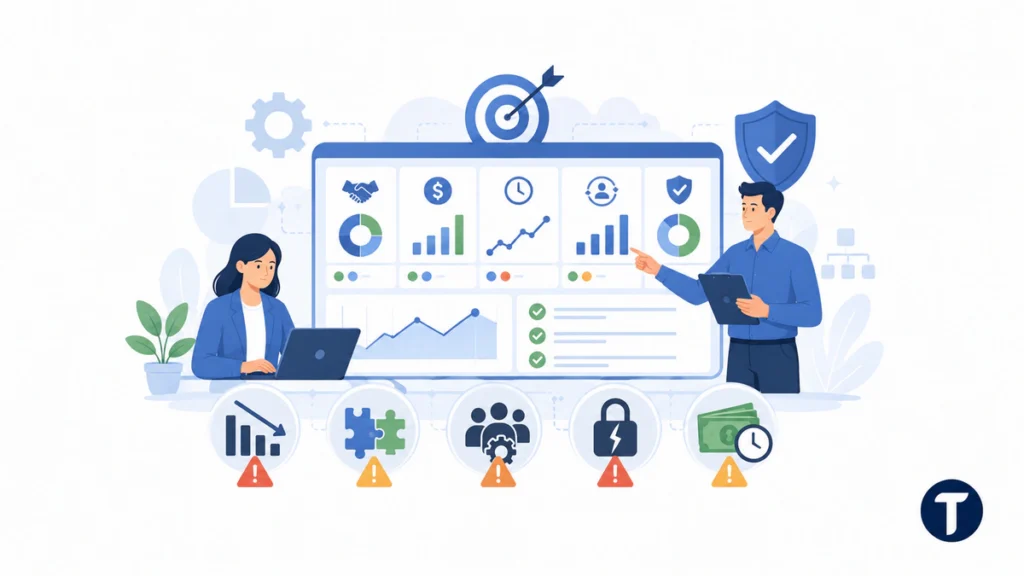
- Slow pipeline: close rate drops or proposals take longer than expected.
- Scope creep: clients request extra work without change orders.
- Contractor dependency: one specialist becomes unavailable during delivery.
- Security incident: client access, credentials, or data handling creates liability.
- Cash delay: large invoices are paid late while fixed costs continue.
Each risk should have a trigger, owner, prevention step, and response. That makes the IT consulting business plan useful during real operations, not just fundraising or planning.
Things people ask
What Should an IT Consulting Business Plan Include?
It should include the niche, buyer, service packages, pricing, delivery model, sales channels, operating costs, financial assumptions, KPIs, and risk scenarios. It should also explain how the firm wins trust and controls technical delivery.
How Long Should the Plan Be?
The working plan can be concise if the assumptions are clear. A founder may use a one-page framework for monthly review and a longer version for partners, lenders, investors, or senior hires.
What Is the Best Revenue Model for IT Consulting?
The best model usually blends paid diagnostics, fixed-fee implementation, and monthly retainers. Hourly billing can work early, but packaged work is easier to sell, forecast, and improve.
How Do You Price IT Consulting Services?
Price by value, risk, scope, urgency, expertise, and delivery cost. The plan should show expected hours, contractor costs, gross margin, software costs, and what is excluded from the fee.
Do IT Consultants Need a Niche?
A niche is not mandatory, but it makes positioning, referrals, case studies, pricing, and delivery stronger. Most small firms benefit from starting narrow, then expanding after they have proof.
The takeaway
A business plan for IT consulting should help the founder make better decisions every month. Keep the plan specific to the buyer, package the strongest IT consulting services, test the numbers against real capacity, and review KPIs before adding new offers. A practical IT consulting business plan is not a generic template; it is a working control system for selling, delivering, measuring, and improving a consulting firm.



2 Comments
Comments are closed.