Employer of Record (EOR): 7 Smart Ways to Hire Global Talent Faster Than Ever
Table of Contents
An employer of record can turn global hiring from a months-long setup project into a faster, safer way to bring international talent onto your team. It lets you hire in new countries without first building every local HR, payroll, tax, benefits, and compliance layer yourself, while your company still leads the employee’s role, goals, and day-to-day work.
The quick version
An employer of record is a third-party organisation that legally employs workers for your company in another country. The EOR handles payroll, contracts, tax filing, benefits administration, onboarding, and compliance with local labor laws while your team manages the employee’s daily work.
Why an Employer of Record Speeds Up Global Hiring
A global hire can look simple at first. You find the right person, agree on the role, and want them to start before a competitor makes an offer.
The slow part starts after that. Local employment laws, pay registration, employee benefits, tax filing, and contracts all need to be handled before the person can work in a compliant way.
GOV.UK employment status guidance shows why the employing label alone is not enough: UK workers and employees have different tests and rights. An EOR arrangement still needs country-specific review of status, contracts, tax, benefits and supervision rather than assuming one global template settles every local obligation.
This service shortens that path because the legal employer is already in place. The provider handles the administrative work while your business keeps control of role, goals, training, and daily direction.
A standard international setup may require legal entities, bank accounts, payroll systems, local HR support, and advice in each market. A global employment service removes much of that first buildout, especially when staffing agencies cannot act as the employer.
This does not mean the process has no checks. A good provider still needs clear role details, salary information, start dates, location, and benefits needs.
The speed comes from using an existing employment platform instead of creating one from scratch.
Use an Employer of Record to Hire Before You Open an Entity
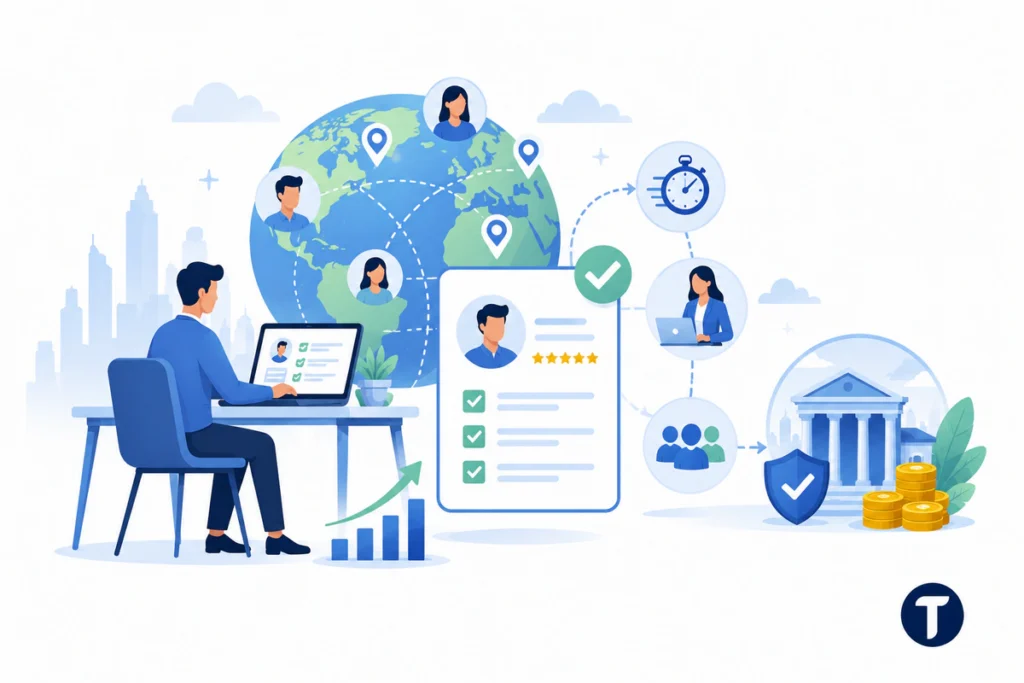
The first smart way to hire faster is to use this model before you set up a local entity. This works well when you want to test a new market, hire one specialist, or support a remote team member in a country where you have no company presence. These services are built for this kind of controlled first step.
When you use employer of record support, the provider can become the local employer for that worker. Your company does not need to establish a legal entity in the countries where you are not ready to invest yet.
This is useful when speed matters, but long-term market certainty is still low. You can hire employees, build revenue, and learn how the market behaves before paying for permanent infrastructure.
This approach also reduces sunk costs. If the country becomes a core market, you can review whether to move from third-party employment support to your own entity later.
Turn Compliance into a Front-Loaded Hiring Step
The second way is to treat compliance as a hiring accelerator, not a last-minute blocker. Global hiring slows down when contracts, notice rules, tax setup, benefits, and labor law checks happen after the offer is accepted.
An EOR handles these items before the start date. That means the employee gets a local contract, the business gets cleaner documentation, and pay starts on the right footing.
The goal is not to avoid responsibility. The goal is to ensure compliance before the worker starts.
A strong provider should help with:
- Local employment contracts
- Payroll processing and tax requirements
- Statutory leave and paid holiday rules
- Mandatory employee benefits
- Local regulations for termination and notice
- Basic HR support during onboarding
This matters because employment laws change by country. Some markets also have rules at state, province, or regional level.
The provider takes care of the local legal and compliance workflow so your team can focus on the hiring decision.
Build a Repeatable Onboarding System for Each Country
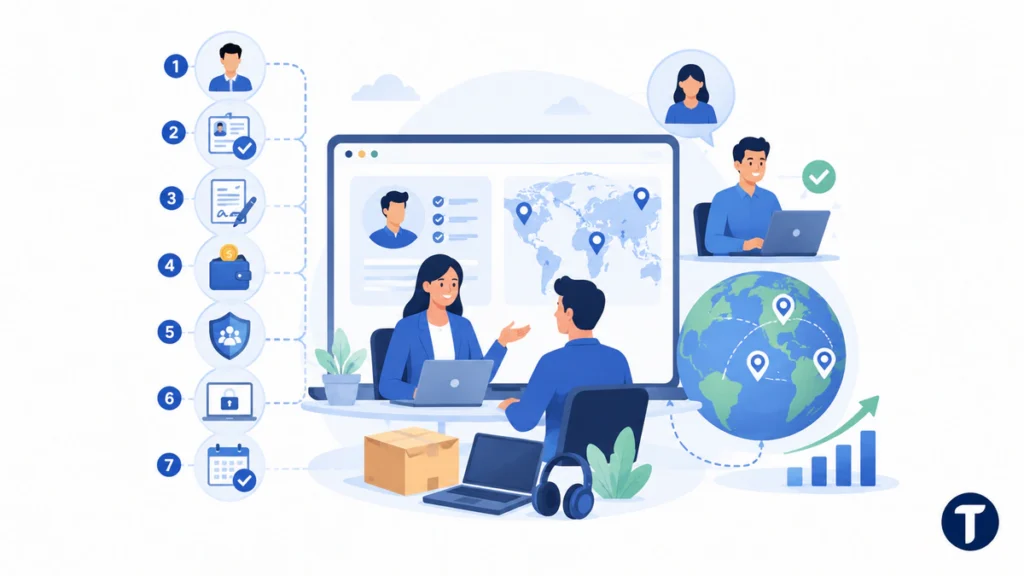
The third way is to make onboarding repeatable. Fast hiring fails when every country feels like a new project.
A repeatable process gives candidates confidence. It also gives your HR department a clear checklist for documents, deadlines, pay, benefits, equipment, and first-week tasks.
Great onboarding is not just a welcome email. It is the moment a global team member sees that your company can support them.
If your new hires work remotely, a structured training setup matters too; this guide to online training software for remote and hybrid teams explains how to keep learning consistent after onboarding.
A practical EOR onboarding flow can include:
- Confirm the role, salary, location, and start date.
- Collect required identity and tax documents.
- Prepare the local employment contract.
- Set up pay and benefits.
- Share company policies and working expectations.
- Coordinate equipment, access, and manager handover.
- Confirm the first pay cycle.
This system also reduces administrative burden for managers. They no longer have to chase country-specific tasks while trying to prepare projects for a new starter.
The best global hiring teams make the process feel calm for the employee and clear for the client company.
Compare EOR vs PEO Before You Choose a Model
The fourth smart move is to compare EOR vs PEO before you choose a hiring model. The two options can sound similar because both can support HR, payroll, and benefits.
The difference is legal control. An EOR legally employs the worker in the target country. A PEO, or professional employer organization, usually enters a co-employment relationship with a company that already has a local entity.
If you do not have an entity in the country, a PEO may not solve the core problem.
A PEO and the client company share certain employer responsibilities. The PEO may support HR tasks, pay, employee benefits, and administrative work.
The record employer becomes the formal employer for the worker. It assumes formal employment responsibilities while the client manages work output.
This is why international employment teams often use this model for new-market hiring and a PEO for markets where the company already has a local structure.
The right employment model depends on your entity status, hiring volume, risk tolerance, and long-term plans. A simple third-party setup can be the cleaner option when you need to move before an entity exists.
Use EOR Services to Test New Markets Faster
The fifth way is to use EOR services to hire talent in a new country before making a full expansion decision. This can be useful for sales, customer support, engineering, marketing, and operations roles.
A global employer of record can make one or two hires possible while leadership tests demand in that market. If the team grows, you can decide whether to keep the EOR model or create local entities.
This gives you a smaller first step into global expansion.
The model works best when you define the test before hiring. Ask what would prove the market deserves more investment.
Useful measures can include:
- Revenue created by the local hire
- Candidate quality in the country
- Customer response time or coverage gains
- Cost per employee compared with entity setup
- Manager workload and HR support needs
This prevents the arrangement from becoming a vague shortcut. It becomes part of a measured workforce plan.
It also gives top talent a legal way to join you while you work out the bigger structure.
Centralise Payroll and Benefits Without Losing Local Fit
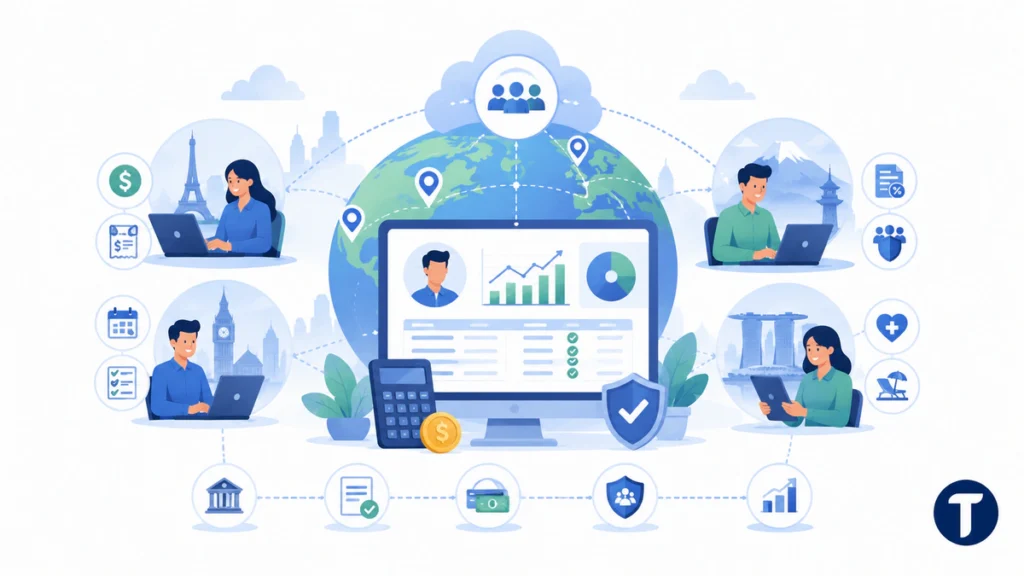
The sixth way is to centralise payroll and benefits while still respecting local rules. Pay is one of the biggest friction points in global hiring because each country has different tax, salary, leave, pension, and reporting rules.
An EOR handles payroll and benefits in the worker’s country. That can include payroll tax, payslips, statutory contributions, health insurance where relevant, and other required benefits.
Centralised oversight with local execution gives your finance and HR teams a cleaner system.
This is also where employee experience matters. A worker may not care who processes wages behind the scenes, but they care if pay is late, benefits are unclear, or documents are hard to access.
A good partner should make payroll and benefits feel normal for the employee. It should also give your company clear reporting.
That balance is important. Global HR should not feel like a maze for either side.
Reduce Manager Admin So Teams Can Focus on Work
The seventh smart way is to reduce manager admin. Global hiring can pull managers into tasks they are not trained for, such as contract wording, benefits questions, local laws, and pay timing.
An EOR handles much of that administrative work. The manager can focus on role fit, training, team culture, performance, and communication.
This is where faster hiring becomes better hiring. The team does not just get someone through the door. It gives that person a cleaner start.
This also protects the employee relationship. Candidates can lose trust when a company appears unsure about paperwork or pay.
A clear workflow makes the company look more prepared. It shows the worker that the business understands international employment and has proper support in place.
How Much Does an EOR Cost Compared With Setting Up Locally?
EOR cost varies by provider, country, salary, benefits package, and service scope. Some providers charge a flat monthly fee per employee. Others use a percentage of salary or a custom package.
The better question is not only how much an international employment service costs. The better question is what cost, time, and risk it replaces.
A local entity can involve incorporation fees, legal advice, accounting, pay systems, banking, tax registration, employment counsel, and ongoing administration. That investment can make sense for a large team.
For the first few hires, this model may give you a faster and cleaner route.
The model is not always the cheapest forever. It is often the smartest bridge while you prove the need for a bigger commitment.
How to Choose the Right Employer of Record
Choosing the right EOR matters because the provider touches contracts, payroll, compliance, benefits, and employee experience. A poor fit can create delays instead of removing them.
Start with country coverage. The provider must operate where the employee lives, not just where your company sells.
Then check how the provider handles compliance with local rules. Ask how contract templates are reviewed, how changes in labor law are tracked, and how payroll issues are resolved.
The right partner should make the process easier without hiding important risks.
Use this checklist before you choose a provider:
- Does the provider cover the exact country and worker type?
- Can it explain who becomes the legal employer?
- Does it support payroll, benefits administration, and tax filing?
- Does it offer clear HR support for the employee?
- Does it show fees in a simple way?
- Does it support offboarding and termination rules?
- Can it scale if you add more workers in the same market?
You should also ask how data, employee documents, and approvals are stored. International hiring creates sensitive records, so clean process matters.
When an EOR May Not Be the Right Fit
An EOR can help companies move faster, but it is not the right answer for every hiring plan. If you want to hire a large team in one country for the long term, setting up an entity may become more practical.
This model may also be a poor fit if the worker needs a highly regulated license, if the role creates unusual permanent establishment risk, or if your company needs direct local employment for strategic reasons.
Use it as a smart hiring tool, not as a way to avoid planning.
The best approach is to match the model to the stage of your growth. Early market test, specialist hire, or urgent remote role? It can help.
Large country team, deep operations, or long-term office setup? A local entity may deserve a closer look.
Final Thoughts: Hire Global Talent with Less Friction
An employer of record gives companies a faster way to hire global talent while keeping payroll, HR, onboarding, and compliance in safer hands. It can reduce administrative burden, support a global workforce, and give leaders time to prove a market before opening local entities.
For companies exploring the employer of record model, the key lesson is simple: use it where speed, compliance, and flexibility matter most. The right partner can help you hire employees across borders faster, without treating international employment as a guessing game.