Penetration Testing Services: How Professional Testing Protects Sensitive Information
Table of Contents
Introduction
Penetration testing services help organizations find exploitable security gaps before attackers do. Professional testing protects sensitive information by showing which vulnerabilities create real business risk.
It gives security and IT teams practical evidence of how weaknesses could affect systems, data, and operations, so they can fix the most important issues first. When planned as cybersecurity penetration testing rather than basic security testing, the work connects technical findings to the information the organization needs to protect.
Quick Answer
Penetration testing services are controlled security assessments where ethical hackers simulate real-world attacks against approved systems to find exploitable vulnerabilities.
Professional penetration testing helps organizations test security controls, protect sensitive data, prioritize fixes, and reduce the risk of attackers using weak points to access critical systems or information.
Cybersecurity penetration testing is different from a basic scan because it validates whether weaknesses can be used in a realistic attack path. This type of security testing gives teams clearer evidence for remediation decisions.
Why Sensitive Information Needs More Than Basic Testing
Sensitive organizational information is often spread across email, cloud storage, customer portals, APIs, finance platforms, web applications, internal systems, and external networks. A single exposed setting can create a path to private records, financial data, credentials, intellectual property, or operational systems.
Automated scans are useful, but they cannot always show how a real person would combine weaknesses. A professional penetration test turns scattered technical findings into a clearer view of business risk.
For example, a scanner may flag an outdated service. A tester checks whether that issue can be used, whether it leads to unauthorized access, and whether a person could move from that access point toward sensitive information.
That evidence matters when leaders must decide what to fix first. Instead of treating every alert as equal, penetration testing services show which issues can lead to data exposure, service disruption, or loss of trust.
This is especially important for organizations with small IT teams. They need plain evidence, clear priorities, and a realistic view of the attack surface, not another dashboard full of unexplained warnings. Manual validation helps those teams focus on the risks that matter most.
What Professional Penetration Testing Services Include
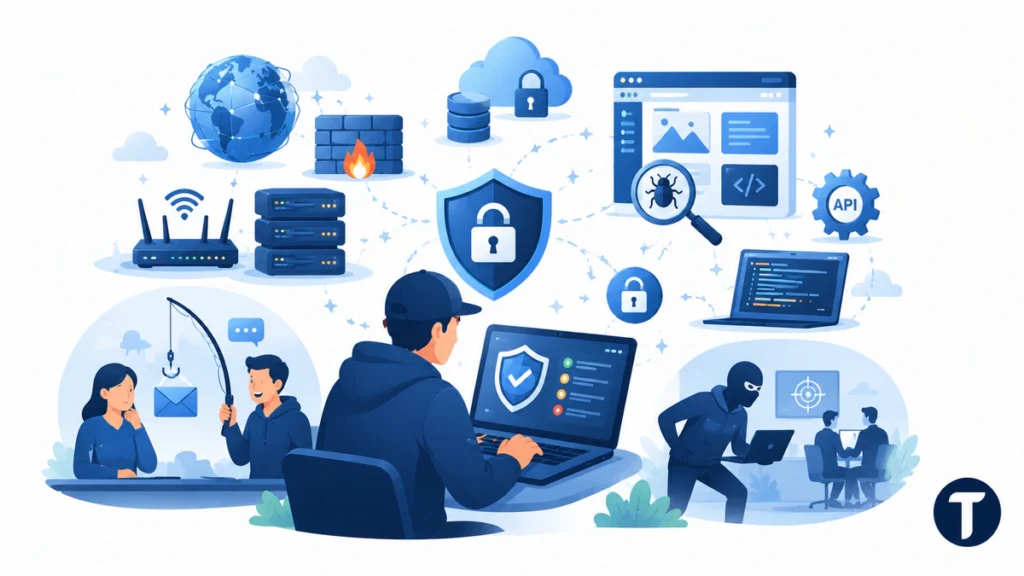
Professional testing usually starts with scoping. The organization and the testing team agree on objectives, systems, timing, rules, and the level of access the tester will have. This makes the assessment controlled, legal, and useful.
A qualified provider of penetration testing services can then assess the areas that matter most to the organization, such as internet-facing systems, internal networks, application security, APIs, cloud security, wireless access, and user-facing processes.
Scope conversations go better when both sides can point at a published methodology. The OWASP Web Security Testing Guide lists the test categories a web application or API assessment is expected to cover, which makes it straightforward to ask a provider which chapters their proposal includes and which it leaves out.
The exact scope depends on the risk profile. A healthcare provider may focus on patient records and compliance requirements. A financial firm may prioritize account portals, payment systems, and internal controls. A software company may need a web application review, API testing, and cloud penetration testing before a major release.
This is why penetration testing services should be scoped around business impact, not only technical assets. A good cybersecurity penetration testing plan identifies the systems most likely to expose sensitive data and then tests them under clear rules.
Network, Application, API, and Cloud Testing
Network penetration testing looks at internal and external exposure. It can uncover weak services, insecure remote access, poor segmentation, and misconfigured systems.
API penetration testing and web application testing focus on the parts that customers, employees, and partners use every day. Testers look for broken access control, injection flaws, authentication issues, sensitive data exposure, and logic flaws that tools may miss.
Cloud checks review identity rules, storage permissions, exposed assets, and misconfigured environments. The goal is to confirm whether protections work under realistic pressure.
Good security testing connects these layers instead of reviewing each one in isolation. It can show whether a weakness in a cloud role, API endpoint, or internal network could become a path to sensitive information.
Social Engineering and Red Team Exercises
Some organizations also need human-risk exercises to understand how employee workflows could be manipulated. For teams that want to reduce one of the most common entry points first, these email security upgrades show practical ways to stop phishing, risky files, and fake payment requests before they create larger incidents. These exercises should be carefully approved, limited, and designed to improve training rather than blame staff.
When penetration testing services include social engineering, the purpose should be learning and risk reduction. The organization should know what is being tested, which tactics are allowed, and how results will support better controls and awareness.
A red team exercise is broader. It may combine technical access, social tactics, and stealth to simulate real-world attacks. This is useful for mature security teams that want to test detection, response, and decision-making.
How Penetration Tests Turn Risk into Action
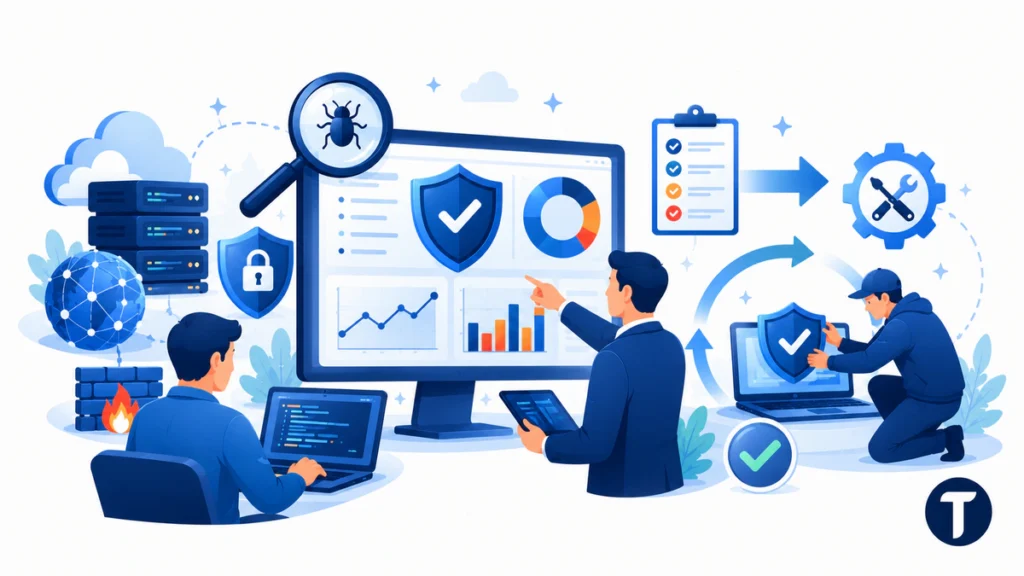
A useful penetration test does not end with a list of vulnerabilities. It explains what was tested, what was found, how each issue could affect the organization, and what the likely impact would be.
Good reports separate theoretical exposure from proven risk. They show which findings affect sensitive information, which systems are most exposed, and which fixes will reduce danger fastest.
Cybersecurity penetration testing is valuable because it turns findings into a practical sequence of action. Security testing reports should show what needs immediate remediation, what should be scheduled next, and what can be monitored as lower-priority improvement.
A practical report should include:
- Executive summary for leadership
- Technical detail for IT and security teams
- Evidence gathered safely within the agreed scope
- Severity, likelihood, and business impact
- Clear remediation guidance
- Retesting steps to confirm fixes worked
This structure matters because security teams rarely have unlimited time. A test that finds issues but does not help prioritize action creates noise. A strong security assessment gives the team a sequence of fixes.
Follow-up testing is also important. After work is completed, the tester can confirm that the issue is closed and that the change did not create a new problem. Retesting turns a report into measurable risk reduction.
For organizations with regulated or sensitive data, penetration testing services can also support audit conversations by showing what was validated, what evidence was collected, and how remediation was confirmed.
How to Choose a Penetration Testing Provider
The best penetration testing companies do more than run tools. They combine manual penetration testing, proven methodology, clear communication, and practical reporting. Their penetration testing services should help both technical teams and business leaders understand what risk remains.
Before choosing a penetration testing provider, ask:
- What systems, applications, APIs, or cloud assets will be in scope?
- How much manual testing is included beyond automated scanning?
- Which certifications or experience does the testing team have?
- How will the project avoid business disruption?
- Will the report include steps engineers can act on?
- Is retesting included after fixes are applied?
Also check whether the provider can explain the difference between a pen test, a vulnerability scan, and a red team exercise. These services overlap, but they are not the same.
A vulnerability scan finds known issues at scale. A penetration test proves whether selected weaknesses matter in context. A red team exercise tests how well people, processes, and technology respond to a more advanced attack simulation.
Organizations should also look for a provider that follows recognized security assessment principles. The NIST SP 800-115 technical guide is a useful reference for structured information security testing and assessment. CISA also describes penetration testing as a way to identify exploitable vulnerabilities in networks.
For cybersecurity leaders, the engagement should validate controls and identify vulnerabilities before exploitation becomes a real incident. A strong provider of penetration testing services should explain findings in plain language and align the results with the organization’s risk priorities.
When Organizations Should Schedule Penetration Testing
Penetration testing services are not only for large enterprises. Any organization that stores sensitive data, relies on online systems, handles regulated information, or depends on uptime can benefit from periodic review.
Common triggers include:
- Before launching a new customer portal
- After major infrastructure, cloud, or network changes
- Before audits or compliance reviews
- After a merger, acquisition, or vendor transition
- After fixing serious vulnerabilities
- At least annually for high-risk environments
Testing can also support insurance, customer due diligence, and board-level risk reporting. The value is not just technical. It helps leadership understand whether security investment is reducing exposure.
The right cadence depends on the attack surface, compliance needs, and pace of change. Fast-moving teams may need more frequent targeted testing. Stable environments may use annual testing with additional checks after major changes.
A practical security testing calendar may combine annual penetration testing services with targeted reviews after major launches, cloud changes, or new vendor integrations. This keeps testing aligned with how quickly the environment changes.
What Better Protection Looks Like After Testing
The most useful outcome is not a thicker report. It is a safer environment and a team that knows what changed.
After a strong test, the organization should know which sensitive systems were checked, which paths were blocked, which gaps remain, and which business processes need tighter controls. Leaders should be able to see the difference between urgent risk, useful improvement, and low-priority cleanup.
After penetration testing services are completed, teams should also have clearer remediation ownership. The process becomes more useful when each validated issue has a responsible team, a target fix, and a way to confirm the risk was reduced.
This makes penetration testing services more than a one-time report. Teams find the issue, fix it, confirm the result, and use the lesson to improve future design decisions.
Final Thoughts: Make Sensitive Information Harder to Reach
Professional testing gives organizations a safer way to find weaknesses before threat actors do. It helps security and IT teams confirm controls, close proven gaps, and protect the information that customers, employees, and partners trust them to safeguard.
For organizations handling sensitive data, penetration testing services are not just a technical checkbox. They are a practical way to reduce risk, guide remediation, and make sensitive information harder for attackers to reach.
When cybersecurity penetration testing and regular security testing are treated as part of the security lifecycle, organizations gain clearer evidence, better priorities, and stronger protection for critical systems and data. The right penetration testing services make that protection easier to prove and improve over time.