Why So Many Fintech Firms Keep Failing Penetration Tests
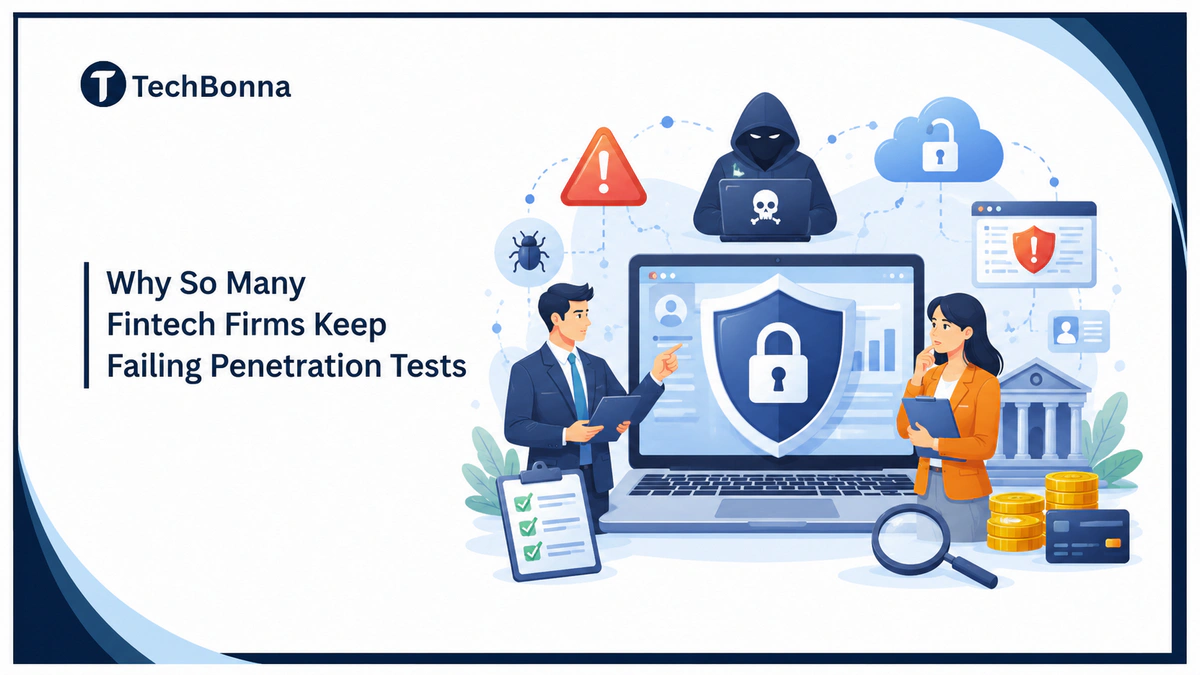
Table of Contents
Fintech penetration testing often exposes the same problems: rushed releases, weak API security, and PCI DSS compliance work left until the deadline is close. These issues matter because payment apps, lending platforms, wallets, and banking tools all handle sensitive financial data.
Most fintech companies do not fail because their teams ignore security. They fail because fast product delivery creates small gaps that become serious when a penetration test checks authentication, authorization, cloud controls, transaction flows, and customer data paths together.
The short explanation
Fintech firms often fail penetration tests because security controls are added too late, APIs expose more data than intended, cloud services are misconfigured, and compliance checks are treated as paperwork instead of engineering work.
A stronger result usually comes from testing earlier, reviewing access controls, checking every API object request, securing cloud storage, and mapping technical evidence to PCI DSS, FCA, or other financial-sector requirements before the formal assessment begins.
Why Fintech Penetration Tests Fail So Often
Fintech teams work under pressure. Product managers want onboarding to feel smooth, investors want growth, and engineering teams want to ship features before competitors do.
That pressure is normal, but it creates a pattern. Security reviews happen after the product is already live, after customer data is already flowing, or after a partner asks for proof that the platform can pass a penetration test.
The problem is not only speed. The problem is speed without repeatable security gates. A fintech company may have good developers, modern tools, and strong intentions, while still missing basic checks across authentication, roles, logging, encryption, and data access.
The most common failures include:
- Test accounts that still have broad permissions.
- Admin routes that are hidden but not properly protected.
- Debug settings left active in staging or production.
- Customer IDs that can be changed in a request.
- Cloud storage that exposes private files.
- Webhooks that trust incoming data without enough validation.
When these issues appear together, a fintech penetration testing report can look worse than the team expected. The test is not creating the risk. It is finally making the risk visible.
Where API Security Breaks First
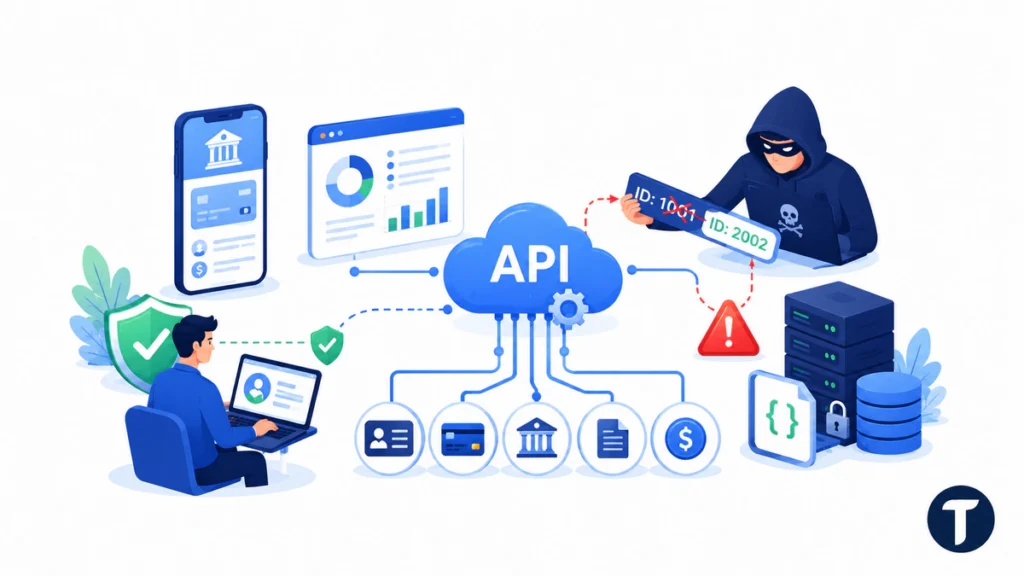
API security is where many fintech platforms show their weakest points. Mobile apps, partner dashboards, card programs, open banking flows, and embedded finance tools all rely on APIs that move sensitive information between systems.
One of the most damaging issues is broken object level authorization. The OWASP API Security Top 10 lists this as API1 because attackers can sometimes change an object ID and reach another user’s record.
In a fintech setting, that can mean invoices, transactions, statements, profile data, funding sources, or account records. A tester may only need to change one value in a URL, header, or JSON body to prove the vulnerability exists.
This is why it helps to involve an experienced cyber security company before the final assessment, especially when the platform uses several APIs, third-party integrations, and financial workflows that need independent security testing before launch.
API failure patterns often include:
- Authentication tokens that are valid but not checked against the right customer record.
- Missing per-object authorization in transaction, card, payment, or document endpoints.
- Overly broad API responses that return fields the interface does not display.
- Weak rate limiting around login, password reset, and verification flows.
- Partner endpoints that are less protected than the customer-facing app.
A secure login is not enough if the API does not check what each logged-in user is allowed to access. Fintech teams need object-level checks on every route that touches financial data.
Common Failure Points at a Glance
The same weaknesses appear again because fintech systems combine product speed, regulation, money movement, and cloud infrastructure. A simple checklist can help teams find the obvious issues before the external tester does.
| Area | Common Failure | Better Control |
|---|---|---|
| API Security | Users can access another customer’s object by changing an ID | Enforce per-object authorization on every sensitive request |
| Cloud Storage | Buckets, backups, or logs expose financial data | Apply private defaults, encryption, and automated configuration checks |
| Access Control | Staff, vendors, or test users hold more access than needed | Review roles, remove stale accounts, and apply least privilege |
| Compliance Evidence | PCI DSS compliance checks are gathered after the test starts | Map controls, logs, scopes, and test evidence before the assessment |
| Release Process | New features skip manual testing and security review | Add pre-release security checks for authentication, APIs, and data flows |
This table is not a replacement for a full test scope. It is a way to remove preventable failures before the formal work begins.
Compliance Pressure Makes Weak Controls Harder to Hide
Fintech security testing is rarely only a technical exercise. The final report may be used for card program reviews, investor checks, partner due diligence, audit packs, insurance questions, or regulator-facing assurance.
PCI DSS compliance is one common driver. If a fintech company stores, processes, or transmits cardholder data, the testing scope needs to reflect the cardholder data environment and the systems connected to it.
The PCI Security Standards Council’s penetration testing guidance is the document to read before the scope is agreed, because it sets out how the cardholder data environment and connected systems are expected to be treated in the methodology and the report.
Other firms need evidence for open banking, vendor security reviews, SOC 2 readiness, or internal risk committees. The labels differ, but the question is similar: can the company prove that customer data and transaction systems are protected? For card programs, DSS requires annual penetration testing around relevant environments, while continuous security testing can help teams avoid waiting a full year to find repeat issues.
Compliance does not fix a weak platform. It only forces the team to show the weakness in a format other people can review. That is why a last-minute penetration test often creates stress. The team is trying to patch code, explain evidence, answer assessor questions, and keep product work moving at the same time.
How Fintech Teams Can Prepare Before the Test
The best time to prepare is before the scope is locked. A fintech penetration testing project works better when the team knows which systems are in scope, which data is sensitive, which integrations matter, and which controls should already be working. A penetration test should confirm those controls, and the next penetration test should show that the same gaps did not return.
Start with the controls that stop the most predictable failures:
- List every customer-facing API and every partner API.
- Test authorization with more than one customer role, staff role, and test account.
- Review cloud storage, secrets, logs, databases, and backups for exposure.
- Remove stale accounts, default credentials, broad admin roles, and unused tokens.
- Check payment, onboarding, password reset, MFA, webhook, and document flows manually.
- Gather evidence for PCI DSS compliance, access reviews, logging, change control, and remediation tracking.
- Run focused security testing before the formal assessment so obvious defects are fixed early.
Manual testing still matters. Automated scanners can find known issues, but fintech systems often fail because of business logic, broken authorization, or hidden assumptions in transaction flows.
Continuous testing also helps. Instead of waiting for one annual penetration test, teams can add smaller reviews after major API changes, payment-flow changes, cloud migrations, and new partner integrations.
What a Strong Fintech Pentesting Scope Should Cover
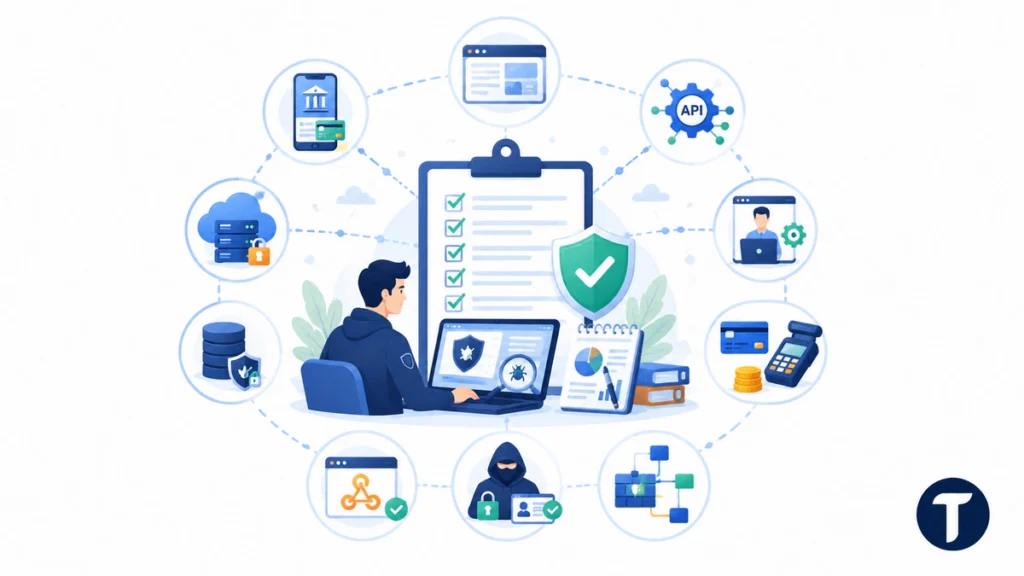
A clear testing scope stops confusion before work begins. Penetration testing for fintech companies should cover the public web app, mobile app, APIs, admin panels, cloud assets, payment systems, third-party callbacks, and any environment that can touch sensitive data.
For larger firms, penetration testing for the fintech industry may also include segmentation testing, API testing, application testing, and threat-led penetration testing against realistic attacker paths. Standard web application penetration testing is useful, but fintech security testing should also check business logic, transaction limits, identity proofing, and fraud controls.
The test must match the way the fintech platform really moves money and financial information. CREST-style reporting, ISO 27001 evidence, and FCA expectations can all shape the final deliverable, but the technical work still needs real-world exploitation paths and manual testing.
Good penetration testing services usually explain what is in scope, what is out of scope, how retesting works, and which security best practices will be checked. That makes remediation easier and helps the company improve its overall security posture instead of only closing individual security vulnerabilities.
Which Vulnerability Patterns Cause Repeat Failures
Repeat failures usually come from one vulnerability pattern showing up in several places. A missing authorization check on one transfer route may point to the same vulnerability in refunds, statements, saved cards, or customer support tools.
A serious vulnerability can also hide in a normal workflow. One breach scenario may start with weak authentication, another breach may come from a forgotten test account, and another may involve an attacker using predictable IDs to exploit financial transactions.
Cybersecurity work gets stronger when the team fixes the class of vulnerability, not only the single finding. For example, if exploitation is possible because one mobile app endpoint trusts the client too much, the fintech business should review every similar endpoint before retesting.
Regular penetration testing evaluates whether each security measure still works after new releases. It also protects customer trust because a financial technology company can show that security issues, financial loss, and sensitive data exposure are being handled before they become public incidents in the financial sector.
A useful security assessment should name each vulnerability clearly, explain how an attacker could exploit it, and show whether the vulnerability affects one route or the whole design. In financial services, one vulnerability in onboarding, one vulnerability in admin tooling, and one vulnerability in payment review can combine into a much larger cybersecurity risk. The OWASP Top 10 mindset helps teams look for repeat classes of weakness instead of treating every vulnerability as an isolated bug.
What to Do After a Failed Penetration Test
A failed penetration test is frustrating, but it can still become useful if the team handles it well. The first step is to separate urgent exposure from lower-risk cleanup.
Fix anything that exposes customer records, payment data, authentication flows, admin access, secrets, or production infrastructure first. Then group the remaining findings into access control, API security, cloud hardening, logging, testing, and compliance evidence.
Do not treat every finding as a one-off ticket. Look for the system that allowed the weakness to appear. If one API endpoint lacks object checks, the team should review the pattern across all similar endpoints. If one storage bucket is public, the team should review the cloud baseline, not only that bucket.
A practical remediation plan should include:
- The risk and affected data.
- The owner responsible for the fix.
- The code, configuration, or process change required.
- The evidence needed for retesting.
- The deadline and approval path.
- A prevention step so the same issue does not return.
This turns the report into engineering work the business can track. It also helps the next penetration test validate improvement instead of rediscovering the same problems.
What this means in practice
Fintech firms fail penetration tests when fast delivery, weak API security, cloud misconfiguration, and delayed PCI DSS compliance work meet a formal assessment. The better approach is to make fintech penetration testing part of the build cycle, not a deadline panic.
If your team reviews object-level authorization, cloud controls, access roles, compliance evidence, and release gates before the testers arrive, fintech penetration testing becomes a useful validation step. It also strengthens API security and PCI DSS compliance before a costly surprise reaches customers, partners, or auditors.