How Does Casino Payment Verification Prevent Fraud?
Table of Contents
Casino payment verification is one part of a wider fraud-prevention system that connects payment technology, digital identity, and online account protection. It helps operators check whether a payment method belongs to the registered player, whether the account looks legitimate, and whether activity matches normal risk patterns.
For readers comparing casino fraud prevention, online casino identity verification, and payment method verification, the key point is simple: checks can reduce risk, but they do not make any gambling platform completely safe. Rules also vary by jurisdiction, regulator, payment option, promotion terms, and the risk level of the account.
In brief
Casino payment verification helps prevent fraud by checking that a player, account, and payment method are consistent before higher-risk actions such as deposits, bonus claims, account changes, or withdrawals. A legitimate verification process may combine identity verification, age checks, payment ownership checks, KYC review, transaction monitoring, device signals, geolocation, encryption, and automated risk scoring. These controls can help detect stolen cards, identity theft, account takeovers, duplicate accounts, bonus abuse, money laundering, chargebacks, underage gambling, unauthorized transactions, and withdrawal fraud, but requirements differ between operators and markets.
What Casino Payment Verification Actually Checks
Casino payment verification is not just a single card check. In regulated online gambling, it is usually a layered review of who the player is, whether they are old enough to use the service, whether the payment method appears to belong to them, and whether account behavior creates a fraud or compliance risk.
The safest way to understand casino payment verification is to separate the checks by purpose. Identity verification confirms that a real person is behind the account. Age verification checks whether that person meets the legal age threshold in the relevant market. Payment method verification reviews whether a debit card, bank account, e-wallet, or similar payment option is plausibly controlled by the same player.
Bonus eligibility checks are different again. They look at promotion terms, duplicate accounts, location rules, and whether an account has already claimed a welcome offer. Source-of-funds reviews may happen when regulation or risk scoring requires extra evidence about the origin of money. Withdrawal verification focuses on whether funds should be released to the correct person and payment route.
The United Kingdom Gambling Commission, for example, requires licensees to verify customer identity information before allowing gambling, which shows how identity checks can sit inside broader gambling regulation rather than a simple payment-screen step. Other markets can use different timing, standards, and regulator expectations, so this article is not legal advice.
Where Promotions and Free Spins Fit In
Casino payment verification often becomes confusing when promotions are involved. Some promotions may not require an initial deposit or card, but the operator may still need identity, age, account, eligibility, or withdrawal verification before the offer is used fully or before any winnings are withdrawn.
Players comparing promotions such as no deposit free spins on SlotsCalendar should still review the operator’s identity, eligibility, wagering, and withdrawal requirements. A neutral comparison should include promotion terms, location limits, account rules, responsible gambling controls, and how the casino explains document handling, not only the headline offer.
Do not assume that free spins mean no verification. A no-deposit promotion might not need a card at signup, yet the operator may later verify identity, age, duplicate-account risk, or the payment method used for a withdrawal. That timing can depend on the casino, jurisdiction, regulator, payment method, risk score, promotion terms, and withdrawal request.
Fraud Risks These Systems Are Designed to Reduce
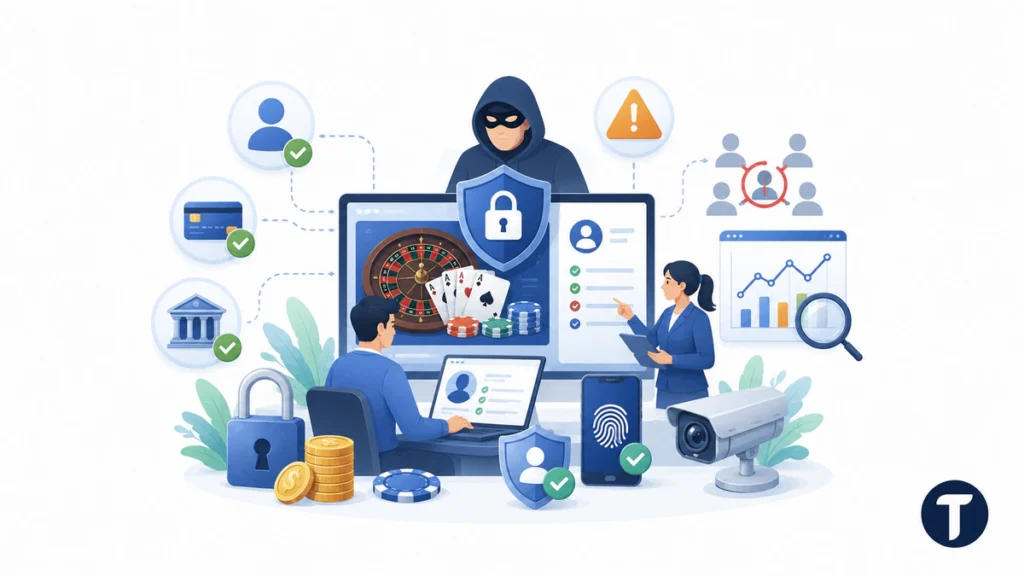
Casino payment verification reduces risk by making it harder for a fraudster to move from a stolen credential or stolen payment method to a successful deposit, bonus claim, or cash-out. It also creates audit trails that help fraud teams review suspicious activity.
| Control | Fraud Risk It Can Reduce | Typical Signals Reviewed |
|---|---|---|
| Identity and Age Verification | Underage gambling, fake accounts, identity theft | Name, date of birth, address, ID document, database checks |
| Payment Ownership Checks | Stolen payment methods, unauthorized transactions, chargebacks | Account name match, masked card details, e-wallet name, 3D Secure result |
| Transaction Monitoring | Money laundering, rapid deposit and withdrawal patterns, unusual account activity | Deposit size, withdrawal timing, payment route, risk rules |
| Device and Behavior Checks | Account takeovers, duplicate accounts, bonus abuse | Device fingerprint, IP location, login patterns, session behavior |
| Withdrawal Verification | Withdrawal fraud, mule accounts, account compromise | Identity consistency, payment route, account changes, prior risk flags |
One practical example is an account created with a real person’s stolen details and a third-party payment account. If the registered name, device history, location, e-wallet details, and login behavior do not line up, casino payment verification can trigger a manual review before funds leave the platform.
Another example is bonus abuse. A fraudster might create several accounts to claim the same offer. Identity checks, device fingerprinting, geolocation checks, behavioral analytics, and payment method verification can help connect those accounts without relying on one signal alone.
How Payment Ownership Checks May Work
Payment ownership checks try to confirm that the payment account is connected to the registered player. They should be limited, proportionate, and handled through official secure channels.
A casino may compare the payment account name with the registered player name, review masked payment details, use 3D Secure for card authentication, or request limited proof of ownership. For a bank transfer or e-wallet, that might mean a document or screenshot showing the player’s name and partial account details while hiding sensitive information.
Legitimate operators should not ask for full card numbers, PINs, full online banking passwords, one-time passcodes, or full card security codes through email, social media, or unofficial messaging apps. If proof is needed, sensitive fields should be masked, and the upload route should be inside the official account area or another clearly secure channel.
Payment security also depends on how operators protect payment data. The PCI Security Standards Council publishes standards for protecting payment account data, which is why reputable operators and payment processors should avoid unnecessary collection and storage of sensitive card information.
The Technology Behind Automated Fraud Detection
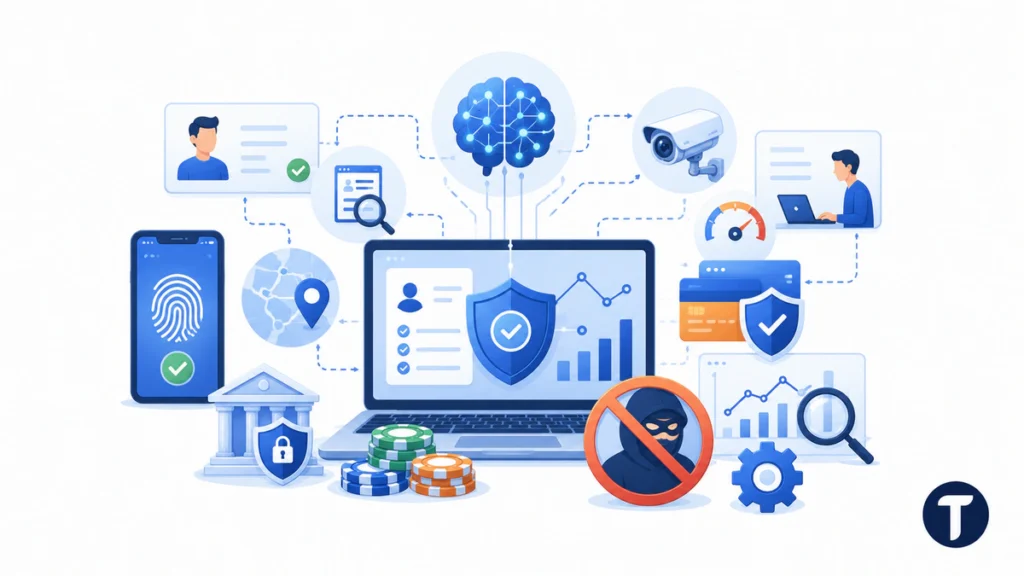
Modern casino payment verification relies on many signals. KYC checks may compare the player’s name, date of birth, address, and identity document with trusted data sources. Document verification may check whether an ID image appears altered, expired, mismatched, or inconsistent with the account profile.
Device fingerprinting can flag repeated signups from the same browser, phone, emulator, or device cluster. Behavioral analytics can review typing patterns, session speed, unusual navigation, failed login attempts, and sudden changes in play or payment behavior. Geolocation checks help confirm whether the player appears to be in an allowed location.
Transaction monitoring reviews deposits, withdrawals, chargebacks, failed payment attempts, rapid payment-method changes, and unusual movement of funds. AML controls are especially relevant where gambling services must manage money laundering risk. The NIST Digital Identity Guidelines explain identity proofing and authentication concepts that help frame why identity evidence and authenticator security matter in digital services, although gambling-specific obligations depend on the market.
Risk scoring pulls these signals together. A low-risk account might pass automatically. A high-risk account may be asked for more evidence, blocked from a withdrawal until review, or escalated to a human fraud analyst. Automation can speed up checks, but it should not replace judgment where the result affects a legitimate user’s money or access.
For a related casino payment verification and payment-technology angle, TechBonna also explains how smart payment routing uses AI to improve approval rates while reducing checkout friction and avoidable declines.
Benefits and Limits of Casino Payment Verification
Good casino payment verification can reduce manual review, speed up lower-risk payments, and help fraud teams spot suspicious patterns earlier. It can also protect players when an account is compromised, because unusual payment or withdrawal behavior may trigger extra checks before funds are lost.
The main benefit is risk reduction, not a guarantee of safety. A platform can have verification tools and still provide poor support, unclear terms, weak privacy practices, or inconsistent decisions. Players should treat verification as one trust signal alongside licensing, secure website practices, clear privacy policies, responsible gambling tools, and transparent withdrawal rules.
There are also user-experience limits. Automated checks can create false positives, delayed withdrawals, accessibility issues, or repeated document requests. A player with a changed name, new address, expired ID, shared household device, or privacy-protective browser setup may be flagged even when they are not committing fraud.
Privacy is another limit. Collecting more data is not automatically better security. Reputable systems should collect only the information needed for a defined verification purpose, explain retention periods, protect uploads, and avoid asking for unnecessary financial credentials. The FTC’s data security guidance emphasizes building security into business practices and limiting access to sensitive information.
How to Recognize Suspicious Casino Payment Verification Requests
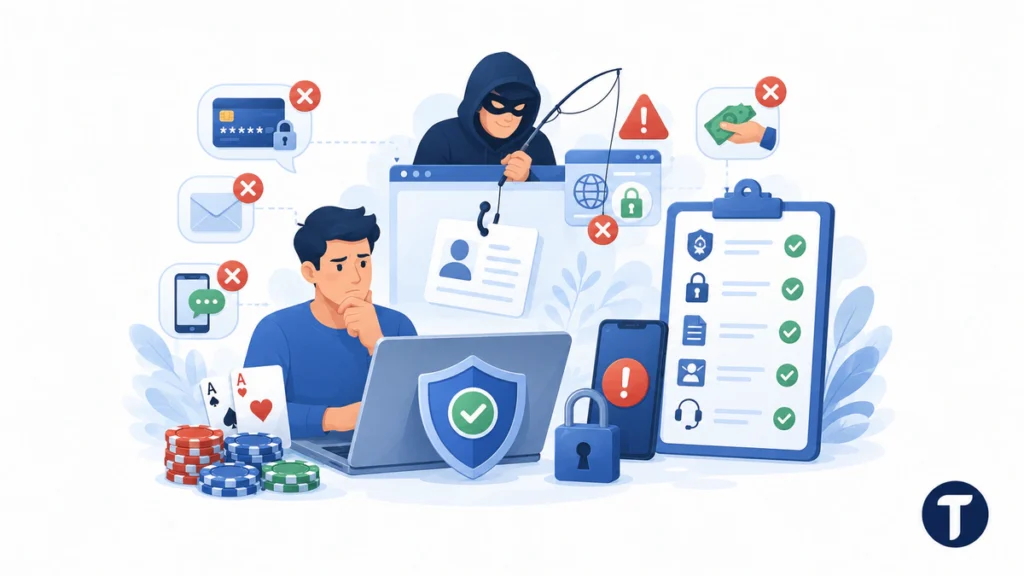
Unsafe casino payment verification requests often appear outside the official platform. A fraudster might impersonate support, send a social media message, create an insecure upload link, or pressure the player to share financial credentials quickly.
Warning signs include:
- Requests for a PIN, full card security code, one-time passcode, or full online banking password.
- Instructions to send documents through social media, unofficial messaging apps, or personal email.
- Upload links that do not use HTTPS or do not match the official casino domain.
- Unexplained verification fees before a withdrawal can be released.
- Vague privacy policies, unclear retention rules, or no contact information.
- An unlicensed operator, a fake regulator logo, or support agents asking for more data than the task requires.
Before submitting documents or payment information, use a simple safety check. Confirm the operator’s license, website security, privacy policy, document-retention policy, contact information, withdrawal rules, responsible gambling tools, and official support channels. If the request feels inconsistent, pause and contact support through the logged-in account area, not the link in the suspicious message.
Common Online Casino Verification Terms Players May See
A gambling site may describe the same review as casino verification, online casino verification, account verification, a KYC check, or a Know Your Customer review. Those labels are not identical, but they often appear together when gambling companies need to verify players before they deposit, withdraw money, or claim winning funds.
Documents can include an ID card, utility bill, bank statements, or a request to ask you for a selfie beside an identity document. Some legal US online casinos may also use credit referencing agencies and the electoral roll where local rules allow those sources. A licensed casino should explain the legal requirement or risk assessment.
Marketing phrases such as best online casino or trusted online casino are not proof of safety. Before you gamble, check whether the gambling business is licensed, whether self-exclusion and problem gambling support are visible, and whether the operator explains payment problems, new payment methods, and withdrawal checks.
When casinos require extra review, the goal should be customer identity verification for a defined purpose, not open-ended data collection. Gambling businesses must keep requests proportionate. Criminals often use stolen documents, synthetic identities, and irregular income patterns, so an identity verification process may include address verification, legal gambling age checks, or limited source-of-funds review.
What Legitimate Operators May Request
During casino payment verification, a legitimate operator may request enough information to verify identity, age, payment ownership, account eligibility, source of funds, or withdrawal safety. That may include name, date of birth, address, government ID, proof of address, masked bank or card evidence, e-wallet ownership evidence, or limited source-of-funds documents where required by regulation or risk controls.
A casino payment verification request should explain the purpose. Identity verification should not be confused with payment method verification. Age verification should not be treated as a bonus check. Source-of-funds review should not be framed as a normal card confirmation. Clear categories help users understand why information is being requested and what can be safely redacted.
Users should never provide full card numbers in an unsecured message, PINs, complete online banking credentials, authentication codes, or unnecessary financial history. If a document shows more information than the operator needs, ask whether fields can be masked before upload. Legitimate casino payment verification should balance fraud prevention with data minimization.
Related questions
What Is Casino Payment Verification?
Casino payment verification is the process of checking whether a payment method appears valid, authorized, and connected to the registered player. It may sit alongside identity verification, age checks, KYC, AML review, device checks, and withdrawal verification.
Is Verification Required Before Free Spins?
Not always. Some promotions may not require an initial deposit or payment card, but an operator may still require identity, age, account, bonus eligibility, or withdrawal checks. The timing depends on the casino, market, regulator, payment method, risk level, and promotion terms.
Why Might Verification Happen Before a Withdrawal?
Withdrawal verification, as part of casino payment verification, helps confirm that funds are going to the correct person and payment route. It can also help detect account takeovers, stolen payment methods, duplicate accounts, bonus abuse, and unusual transaction patterns before money leaves the platform.
What Role Do KYC and AML Checks Play?
KYC checks help verify who the customer is. AML controls help operators identify suspicious money movement and comply with relevant financial-crime rules where they apply. Requirements vary by jurisdiction and are not the same in every market.
Can Automated Verification Make Mistakes?
Yes. Automated casino payment verification systems can produce false positives, delay legitimate withdrawals, or request extra evidence from users whose details have changed. Strong systems combine automation with secure upload flows, clear explanations, human review, and privacy controls.
What Information Should a Player Never Provide?
Players should not provide PINs, full online banking passwords, one-time passcodes, full card security codes, or unnecessary unmasked financial details through email, social media, or unofficial messaging channels. Official secure account portals are safer than ad hoc requests.
Why Do Operators Ask Users to Verify Their Account?
Operators may ask you to verify your account because casinos must reduce fraudulent activity, confirm that a customer is legally allowed to gamble, and meet KYC requirements. The KYC process can verify the identity behind a casino account before real money withdrawals, casino payouts, or promos are abused. Casino payment verification checks apply across the gambling industry, not only on a land-based casino floor. Some gambling platforms may also compare users with self-exclusion lists, run ID verification, or review Skrill and other wallet details when they need to verify your identity.
The takeaway
Casino payment verification works best when it is treated as one layer in a wider fraud-prevention system. It can connect identity checks, age verification, payment method verification, device signals, transaction monitoring, encryption, and risk scoring to reduce stolen payments, account takeovers, bonus abuse, money laundering, and withdrawal fraud.
Still, casino payment verification is not a safety guarantee, and it should not justify excessive data collection. The strongest casino payment verification programs use clear online casino identity verification, proportionate payment method verification, secure official channels, human review when needed, and privacy practices that collect only what is necessary for a defined purpose.