Bootstrapped Startup Fundraising Strategy: A Practical Guide for Founders
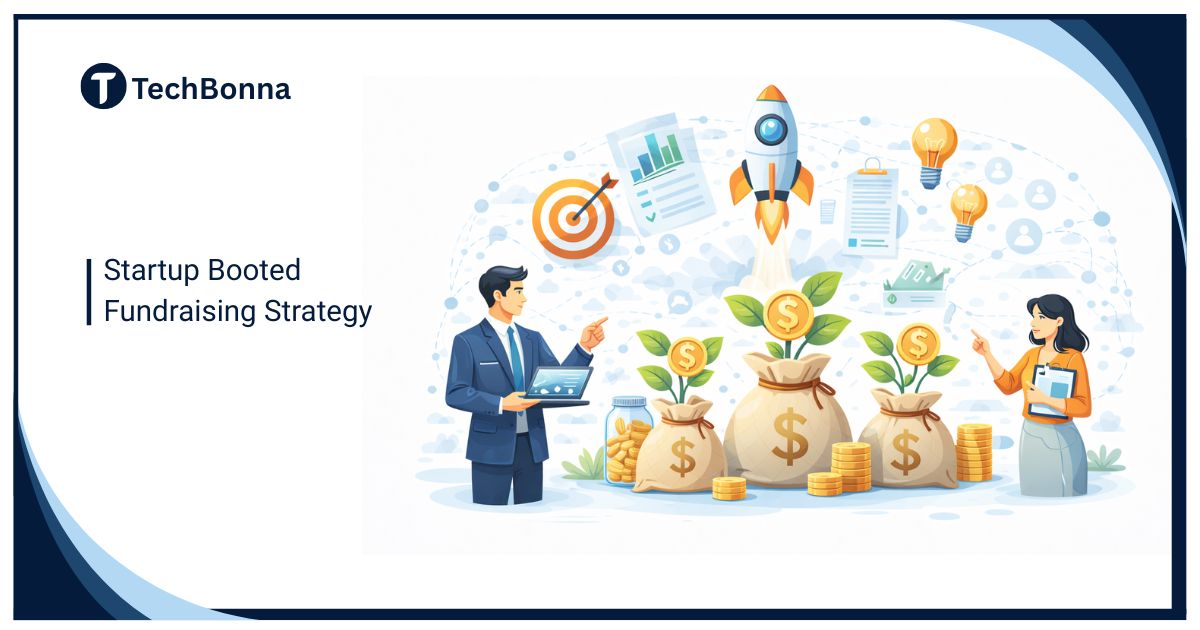
Table of Contents
A startup fundraising strategy does not have to begin with a pitch deck, venture capital, or a long investor list. For many software, SaaS, and digital business founders, the smarter first move is to prove demand with customers before chasing outside money.
This guide explains bootstrapping vs fundraising, where cash flow forecasting fits, and how to build a practical plan that keeps control of the company while still leaving room for future capital. For a bootstrapped startup fundraising strategy, the goal is not to avoid funding forever. The goal is to know when revenue, customer proof, and timing make outside capital useful.
The short explanation
A bootstrapped startup fundraising strategy is a revenue-first funding plan where founders use personal savings, early sales, lean operations, and customer cash flow before raising venture capital or angel investment.
It works best when the startup can launch a minimum viable product quickly, keep upfront costs low, reinvest revenue, and use cash flow forecasting to decide when external funding would speed growth rather than rescue weak finances.
In simple terms, this startup fundraising strategy helps founders build leverage before they ask investors for money.
Why Bootstrapped Fundraising Starts With Control
Bootstrapping is not anti-investor. It is a way to build evidence before you invite investors into the cap table.
The main advantage is control. You keep more equity, make faster business decisions, and shape the product around paying customers instead of investor expectations.
That matters in technology markets because early teams often change their offer several times. A founder building software, a SaaS workflow, or a digital service may need room to test pricing, onboarding, support, and retention before committing to aggressive scaling.
Bootstrapping also changes the marketing mindset. Instead of spending heavily on broad awareness, founders usually start with low-cost channels, useful content, referrals, search-led pages, and practical low-cost email marketing routines that keep customer conversations moving without burning cash.
That is why a bootstrapped startup fundraising strategy should protect customer learning first and investor conversations second.
Bootstrapping vs Fundraising: The Core Trade-Off
Bootstrapping and fundraising are not moral choices. They are financing choices with different costs. Understanding bootstrapping vs fundraising helps founders choose the right source of money for the right stage.
| Path | Best For | Main Risk | Founder Question |
|---|---|---|---|
| Bootstrap | Low-capital software, services, consulting, and niche SaaS | Slower growth if cash is tight | Can revenue fund the next stage? |
| Raise Funding | Capital-heavy, winner-takes-most, or fast-scaling markets | Dilution and investor pressure | Will speed matter more than control? |
| Hybrid | Startups with traction that need selective acceleration | Confused priorities if timing is poor | Can capital be used from strength? |
Bootstrapping may be better when your product or service can reach customers quickly. Fundraising may be better when research and development, compliance, hardware, or market share demands require large upfront capital.
The useful question is simple: are you financing your startup to learn, or raising money because you already know exactly what to scale?
Build the Strategy Around Revenue Milestones
A strong startup fundraising strategy needs milestones, not vague optimism. Each stage should answer one business question.
| Stage | Goal | Funding Source | Metric to Watch |
|---|---|---|---|
| Idea Validation | Prove the problem is urgent | Founder time and personal savings | Customer interviews and paid tests |
| MVP Launch | Sell the simplest useful version | Early revenue | Conversion rate and support load |
| Repeatable Sales | Find one reliable acquisition channel | Reinvested profit | Customer acquisition cost |
| Growth Decision | Choose bootstrapping, external funding, or hybrid capital | Revenue, grants, crowdfunding, or investors | Runway and payback period |
Revenue milestones protect you from raising too early. If the numbers are weak, more money can hide the problem. If the numbers are strong, investors and angel investors have to react to evidence, not promises.
This is where a bootstrapped startup fundraising strategy becomes practical. Each milestone shows whether the business should keep funding growth through revenue or prepare for outside capital.
Create a Funding Trigger Before You Need Money
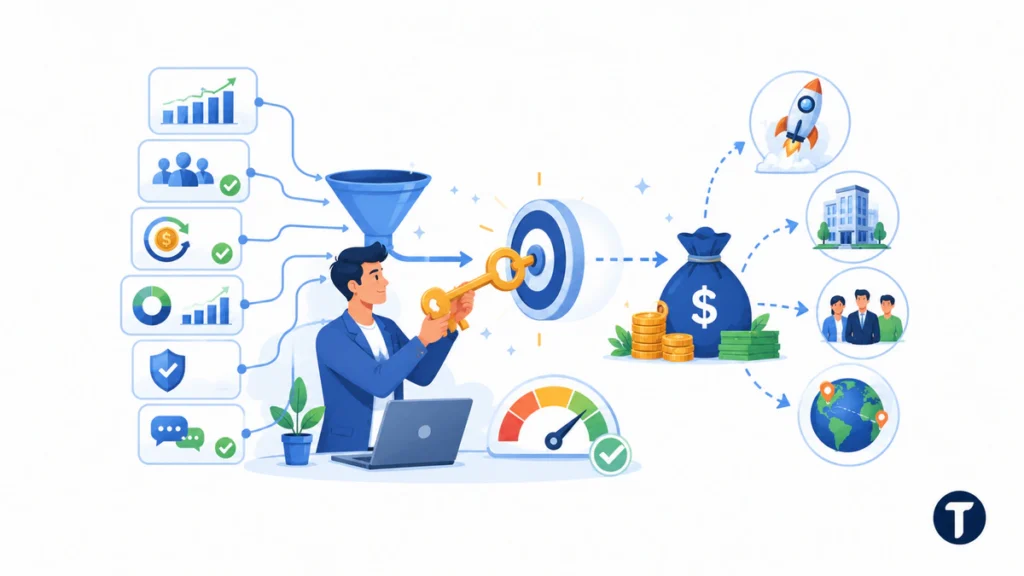
A practical bootstrapped startup fundraising strategy should include a funding trigger. This is the point where outside capital becomes useful because the business has evidence, not because the bank balance is running out.
Your funding trigger may be based on:
- Three to six months of repeatable revenue growth
- A clear customer acquisition channel that can absorb more budget
- A payback period that makes growth spending reasonable
- Gross margin strong enough to support hiring or infrastructure
- Churn, refunds, and support costs under control
- A specific use for capital, such as sales capacity, product infrastructure, compliance, or expansion
This trigger keeps fundraising disciplined. Instead of asking, “Can we raise money?” founders ask, “What proven part of the business would capital accelerate?”
That distinction matters. Investor money should speed up something that already works. It should not be used to cover unclear positioning, weak customer demand, or a broken sales process.
Use Cash Flow Forecasting Before You Hire or Scale
Cash flow forecasting turns bootstrapping from a mindset into an operating system. It shows when money comes in, when bills go out, and how long the startup can survive if sales slow down.
For a bootstrapped company, track these numbers weekly:
- Monthly recurring revenue or repeat purchase revenue
- Customer acquisition cost and payback period
- Gross margin after delivery, support, and tools
- Runway based on cash in the bank
- Churn, refunds, and unpaid invoices
A few simple formulas can make the forecast easier to manage:
| Metric | Simple Formula | Why It Matters |
|---|---|---|
| Runway | Cash in Bank ÷ Monthly Net Burn | Shows how long the startup can operate |
| CAC Payback | Customer Acquisition Cost ÷ Monthly Gross Profit per Customer | Shows how quickly sales spending returns cash |
| Gross Margin | Revenue Minus Delivery Costs ÷ Revenue | Shows whether growth creates enough profit |
| Net Burn | Monthly Cash Out Minus Monthly Cash In | Shows whether the business is consuming or creating cash |
The Kauffman Foundation research on new-firm capital structure found that new firms often rely heavily on owner equity, bank loans, and credit card debt. That is a useful warning for entrepreneurs: funding choices affect risk long before a pitch deck exists.
Good forecasting also makes external funding easier later. Venture capitalists care about growth, but they also care whether a founder understands burn rate, dilution, customer demand, and the capital needed to fuel growth.
For this reason, cash flow forecasting should sit at the center of any bootstrapped startup fundraising strategy.
Choose Lean Tools That Support the Business Model
Bootstrapping your business does not mean avoiding tools. It means choosing tools that create value for the business without adding needless subscriptions.
| Need | Lean Tool Choice | Why It Helps |
|---|---|---|
| Finance | Accounting platform and cash dashboard | Keeps runway visible |
| Sales | Simple CRM | Tracks real pipeline, not guesses |
| Marketing | Email, SEO, analytics, and content tools | Builds owned channels |
| Product | Feedback board and usage analytics | Shows what customers actually use |
| Operations | Project management and automation | Reduces manual work |
A simple rule is to pay for tools only when they save founder time, protect cash visibility, improve conversion, reduce churn, or support delivery quality.
For a SaaS startup, the tool stack should support onboarding, billing, support, retention, and product analytics before it supports vanity reporting.
The right tools make the startup fundraising strategy easier to defend because they show clean numbers and real customer behavior.
When Bootstrapped Startups Should Consider Outside Capital

External funding can be the right move once the startup has proof. The mistake is treating fundraising as a substitute for product-market fit.
Consider investors, crowdfunding, revenue-based financing, grants, loans, or strategic partners when:
Crowdfunding in particular is narrower than the word suggests. In the United States, what Regulation Crowdfunding actually permits is a capped raise conducted through a registered funding portal or broker-dealer, with disclosure obligations attached. Worth reading before it goes on a shortlist as the low-friction option.
- You have repeatable demand and a clear acquisition channel.
- Your cash flow can support stronger hiring, but not fast enough.
- The market rewards speed and delayed scaling would cost market share.
- You understand the dilution, reporting, repayment, and control trade-offs.
- The money has a specific use, such as sales capacity, infrastructure, compliance, or international expansion.
Raise from strength, not panic. A bootstrapped startup that can survive without investor money usually negotiates better terms than one that needs a bridge to stay alive.
This is the strongest position for a bootstrapped startup fundraising strategy: the company can say no, compare funding options, and choose capital that matches the next stage.
Common Mistakes in Bootstrapped Fundraising
Bootstrapping forces discipline, but it can also create blind spots. Founders sometimes underinvest in distribution, delay hiring too long, or avoid funding rounds even when capital would unlock a proven channel.
| Mistake | Why It Hurts | Better Move |
|---|---|---|
| Scaling before revenue | Burn rises before demand is proven | Set revenue gates before hiring |
| Ignoring cash flow | Profit on paper can still become a cash crunch | Review runway every week |
| Waiting too long to charge | Free users may not validate willingness to pay | Test pricing early |
| Using too many tools | Subscriptions quietly drain limited capital | Audit tools monthly |
| Avoiding all investors | Good opportunities may pass | Keep a capital plan, even if you delay raising |
| Raising without a use case | Money gets spent without fixing the bottleneck | Tie capital to one proven growth lever |
There are clear benefits of bootstrapping, but there are also drawbacks of bootstrapping. The balanced view is to learn how to bootstrap well, then decide whether future funding supports the mission.
The real issue in bootstrapping vs fundraising is not which path sounds better. It is whether the founder has enough evidence to choose the right financing path at the right time.
A Simple Bootstrapped Fundraising Plan
A founder does not need a complex finance model on day one. The plan can start with a short operating rhythm.
- Validate the problem with customer conversations and small paid tests.
- Sell the smallest useful offer before building a large platform.
- Track revenue, cash in the bank, runway, churn, and payback period every week.
- Reinvest revenue into one acquisition channel before adding more.
- Keep fixed costs low and tie variable costs to revenue.
- Document the business plan, runway model, and funding trigger points.
- Build an investor or capital list before you need money.
- Raise only when capital can accelerate something already working.
This keeps the company flexible. The founder can continue bootstrapping, choose non-dilutive funding, raise from investors, or use a hybrid approach based on evidence.
As a startup fundraising strategy, this sequence keeps validation, forecasting, scaling, and fundraising in order.
Practical Tips for Bootstrapping a Business
These tips for bootstrapping keep the strategy practical:
- Sell the smallest useful offer before building a large platform.
- Keep fixed costs low and variable costs tied to revenue.
- Build one acquisition channel before adding more.
- Use customer support conversations as product research.
- Document the business plan, runway model, and funding trigger points.
- Protect founder energy with weekly milestones and simple reporting.
Many successful startups begin this way because limited resources force sharper positioning. You cannot serve every segment, so you learn which customer values the product most.
For founders comparing bootstrapping vs fundraising, these habits make the decision easier because they reveal whether growth is being limited by demand, execution, or capital.
Where this leaves you
A bootstrapped startup fundraising strategy is really a control strategy. It helps founders validate demand, keep equity, manage cash, and use investor capital only when the business is ready.
If you are comparing bootstrapping vs fundraising, start with the numbers: customer demand, payback period, runway, and cash flow forecasting. The best startup fundraising strategy is the one that lets a strong business grow without losing discipline.
The best time to raise is not when the startup is desperate for cash. It is when the business has evidence, a clear use for capital, and enough control to choose the right funding path. In that sense, a bootstrapped startup fundraising strategy does not reject outside money. It makes outside money easier to use well.