
How Much Does an ERP System Cost in 2026?
Table of Contents
Introducction
ERP system cost is hard to price from a software page alone because licensing is only the visible line item. A realistic budget also needs ERP implementation work, data migration, integrations, training, support, and the total cost of ownership after go-live.
This guide explains ERP pricing in practical ranges so you can compare vendors without treating every quote as equal. It also shows how company size, deployment model, and project complexity affect both the rollout budget and long-term spending.
In brief
A small ERP system can cost about $25,000 to $150,000 for a focused cloud rollout, a mid-sized company often budgets $150,000 to $750,000, and complex enterprise ERP can run from $750,000 into the millions once setup, migration, integrations, and support are included.
The fastest way to estimate ERP system cost is to list users, modules, deployment model, data migration, integrations, reporting, training, and partner support. Then model the total cost of ownership over three to five years instead of comparing subscription prices only.
ERP Cost Ranges by Company Size
Company size changes the project budget because every extra process adds decisions, testing, and support. A small team replacing spreadsheets may only need finance, purchasing, sales orders, and basic inventory. A larger company may need manufacturing, field service, warehouse management, approvals, consolidations, and advanced reporting.
| Company Size | Typical Project Range | Main Cost Drivers |
|---|---|---|
| Small business | $25,000-$150,000 | Cloud subscription, basic setup, light migration, training |
| Growing mid-market company | $150,000-$750,000 | Multiple modules, integrations, reporting, partner consulting |
| Complex enterprise | $750,000-$5 million+ | Global rollout, custom workflows, governance, change management |
Use these as planning ranges, not promises. A simple rollout with clean data can stay lean, while a smaller company with messy inventory, custom pricing, or compliance rules may spend more than a larger but simpler operation.
ERP Pricing Model Differences by Deployment
Cloud ERP usually starts with subscription pricing charged per user, module, or usage tier. That can reduce infrastructure work, but the full budget still includes setup, training, integrations, data cleanup, and support.
A cloud-based ERP system can be easier to start because the vendor hosts the platform, applies patches, and bundles maintenance into software pricing. Long-term cost still depends on ERP users, storage, advanced modules, support level, and product limits.
On-premise ERP may involve a software license, servers, database administration, security, backups, upgrades, and internal IT labor. Hybrid setups can add integration work because cloud applications and local systems must remain synchronized.
Vendor pages provide useful subscription benchmarks. Microsoft publishes Dynamics 365 Business Central pricing, while Odoo lists per-user plans. Quote-based products such as Oracle Cloud ERP require a sales process because modules, users, and scope change the final price.
What ERP Implementation Includes
ERP implementation is often the largest controllable part of ERP system cost. It covers requirements, process design, configuration, migration, security roles, workflows, integrations, testing, training, and go-live support.
Partners may quote fixed phases, time-and-materials work, or a blended model. A careful estimate should include consultant hours, internal staff time, data cleansing, user acceptance testing, documentation, and post-launch stabilization.
Vendor implementation guidance is a useful cross-check on a partner quote, because it shows what the work is meant to contain. Microsoft’s Dynamics 365 implementation guide sets out the project phases and governance a rollout is expected to run through, so a quote that omits testing or post-go-live stabilisation stands out.
Project decisions also affect lifecycle cost because every custom workflow must be maintained later. Keep configuration simple where possible and document how each major choice changes the budget.
For related modernization considerations, TechBonna’s guide to AI Driven ERP Systems explains how automation can improve workflows while adding governance, integration, and data-readiness costs.
Total Cost of Ownership Scenarios
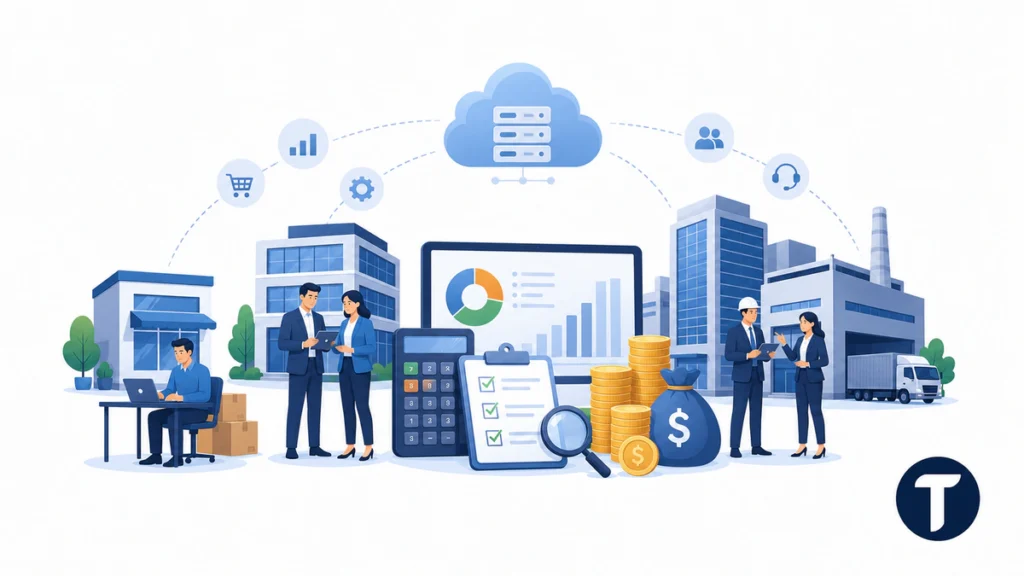
The total cost of ownership is the best way to compare ERP software because the cheapest subscription can become expensive if setup is slow or support is weak. A useful model includes software, implementation, integrations, migration, training, support, internal labor, upgrades, and process changes.
Lean Cloud Scenario
A 20-user company choosing finance, purchasing, and inventory in a cloud ERP might pay $30,000-$80,000 in the first year when subscription, setup, migration, and training are combined. Three-year lifecycle spending may reach $70,000-$180,000 after support and process improvements.
Mid-Market Scenario
A 100-user company with finance, CRM integration, inventory, approvals, and custom reporting may budget $250,000-$700,000 for deployment and first-year software. A realistic three-year total cost of ownership can reach $500,000-$1.3 million when partner support and internal labor are counted.
Enterprise Scenario
A multi-location company with manufacturing, warehouse operations, multi-currency finance, compliance controls, and analytics may need a phased rollout. Initial ERP system cost can pass $1 million, with lifecycle spending rising further through localization, integrations, and change management.
Reliable ERP Cost Benchmarks
Public benchmarks can help you challenge quotes. Software Path’s research across 1,384 ERP projects reported an average ERP project budget of about $9,000 per user, though company size and user count materially affect the result.
That benchmark should not replace a vendor quote, but it can reveal whether a proposal is missing important work. If a price looks unusually low, ask whether it excludes migration, custom reports, API integrations, training, support, or business-process redesign.
For an initial estimate, multiply active users by the expected software range, then add implementation services, internal labor, contingency, and support. This prevents the cost of ERP from being reduced to a monthly subscription line.
Oracle’s ERP overview and Oracle’s ERP overview can help frame business value, but your finance team should validate the projected benefits.
ERP Vendor and Consultant Cost Factors
ERP providers price work differently. Some charge per user, others by user and module, and some quote a package after discovery. Consultants may bill separately for selection, setup, training, reporting, and integrations.
The right partner should explain cost factors before you sign. Ask how business requirements affect ERP software costs, whether sandbox environments cost extra, and whether the consultant will manage testing or only configuration.
NetSuite ERP, Acumatica Cloud ERP, Odoo, Oracle, SAP Business One, and Dynamics 365 Business Central can address similar needs, but their pricing, delivery, and support models differ.
ERP Software Costs by User, Module, and Scope
ERP software costs usually rise with user count, module count, and business requirements. A finance-only solution has a different ERP system cost from a platform that includes manufacturing, ecommerce, field service, business intelligence, and warehouse automation.
Ask vendors to separate software fees from deployment services. Delivery costs may include workshops, configuration, custom fields, permissions, testing, and administrator training. When those items are bundled, request a line-by-line explanation before approving the budget.
Some cloud products charge per user, while others use feature editions, transaction volume, or support tiers. Compare realistic operating scenarios rather than headline prices alone.
How to Choose the Right ERP Solution
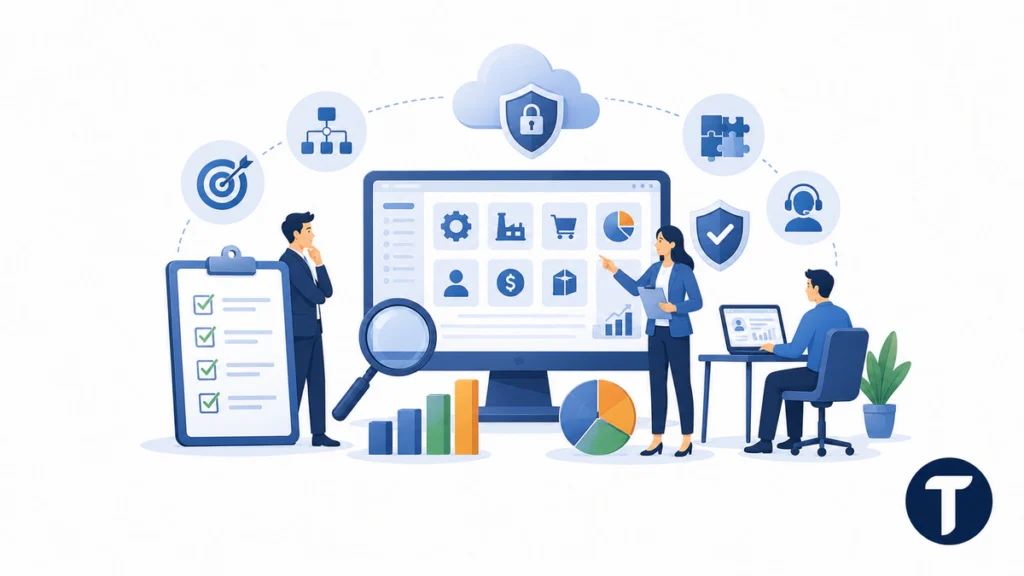
Choosing the right ERP starts with business needs, not brand names. List the process gaps that matter most, then assess whether each platform can solve them without expensive customization.
Score every vendor on its implementation plan, reporting, integrations, upgrade path, user experience, support, and long-term cost. A lower initial price can be misleading if the tool does not fit daily work.
Delay the project when data ownership is unclear, managers disagree about approvals, or no one can define success. Investing in ERP without those foundations may create more risk than value.
Hidden Costs That Change ERP Pricing
Common surprises include duplicate-data cleanup, legacy-system exports, custom approval paths, obsolete reports, and integrations with ecommerce, payroll, CRM, warehouse, or payment systems.
Training is another frequent gap. When users retain old spreadsheets because the new platform feels confusing, errors, rework, and shadow processes increase lifecycle spending. Budget for role-based training, administrator training, and extra post-launch support.
Reviewing lifecycle costs early makes the investment easier to defend because planned spending can be separated from avoidable waste.
How to Control ERP Budget Risk
The safest rollout plan starts with scope control. Separate must-have processes from nice-to-have improvements, then launch in phases. Finance, purchasing, sales orders, inventory, and core reporting usually matter before advanced dashboards or niche automation.
Maintain a decision log that records included modules, approved process changes, and deferred requests. A stable requirement set helps vendors produce more comparable quotes.
- Map current workflows before requesting demonstrations.
- Clean customer, supplier, item, and chart-of-account data early.
- Ask vendors to price users, modules, storage, support, and upgrades separately.
- Request an implementation plan with assumptions, exclusions, and acceptance criteria.
- Keep contingency funds for integration changes and late data issues.
When ERP Is Worth the Cost
ERP is worth the investment when disconnected tools slow decisions, hide stock problems, delay month-end close, or make growth harder. A good system centralizes finance, inventory, purchasing, sales, production, and reporting so teams work from the same records.
Do not rush when the business has not agreed on processes. Buying software before fixing ownership, data standards, and reporting needs can create an expensive cleanup exercise.
How to Build an ERP Budget Request
A strong request makes ERP system cost understandable for finance leaders. Start with business problems, then connect project delivery to measurable outcomes such as faster close, fewer manual orders, better inventory accuracy, cleaner approvals, and stronger reporting.
Show three options: minimum viable, recommended, and higher-change. Each should include software pricing, services, internal labor, migration, integrations, training, and total cost of ownership. This keeps the decision focused on scope and prevents the cheapest incomplete quote from appearing best.
Cost Review Rhythm After Go-Live
Review spending every quarter during the first year, then at least annually. Check license usage, inactive users, support tickets, custom reports, integration errors, and new module requests.
This review protects the total cost of ownership because small changes compound. Unused licenses, rushed customizations, and duplicate integrations can quietly raise costs long after the original ERP implementation is complete.
Low, Medium, and High Complexity Scenarios
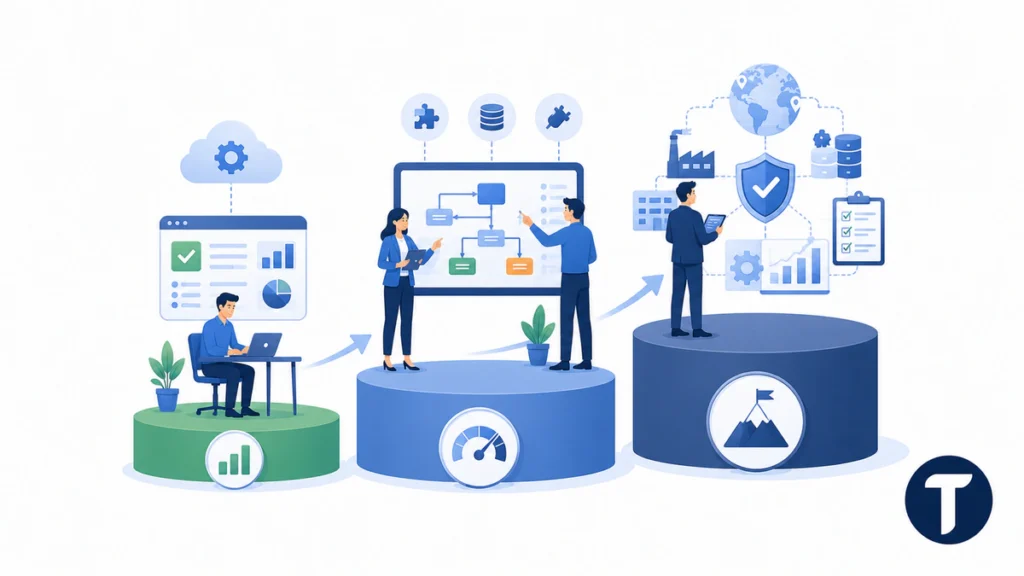
A low-complexity project has clean data, few integrations, standard workflows, and limited custom reporting. ERP system cost is usually near the lower range because the rollout can follow vendor defaults.
A medium-complexity project requires more configuration, data mapping, role design, dashboards, and third-party connections. More people must test the software before launch, which increases long-term spending.
A high-complexity project includes multiple sites, heavy customization, advanced inventory, compliance, or global finance. ERP implementation should be phased, with contingency reserved for change requests.
Final ERP Pricing Checklist
Before approval, request a written estimate naming every major expense. It should cover ERP software costs, installation, training, integrations, support, upgrades, data work, reporting, and post-launch changes.
When someone asks how much ERP costs, discuss average cost, upfront investment, and long-term ownership. Budget beyond subscription pricing and include hidden implementation expenses, internal labor, and ongoing support.
For small teams, initial cost may matter most. For larger organizations, governance and support become more important because the system must deliver process control, savings, and reliable reporting beyond the first year.
Follow-up questions
The answers below clarify the cost, deployment, timeline, and quote components that most often affect ERP purchasing decisions.
Why Do ERP Projects Cost So Much?
ERP projects change core business processes. Their budgets cover software, ERP implementation, data migration, testing, training, support, integrations, and internal staff time.
Is Cloud ERP Cheaper Than On-Premise ERP?
Cloud ERP often has lower infrastructure costs and easier updates, but it is not automatically cheaper. The total cost of ownership depends on users, modules, integrations, support, and the amount of setup help required.
How Long Does ERP Implementation Take?
A focused small-business ERP implementation may take a few months. A mid-market or enterprise rollout can take several quarters, especially with multiple sites, legacy systems, or complex approval workflows.
What Should Be Included in an ERP Quote?
A quote should separate software pricing, services, data migration, integrations, training, support, customization, reporting, hosting, and maintenance. Ask vendors to list exclusions clearly, then compare ERP system cost using the same lifecycle model.
Where this leaves you
ERP system cost is best judged through scope, ERP implementation effort, and total cost of ownership rather than a single software price. Build the budget around users, modules, deployment model, migration, integrations, training, and support. Then compare each proposal against the same assumptions before choosing a vendor.
2 Comments
Comments are closed.