
SaaS Spend Management: Definition, Strategy & Tools
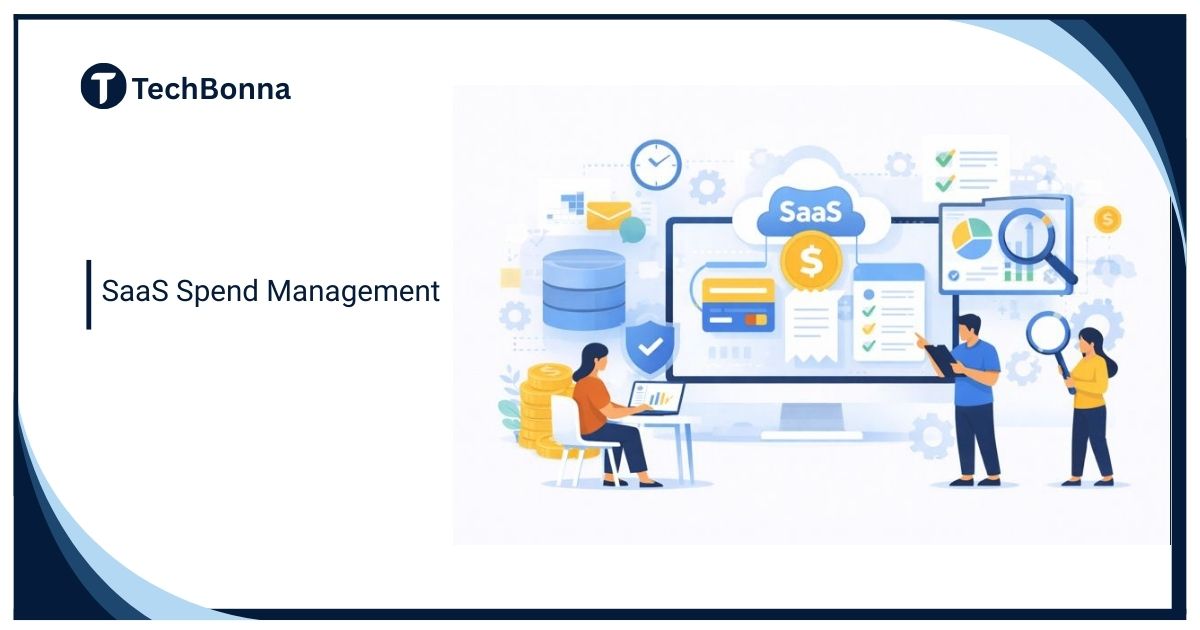
SaaS spend management is no longer just a finance concern. As companies rely on dozens sometimes hundreds of cloud applications to run daily operations, controlling SaaS costs has become a business-wide responsibility. In 2026 and beyond, unmanaged SaaS spend quietly erodes margins, increases security risk, and limits growth.
This guide explains what SaaS spend management really means, why it matters now more than ever, and how modern organizations manage it effectively.
What Is SaaS Spend Management?
SaaS spend management is the ongoing process of discovering, tracking, controlling, and optimizing spending on software-as-a-service applications across an organization.
In plain terms, it answers four questions:
- What SaaS tools are we paying for?
- Who is using them, and how often?
- Are we paying the right price for the value received?
- How do we prevent waste from coming back?
What Problems It Solves for Modern Businesses
Unmanaged SaaS creates several hidden problems:
- Paying for licenses nobody uses
- Duplicate tools doing the same job
- Automatic renewals no one reviews
- Departments buying software without oversight
- Security and compliance gaps from unapproved apps
SaaS spend management brings visibility and structure where chaos tends to grow quietly.
Why SaaS Spend Is Harder to Control Than Traditional Software
Traditional software was purchased infrequently, installed centrally, and owned by IT. SaaS is different:
- Anyone can sign up with a credit card
- Pricing changes by user count, usage, or features
- Renewals happen automatically
- Costs grow gradually, not all at once
That makes SaaS easy to adopt and easy to lose control of.
SaaS Spend Management vs SaaS Spend Optimization
These terms are often used interchangeably, but they are not the same.
Strategic Governance vs Tactical Cost Cutting
- SaaS spend management focuses on structure, ownership, policies, and long-term control.
- SaaS spend optimization focuses on immediate savings such as license reductions or cancellations.
Optimization without management creates short-term wins but long-term relapse.
Why Both Are Required for Long-Term Savings
Optimization reduces costs today. Management prevents waste tomorrow. Companies that only optimize once usually see spend creep back within 6–12 months.
SaaS Spend Management vs FinOps
FinOps plays a role but it does not solve SaaS sprawl by itself.
Where FinOps Ends and SaaS Spend Management Begins
FinOps focuses primarily on cloud infrastructure costs such as AWS, Azure, and GCP. SaaS spend management covers:
- Application-level subscriptions
- User licenses
- Departmental ownership
- Vendor contracts
- Renewal governance
How the Two Work Together
FinOps controls infrastructure efficiency. SaaS spend management controls application efficiency. Together, they provide full visibility into modern software spend.
Quick Answers:
What is SaaS spend management?
It is the continuous process of tracking, controlling, and improving how an organization spends money on SaaS applications.
Why is SaaS spend management important?
Because most companies waste 20–40% of their SaaS budget through unused licenses, duplicate tools, and poor renewal oversight.
Is SaaS CapEx or OpEx?
SaaS is classified as operational expenditure (OpEx) because it is subscription-based rather than a one-time asset purchase.
Who owns SaaS spend: IT, Finance, or Procurement?
In practice, ownership is shared:
- Finance controls budgets
- IT ensures security and access
- Procurement manages vendors
Clear accountability is critical.
How much can companies realistically save?
Most organizations reduce SaaS spend by 20–30% in the first year with proper management.
When should a company adopt SaaS spend management?
As soon as SaaS usage spreads across multiple teams or when total SaaS spend becomes hard to explain.
Why SaaS Spend Management Is Critical in 2026–2027
SaaS usage has changed faster than governance models.
Key Forces Driving the Problem
- Rapid SaaS adoption across every department
- Growth of employee-purchased tools
- Pressure from CFOs to improve margins
- AI tools adding both value and cost
- Spreadsheets failing at scale
Manual tracking simply cannot keep up.
Key Business Benefits
Improved Budgeting and Forecasting
Accurate visibility replaces guesswork.
Reduced Shadow IT
Unauthorized tools are identified early.
Elimination of Unused Licenses
Inactive users no longer drain budgets.
Better Security and Compliance
Lower risk exposure for GDPR, HIPAA, SOC 2, and CCPA.
Reinvestment Into Growth
Savings are redirected to high-impact initiatives.
Executive Confidence
Leadership gains clarity over software spend.
How Much Do Companies Spend on SaaS?
This is one of the most misunderstood areas of SaaS management.
Startups (1–100 Employees)
- Average annual spend: $1,500–$3,000 per employee
- Waste: 25–35%
- Common issues: overlapping tools, over-provisioned plans
Mid-Market (100–1,000 Employees)
- Annual spend: $2,500–$4,500 per employee
- Waste: 30–40%
- Common issues: decentralized purchasing, poor renewal oversight
Enterprise (1,000+ Employees)
- Annual spend: $4,000–$8,000 per employee
- Waste: 20–30%
- Common issues: contract sprawl, low license utilization
Overspending often hides in plain sight inside renewals no one reviews.
Core Components of SaaS Spend Management
SaaS Spend Discovery
Identifying every application in use, approved or not, using:
- Expense data
- SSO logs
- API connections
- Finance systems
License & Usage Management
- Tracking active versus inactive users
- Adjusting license tiers
- Reassigning licenses automatically
Renewal & Contract Management
- Visibility into renewal dates
- Central contract storage
- Prevention of unwanted auto-renewals
Vendor & Pricing Management
- Benchmarking pricing
- Negotiating from usage data
- Comparing pricing models
Budgeting & Forecasting
- Department-level accountability
- More accurate forecasts
- Fewer budget surprises
Common Challenges
- Lack of visibility across teams
- Underused licenses
- Overlapping tools
- Complex pricing structures
- Application sprawl
- Manual tracking consuming excessive time
- Poor onboarding and training
- Compliance exposure
These challenges compound as companies grow.
How to Optimize SaaS Spend (Step-by-Step Playbook)
Conduct a Full SaaS Audit
Create a complete inventory and assign ownership.
Identify High-Cost, Low-Value Apps
Focus on business impact, not just login counts.
Right size Licenses
Downgrade, remove, or reassign licenses.
Eliminate Redundancy
Consolidate tools with overlapping functionality.
Strengthen Vendor Negotiations
Use usage data and renewal timing to your advantage.
Automate Continuous Monitoring
Replace calendar reminders with real-time alerts.
Align Spend With Forecasting
Tie SaaS usage to departmental budgets.
Best Practices
- Centralize SaaS procurement
- Establish governance standards
- Assign clear application owners
- Track engagement, not just access
- Review renewals proactively
- Involve IT, Finance, Security, and business leaders
- Replace spreadsheets with purpose-built platforms
Measuring the Success
Key metrics include:
- Cost savings percentage
- License utilization rates
- Renewal savings
- Reduction in Shadow IT
- Time saved by IT and Finance teams
- Improved security posture
- Forecast accuracy
Measurement turns cost control into a repeatable process.
Why Use SaaS Spend Management Software?
Manual tracking breaks down quickly as SaaS usage grows.
Purpose-built platforms offer:
- Continuous visibility
- Automated rightsizing
- Scalable governance
- Ongoing optimization instead of one-time cleanup
How to Choose the Right Platform
Must-Have Features
- Complete SaaS discovery
- Subscription tracking
- Renewal alerts
- License optimization
- Contract repository
- Finance, SSO, and HR integrations
- Flexible reporting
- Security insights
Questions to Ask Vendors
- What data sources are supported?
- How automated is license optimization?
- Is benchmarking included?
- How quickly does value appear?
SaaS Spend Management vs Cost Management Tools
Traditional cost tools focus on infrastructure and invoices. SaaS requires visibility into usage, ownership, and renewals areas general cost tools do not cover well.
Real-World SaaS Spend Optimization Examples
- Startup: Eliminated unused design and analytics tools, saving 28%
- Mid-market: Consolidated project management platforms, saving six figures
- Enterprise: Used benchmarking to renegotiate enterprise contracts
The Future of SaaS Spend Management
The next phase includes:
- Usage-based forecasting
- Automated license adjustments
- Closer alignment with FinOps
- Spend governance as a competitive advantage
AI will assist but governance remains human-led.
Frequently Asked Questions (FAQ)
What is SaaS spend management?
A structured approach to controlling and improving SaaS costs.
Why is SaaS spend management important?
It prevents waste, improves security, and supports growth.
What are SaaS expenses?
Recurring subscription costs for cloud software.
Is SaaS CapEx or OpEx?
OpEx.
What is a SaaS spend management tool?
Software designed to track, optimize, and govern SaaS usage.
How much can companies save?
Typically 20–30% in the first year.
Who should own SaaS spend management?
A cross-functional team led by Finance and IT.
How often should SaaS audits be done?
Continuously, not annually.
Can small businesses benefit?
Yes especially as tool counts grow.
How does SaaS spend management improve security?
By identifying unapproved tools and limiting access exposure.
Final Thoughts
SaaS spend management is not just about cutting costs. It enables smarter decisions, stronger governance, and sustainable growth in SaaS-first organizations. Companies that treat it as a strategic function gain financial clarity and a competitive edge.

One Comment