
Business Plan for IT Consulting: The Complete 2026 Guide
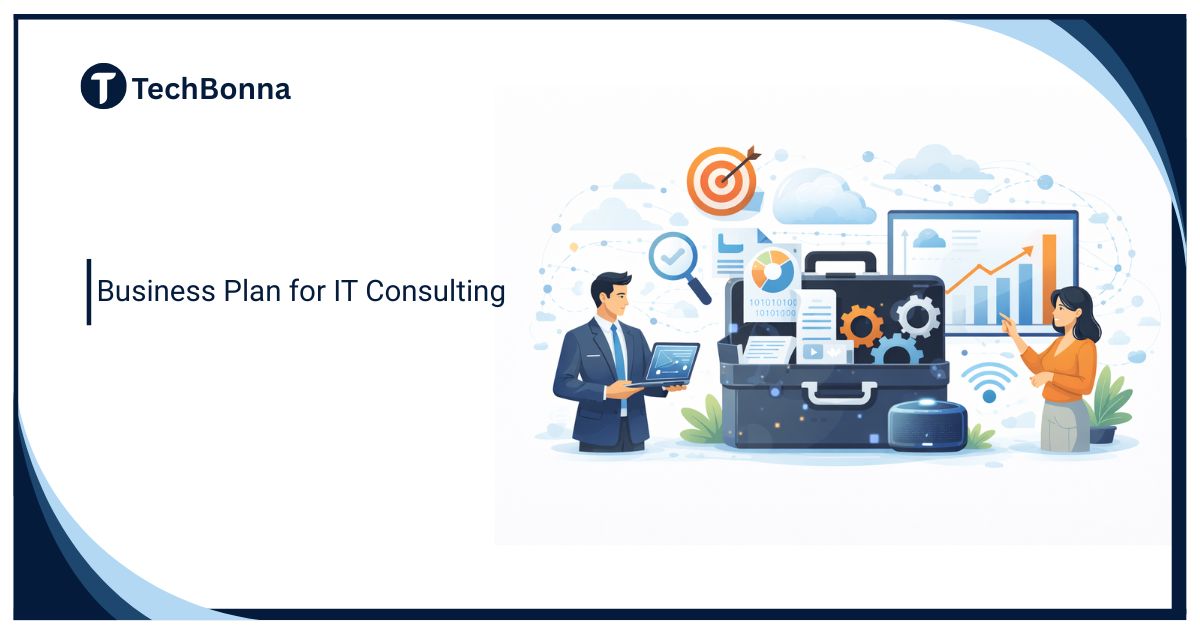
Starting an IT consulting business can be exciting, but without a well-structured plan, even the best ideas can stumble. A business plan for IT consulting is more than just a document, it’s your roadmap to success. It helps you define your niche, set financial goals, create marketing strategies, and structure operations efficiently. In this guide, we’ll cover every aspect of building and growing your IT consulting business in 2026.
Why Your IT Consulting Business Needs a Business Plan for IT Consulting
Many aspiring consultants underestimate the importance of a business plan. A strong IT consulting business plan helps you:
- Clarify business goals and objectives
- Identify ideal clients and target market
- Set competitive pricing and define service offerings
- Secure funding or investors if needed
- Track progress and measure success
Even if you’re running a solo consultancy, a plan keeps you focused, organized, and prepared for challenges. Think of it as your personal roadmap, guiding each decision from day one. Without it, you risk mismanaging resources or targeting the wrong clients.
IT Consulting Business: Define Your Niche and Services
One of the first steps in your IT consulting business plan is defining your niche. IT consulting spans a wide range—from cloud migration and cybersecurity to network management, software solutions, and IT support.
Tips to define your niche:
- Identify your expertise: What platforms, technologies, or industries do you excel in?
- Assess market demand: Are clients actively seeking these services?
- Evaluate competition: Can you offer something unique or faster solutions?
- Focus your services: Start with 2–3 core offerings to build reputation before expanding.
Examples of IT consulting niches:
- IT strategy for startups
- Cloud infrastructure consulting
- Cybersecurity audits and compliance
- Small business IT support
Clearly defining your niche in your IT consulting business plan not only guides your marketing efforts but also positions you as an expert in your field.
IT Consulting Business Plan: Determine Your Business Structure
Your business structure affects taxes, liability, and growth potential. Common structures for IT consulting businesses include:
- Sole Proprietorship: Easy to set up with minimal compliance. Best for solo consultants, but personal liability is high.
- Limited Liability Company (LLC): Protects personal assets and offers flexibility in management. Popular among IT consultants.
- Corporation: Ideal if you plan to scale or attract investors, though it comes with higher regulatory requirements.
Choose a structure that aligns with your long-term vision, risk tolerance, and financial goals, and clearly document this in your business plan for IT consulting.
Value Proposition and Sales Pitch for IT Consulting Services
Your value proposition answers the key question: Why should a client hire you?
- Highlight results and benefits: For example, “I reduce IT downtime by 30% for small businesses within three months.”
- Be specific and clear: Avoid generic statements like “I provide IT solutions.”
- Craft a one-sentence sales pitch: This is invaluable for emails, LinkedIn messages, and networking events.
A compelling value proposition ensures that potential clients immediately understand the unique advantage of working with your IT consulting business.
Market Research for Your IT Consulting Business
Understanding your market is critical. Without proper research, you risk guessing client needs, pricing, and competition.
Steps for effective market research:
- Define your target audience: Consider industry, company size, and location.
- Analyze competitors: What services do they offer, and at what price points?
- Identify client pain points: Conduct surveys, LinkedIn polls, or read industry forums.
- Estimate market size: Helps with realistic revenue projections and strategic decisions.
Including detailed market research in your IT consulting business plan ensures that your strategies are grounded in reality and improves your chances of winning clients.
Marketing Strategy for IT Consulting Business Plan
Marketing determines how clients find and choose you. A strong strategy combines digital presence, networking, and referrals.
Key marketing tactics:
- Build a professional website with clear services, case studies, and client testimonials
- Leverage LinkedIn for professional networking and outreach
- Share valuable content (blogs, whitepapers, or guides) to showcase expertise
- Attend industry events, webinars, and workshops to establish credibility
In IT consulting, trust and relationships matter more than flashy ads. Your marketing plan in the business plan should clearly outline both online and offline strategies.
Pricing and Billing Models in an IT Consulting Business Plan
Correct pricing ensures profitability and client satisfaction. Common models include:
- Hourly rate: Flexible but can limit revenue potential.
- Project-based pricing: Preferred for defined deliverables and clear expectations.
- Retainers: Monthly recurring revenue for ongoing support.
- Value-based pricing: Charges reflect the business value or results delivered.
Include competitive benchmarks and explain your pricing approach in your IT consulting business plan to avoid confusion with clients and ensure sustainable cash flow.
Operations Plan for IT Consulting Services
Your operations plan defines how your IT consulting business functions day-to-day. Key components include:
- Client onboarding process and documentation
- Project management tools and software
- Communication channels (email, video calls, Slack)
- Support and escalation processes
A detailed operations plan in your business plan increases efficiency, reduces errors, and ensures a consistent client experience.
Certifications and Skills for IT Consulting Business Plan
Certifications enhance credibility and help you stand out. Some valuable ones for IT consultants:
- CompTIA A+ (IT support fundamentals)
- Certified Information Systems Security Professional (CISSP)
- AWS Certified Solutions Architect
- Microsoft Certified: Azure Fundamentals
Alongside technical skills, emphasize soft skills like communication, problem-solving, and project management. Documenting this in your business plan for IT consulting signals professionalism and preparedness.
Financial Planning in an IT Consulting Business Plan
A sound financial plan outlines both expected income and expenditures. Include:
- Startup costs: Software, hardware, certifications, and licenses
- Operating expenses: Rent, tools, software subscriptions, salaries
- Revenue projections: Monthly and yearly estimates for 1–3 years
- Break-even analysis: Determine when the business becomes profitable
- Cash flow management: Ensures you have enough liquidity to sustain operations
Financial planning is critical for sustainability, whether you’re self-funded or seeking external investment.
Launch and Iteration Strategy for IT Consulting Business Plan
Launching is just the beginning. A good IT consulting business plan includes strategies for testing, feedback, and scaling.
- Pilot projects: Start small with a few clients to refine processes
- Feedback collection: Gather insights to improve services
- Scaling plan: Expand service offerings or team gradually
- Continuous learning: Stay updated with tech trends, certifications, and industry developments
Iterating based on real-world experience ensures long-term success and keeps your IT consulting business competitive.
Conclusion
A business plan for IT consulting is essential for turning an idea into a thriving business. From defining your niche and services to market research, marketing, pricing, operations, and financial planning, every section plays a critical role in building a sustainable IT consulting business.
Focus on real-world insights, actionable steps, and continuous improvement. With a clear plan and disciplined execution, your IT consulting business can grow and thrive in 2026 and beyond.

2 Comments