How CPG Brands Use Quality Management Technology to Streamline Operations
Table of Contents
CPG quality management becomes harder when product specs, vendor files, compliance evidence, and customer complaints sit in separate tools. For growing consumer packaged goods companies, that gap can slow production and make small quality issues harder to control.
The practical fix is better operating visibility. Supplier quality management, document control software, corrective action records, and quality management technology help teams protect product quality while keeping daily work easier to track.
The short explanation
CPG brands use quality management technology to bring specifications, supplier records, audit evidence, document approvals, customer complaints, and CAPA actions into one controlled management system. This helps teams streamline workflow steps, automate reminders, track issues in real time, support compliance, and make faster decisions across product, procurement, manufacturing, and regulatory teams.
The best result is not another dashboard. It is a shared quality record for the decisions and actions that affect product quality. Strong CPG quality management also keeps teams focused on the records that matter most.
Why Quality Management Technology Matters in CPG Operations
Consumer packaged goods teams move quickly. Packaging changes, new ingredients, seasonal demand, and retailer requirements can all create pressure at the same time.
Quality software matters because it connects decisions to evidence. Instead of hunting through email and spreadsheets, teams can see the current specification, approval status, risk management record, or corrective action in one controlled workflow.
That is especially useful when a brand needs to improve quality without adding more manual admin. Supplier quality management and document control software make that visibility easier to maintain as work moves across teams.
For a wider operations view, TechBonna also explains how technology improves business efficiency by reducing repetitive work, improving visibility, and supporting faster decisions.
Where CPG Software Fits into the Quality Stack
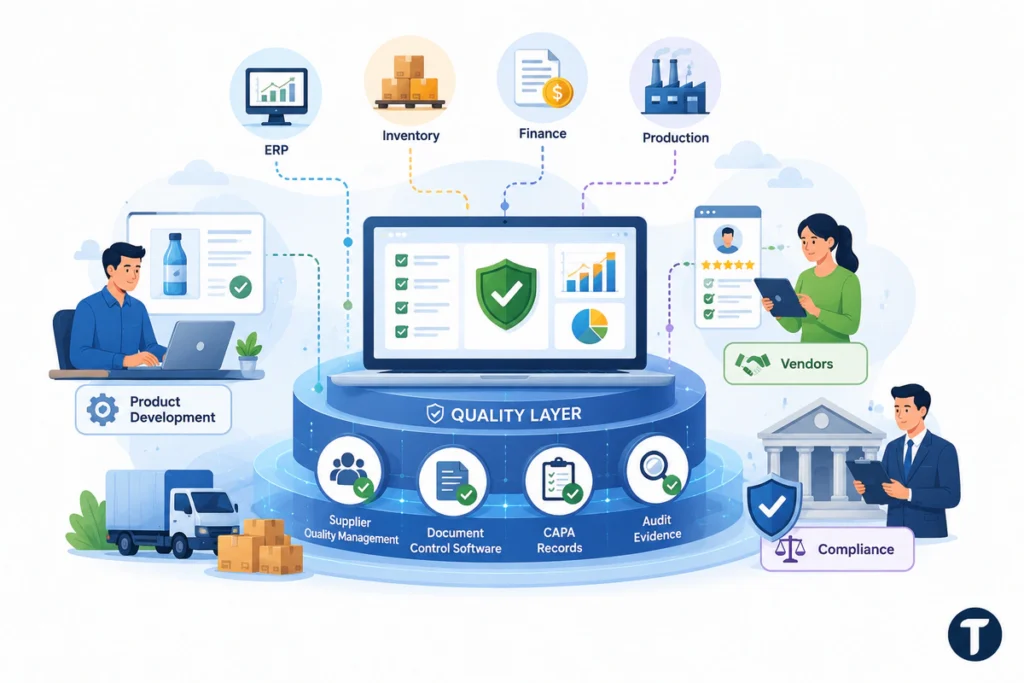
Most brands already use ERP, inventory, finance, and production tools. Those systems are useful, but they do not always control quality processes well.
A dedicated quality layer fills that gap. The right software for documented preventive controls can help teams manage the records, approvals, and actions that sit between product development, manufacturing, vendors, and compliance.
For food and beverage brands, ISO 22000, the food safety management standard, is a useful reference for what that layer is expected to control, because it is written for any organisation in the food chain rather than for one plant type.
For CPG quality management, this layer is where supplier quality management, document control software, CAPA records, and audit evidence can work together instead of staying scattered.
The point is not to replace every platform. The point is to make quality work easier to trust.
Centralize Product Specifications and Data
Product specifications are the base of consistent quality. Formulas, packaging materials, labels, allergens, testing rules, and finished goods standards need to be current and easy to find.
A quality management system can give teams:
- Approved specifications in one place.
- Version control for changes.
- Clear approval steps.
- Links between product data, batches, and test records.
- Fewer duplicate files.
For example, a packaging artwork change may need input from quality, marketing, regulatory, and production teams before it can move forward. A controlled record makes it easier to see which version is approved and which review is still open.
If a team cannot identify the approved version quickly, the process is already fragile. CPG quality management depends on that clarity because small specification errors can create larger production or compliance problems.
Improve Supplier Records and Oversight
Vendor performance affects product quality, cost, and delivery. A weak certificate process or repeated material issue can create bigger problems if nobody sees the pattern.
QMS software helps track certifications, scorecards, quality assurance records, and corrective actions. It also helps the quality team see whether the same vendor issue keeps returning.
This supports supplier management without relying on memory or scattered files. For example, if a supplier certificate expires before a production run, automated alerts can help the team catch the risk before materials reach the line.
Supplier quality management also gives teams a clearer way to compare vendor performance, review risk, and confirm that required records stay current.
Oversight works best when the record is visible before a problem becomes urgent.
Simplify Audit and Regulatory Compliance
Compliance work is easier when evidence is organized before someone asks for it. Teams may need training records, product approvals, inspection results, CAPA logs, and controlled documents during a review.
A good system makes those records easier to retrieve and explain. It can also support regulatory compliance by showing what changed, who approved it, and when the action was completed.
For food and beverage brands covered by the U.S. Food and Drug Administration’s Food Traceability Rule, traceability is a serious example. The rule applies to certain foods on the Food Traceability List and requires additional records to help identify and remove potentially contaminated products from the market faster.
Document control software supports this work by keeping procedures, approvals, and revision history tied to the evidence teams may need during an audit.
Compliance software should reduce panic, not create more work at the last minute.
Reduce Document Control Delays
Document control matters because controlled content guides real work. That can include SOPs, packaging approvals, testing methods, work instructions, and release checks.
A practical document workflow should cover:
- Drafting.
- Review.
- Approval.
- Effective dates.
- Revision history.
- Training management where needed.
This reduces human error and helps frontline teams use the same approved information. Document control software is especially useful when teams need to update procedures, route approvals, and prove which version was active at a specific time.
A current document is only useful if the right person can find it when work is happening.
Manage CAPA and Root Cause Work
Quality issues can start with materials, equipment, labeling, shipping, sanitation, or customer complaints. CAPA gives teams a structured way to investigate, find root cause, assign owners, and confirm the fix worked.
Digital workflows can automate reminders, track deadlines, and keep each action tied to the original issue without making one person chase every task.
A strong corrective record should show what happened, why it happened, what changed, and whether the action was effective. If a customer complaint keeps pointing to the same label defect, the CAPA record should help the team connect the complaint, batch, supplier, approval record, and corrective step.
In CPG quality management, CAPA works best when supplier quality management records and document control software updates are connected to the same issue history.
Corrective action is complete only when the risk is reduced.
Use Real-Time Data for Continuous Improvement
Real-time quality data helps teams act proactively. It can show open actions, recurring defects, late approvals, vendor trends, and customer complaint patterns.
When the quality solution has integration with production or ERP systems, teams can connect quality signals to business outcomes. For example, a recurring packaging defect may affect waste, returns, retailer chargebacks, and customer satisfaction.
Advanced analytics are not useful unless they lead to clearer decisions. The goal is measurable improvement, not prettier charts.
Better data helps teams move from reporting problems to preventing repeat issues.
CPG Quality Management Software Feature Checklist
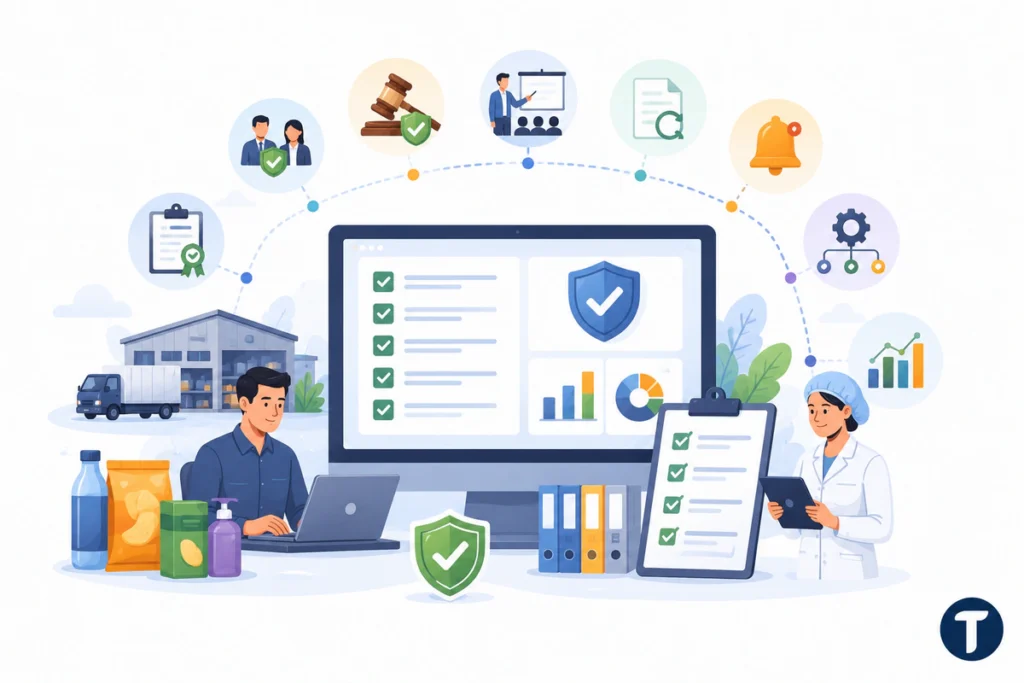
A purpose-built quality solution should cover the specific needs of CPG manufacturers without turning every task into a custom project. The basics are simple: teams need a QMS solution that manages quality processes, product lifecycle records, supplier data, and approval steps without forcing every workflow into a custom build.
Useful capabilities include:
- Supplier management for certificates, scorecards, and risk reviews.
- Compliance management for industry standards and regulations.
- Training management for controlled procedures.
- Change management for formulas, labels, packaging, and procedures.
- Version control for documents and templates.
- Alerts for expired records, late tasks, and overdue approvals.
- Automation for repeatable routing and reminders.
- Advanced analytics for recurring issues and measurable trends.
For many brands, the strongest CPG quality management software is the one that connects supplier quality management, document control software, audit records, and corrective actions without slowing down daily work.
The value of CPG quality management software is not feature volume. It is whether the system helps frontline teams protect high-quality products during normal work.
Full Traceability and Product Lifecycle Control
Full traceability connects product data, vendors, batches, test results, customer complaints, and corrective actions. That end-to-end view can support faster investigations and better business growth because teams can see where risk entered the process.
A shared quality record also helps consumer goods companies avoid weak handoffs between departments. Product development can see approved ingredients. Manufacturing can see the latest procedure. Quality can see inspection history. Regulatory teams can see evidence for compliance.
This is how software solutions empower operational excellence. They make the route from issue to decision shorter and clearer.
For CPG companies, the approach to quality management should also support compliant decisions, consistent quality, and practical business outcomes. The quality team should be able to explain what changed, why it changed, and which record proves it.
Traceability is useful only when people can follow the record without rebuilding the story manually.
Quality Control, Quality Assurance, and Human Error
Quality control checks whether work meets the standard. Quality assurance makes sure the process itself is designed to produce consistent quality. Both are easier when records are connected.
Manual systems increase human error because people copy data between spreadsheets, rename files, forget reminders, or miss a required review. An eQMS can reduce those weak points by guiding the next action and keeping the history attached to the record.
This is also where ISO-aligned thinking helps, even when a brand is not pursuing a formal ISO certificate. Clear procedures, evidence, responsibilities, and continuous improvement habits make the company easier to manage. In practice, controlled documents help support those habits by keeping procedures current and review history visible.
Better systems do not remove judgment. They make good judgment easier to apply consistently.
Questions to Ask Before Choosing a QMS
The best QMS depends on product risk, team size, sites, systems, and compliance needs. Before buying, test the platform against real work.
Ask:
- Can it manage product specifications and approvals?
- Does it support vendor records and corrective actions?
- Can it produce evidence for an audit quickly?
- Does it support full traceability where needed?
- Can nontechnical users complete daily tasks?
- Does it connect with existing systems?
- Is the platform flexible enough for your workflow?
For CPG quality management, also ask whether supplier quality management and document control software features are strong enough for the way your team actually works.
The best QMS is the one that fits the way your company actually manages quality.
What this means in practice
Quality management technology helps CPG companies control daily operations as product lines, vendors, and compliance requirements grow. It gives teams a clearer way to manage CPG quality management, supplier quality management, and document control software workflows without losing sight of the customer.
The strongest systems do more than store records. They help teams act faster, prove what changed, and prevent the same quality problems from returning. For most brands, the best next step is to map the highest-risk quality workflow first, then choose software that makes that workflow easier to control.