Boosting Software Adoption Rates: How DAPs Are Changing the Game
Table of Contents
A digital adoption platform helps teams turn confusing software into guided work by giving employees support at the exact moment they need it. Instead of relying on one-time training or static documentation, it provides in-app prompts, walkthroughs, and guidance that help people complete tasks with more confidence.
What it means
A digital adoption platform helps employees use business software with in-app guidance, walkthroughs, prompts, and analytics. It improves software adoption by speeding up onboarding, reducing support tickets, guiding users through key workflows, and showing teams where people get stuck.
Nexthink Guides documentation describes a digital adoption solution that overlays browser-based applications with context-aware in-app support, on-demand training and interaction analytics. That product example shows why buyers should compare the exact applications covered, guidance formats and measurement features rather than treating every DAP as interchangeable.
The Real Software Adoption Problem
Most companies still treat adoption as a launch problem.
They buy enterprise systems, run onboarding sessions, share documentation, and expect people to adapt. That model made sense when tools changed slowly. It breaks when teams use dozens or hundreds of apps.
WalkMe’s 2025 State of Digital Adoption research found that executives believed their organizations used an average of 37 applications. WalkMe usage data showed the real figure was 625 applications, a 17x gap between perception and reality. The same report said enterprises lost more than $104 million in 2024 through underused technology and poor productivity practices.
Adoption now fails because employees face too much change with too little live support.
The problem shows up in simple ways:
- New user onboarding takes longer than planned
- Employees skip fields, steps, or approvals
- IT teams receive the same support tickets again and again
- Managers cannot see where the workflow breaks
- Expensive systems get used for only a small set of features
This is digital friction. People have access to the tool, but they do not feel confident using it.
What a Digital Adoption Platform Does
DAPs Make Digital Transformation More Measurable
A digital adoption platform is a guidance layer that sits on top of business applications. Instead of sending employees to a help center, it gives in-app guidance while they work.
A good DAP can show a tooltip beside a field, launch a walkthrough for a new process, remind a user about a missing step, or point someone to the next action. It can also give leaders product analytics and adoption analytics, so they can see where people drop off.
A strong Digital Adoption Platform does more than explain screens. It connects training, workflow support, automation, and user experience into one system.
Common DAP features include:
- Interactive walkthroughs for complex tasks
- Contextual prompts based on the page, role, or action
- Smart checklists for onboarding and change management
- In-app guidance for errors, approvals, and data entry
- Analytics on usage, completion, and user behavior
- Segmented experiences for different teams or roles
- Guided shortcuts for repeatable steps inside business processes
The goal is simple: guide users through real work without pulling them away from the task.
That shift matters. People remember a process better when they complete it in context.
How Digital Adoption Platforms Improve Onboarding
Onboarding is where adoption often starts to crack. A new employee may join a company and face HR tools, CRM systems, project apps, reporting dashboards, communication tools, and internal portals in the same week.
A digital adoption platform works like a patient coach. It can guide users through the first login, first task, first approval, and first report. That reduces pressure on trainers and managers.
Guided onboarding is stronger because the learning happens inside the workflow.
Traditional onboarding asks people to remember a process before they need it. The tool gives them the process when they are trying to complete it.
This improves onboarding in three practical ways:
- New users get help without waiting for a colleague.
- Teams can update guidance when the tool changes.
- Managers can see which steps slow people down.
This also improves refresher training for existing employees. A product launch, ERP update, AI feature, or compliance change can trigger a fresh guided path without rebuilding a full training program.
Why Digital Adoption Platforms Lower Support Costs
Support teams lose time when the same question appears every day.
“How do I submit this request?”
“Where do I add this field?”
“Why can’t I move this case forward?”
The guidance layer can answer many of these questions before the ticket gets created. It gives help users can act on in real time, inside the screen where the issue appears.
Every avoided ticket gives IT more time for higher-value work.
The best digital adoption platform for a support-heavy team is not always the one with the longest feature list. It is the one that removes the most repeated confusion from daily work.
This is where analytics become important. If support tickets rise after a new process launches, adoption tools can show whether users are missing a field, skipping a step, or dropping out at the same point. Teams can then fix the guidance, improve the workflow, or change the training.
That creates a feedback loop. The platform teaches users, measures adoption, and shows where the digital adoption process needs work.
DAPs Make Digital Transformation More Measurable
Digital transformation sounds strategic, but it often fails in small moments.
A sales rep avoids the CRM because updates take too long. A finance team keeps a spreadsheet because the ERP process feels unclear. A manager ignores a dashboard because they do not trust the data.
These moments hurt ROI.
WalkMe reported that enterprises using at least one digital adoption best practice can lift digital transformation ROI from 22% to 64%. That does not mean one prompt fixes every project. It means adoption plans have a clear business impact when they reduce friction at scale.
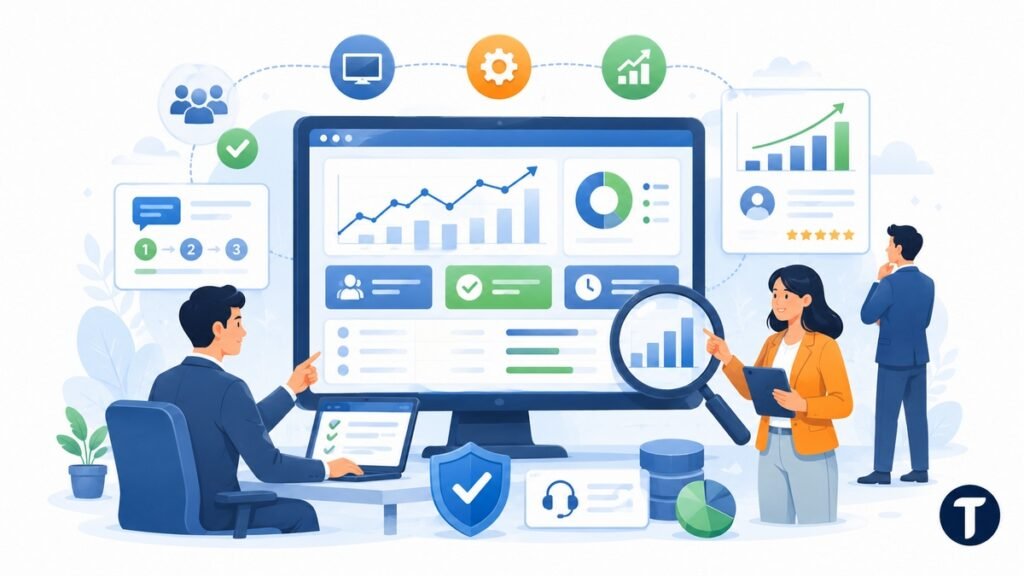
You cannot improve what you cannot see, and DAP analytics make adoption visible.
A digital adoption solution can help leaders measure:
- Feature adoption across teams
- Task completion rates
- Drop-off points inside key workflows
- Time spent on specific processes
- User adoption by role, location, or department
- The impact of new guidance on support tickets
This makes enterprise digital adoption a management discipline, not a guess.
AI Is Raising the Stakes for Adoption
AI has made the adoption challenge more urgent. Companies are adding copilots, assistants, automation, and predictive tools into the digital workplace. These systems can save time, but only if people trust them and know when to use them.
WalkMe found that 75% of workers struggle to harness AI efficiencies. Only 28% felt adequately trained, and only 25% said they could use AI to work more efficiently.
That gap matters. AI spending can grow fast while real adoption stays low.
AI value depends on behavior change, not just tool access.
These platforms can support AI adoption by showing when to use an assistant, how to write a useful prompt, where to check AI output, and when a human approval step still matters.
This is where contextual support beats a static guide. If an AI feature appears in a sales workflow, a finance process, or a service desk screen, the guidance should match that use case.
This approach can make AI feel less like a separate tool and more like part of the workflow.
Choosing the Right Digital Adoption Platform
Choosing the right digital adoption platform starts with the adoption needs of the business. A product team, an HR department, and an enterprise operations team may all need different things.
Start with the workflows that cost the most when people get them wrong.
For example, an ERP process may need strict step-by-step guidance because errors affect reporting. A customer activation tool may need product adoption prompts because the main goal is activation. An internal AI rollout may need short, role-based prompts because employees need confidence.
The right DAP should match your highest-friction workflows, not just your longest software list.
Before you choose a platform, ask:
- Which processes create the most support tickets?
- Which tools have low feature adoption?
- Where do new users lose the most time?
- Which workflows affect revenue, compliance, or customer experience?
- Do we need analytics, guided support, role-based learning, or all three?
- Can the guidance change as systems change?
Platforms like WalkMe, Pendo, Whatfix, Userpilot, and newer DAPs all approach adoption in different ways. Some focus on employee training. Some lean toward product analytics. Some are better for customer-facing activation. Some fit large enterprise environments.
The best options are the ones that fit your workflows, your users, and your change management plan.
The Future of DAPs in Enterprise Software
The market is growing because the software stack is no longer getting simpler. Fortune Business Insights valued the global digital adoption platform market at USD 1.24 billion in 2025 and projects it to reach USD 4.37 billion by 2034.
That growth reflects a bigger change. Businesses are learning that buying technology is not the same as getting people to use it.
True digital adoption happens when people can use tools with confidence, speed, and accuracy.
Modern digital adoption platform software will become more intelligent. AI will help predict where users need support. Analytics will connect adoption to business outcomes. Guidance will become more personal by role, task, and behavior.
The companies that win will not be the ones with the biggest software budgets. They will be the ones that make work easier every day.
These platforms are changing the game because they solve the hidden problem behind wasted tech spend. They turn training into live support, turn confusion into clear next steps, and turn adoption from a launch checklist into a lasting business habit.
The takeaway
Enterprise teams do not need more unused tools. They need better ways to make the tools they already own work.
A digital adoption platform gives users help in context, gives leaders adoption analytics, and gives businesses a better chance of seeing ROI from systems, guided workflows, and AI investments.
In 2026, software adoption is no longer just an IT concern. It is a core business performance issue.
Companies that treat these platforms as strategic adoption solutions will move faster, waste less, and get more value from every digital transformation investment.