How Technology Helps Businesses Improve Operational Efficiency
Table of Contents
Introduction
How Technology Improves Business Efficiency starts with one simple idea: the right tools should make daily work easier, not more complicated.
Technology used to feel like a shiny extra. Now it feels like plumbing. It sits behind sales, inventory, payroll, service, and planning.
When it works, your team moves with less friction. When it fails, every small task feels harder. The best tools do not add noise. They remove stress, save time, and make daily work easier to manage.
Quick Answer
The right tools eliminate repetitive steps, provide teams with real-time data, reduce human error, and enable better, faster decisions. Companies that embrace smart systems gain more room for service, planning, and business growth.
5 Ways Technology Can Improve Operational Efficiency
The first win is speed. A task done manually can eat up minutes all day until those minutes become weeks. A Salesforce report on small-business productivity trends shared a Slack study showing that owners lost 96 minutes of productivity each day to wasted work.
When a business wants better operational efficiency, the first step is often choosing the right everyday software stack. TechBonna’s guide to productivity software, workflow tools, and team productivity explains how to compare office suites, project management software, automation tools, and collaboration systems before adding more technology.
Technology closes that leak by making routine work lighter. The use of technology can turn scattered tasks into one clear workflow.
Here are the five main ways technology can improve daily work:
- It cuts repeat manual tasks.
- It gives teams real-time updates.
- It reduces human error.
- It keeps teams aligned.
- It gives leaders cleaner data for decisions.
Routine Work Gets Lighter
A retailer can automate stock alerts. A clinic can streamline patient intake. A contractor can send invoices from the field instead of waiting until Friday night.
I have seen small teams feel taller once the right setup is in place. The work does not vanish. The drag does. That is where increased productivity starts to show up in meetings, sales calls, and calmer afternoons.
How Automation and AI Improve Efficiency
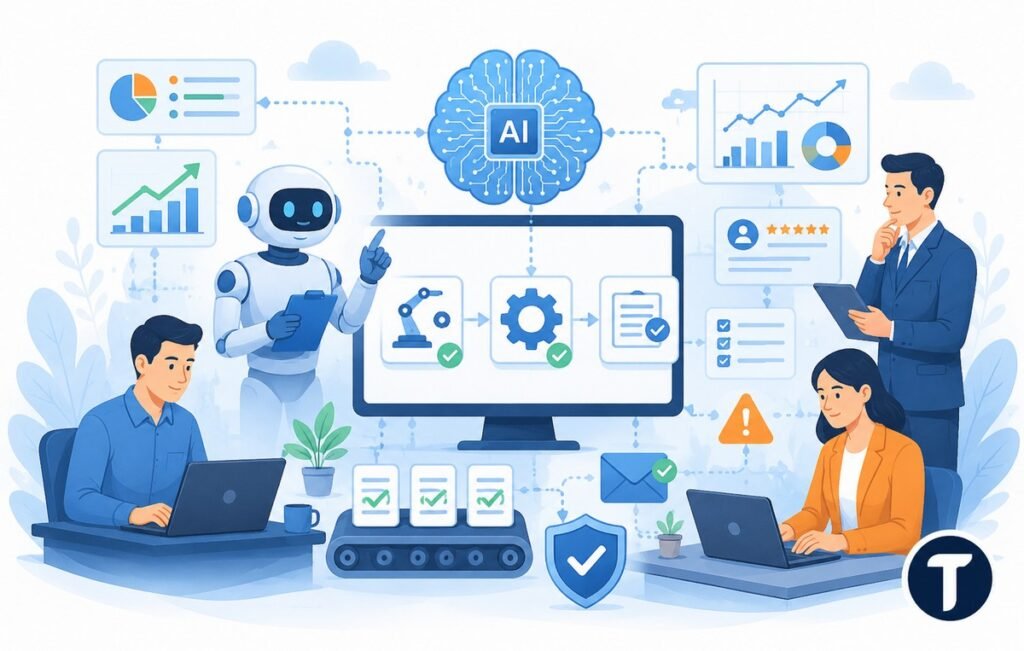
AI is not a magic wand. It is a sharp tool. A McKinsey report on the state of AI found that 88% of surveyed organizations used AI in at least one function in 2025, up from 78% the year before. That shift shows how technology is transforming daily work, not just boardroom plans.
Rules-based tools handle repetitive tasks. AI spots patterns, drafts messages, sorts customer data, and flags risk.
The Task Changes, Not The Judgment
Together, automation and AI create automated processes that protect focus.
A good rule is simple: automate the task, not the judgment. Let AI summarize tickets. Let a person decide the answer when trust matters. Let process automation route forms. Let a manager approve the exception.
This balance matters because human error creeps in when people are tired, rushed, or buried in tabs. AI can check entries, compare records, and warn your team when errors become expensive. Using automation for the dull parts gives people more energy for judgment, care, and sales.
Technology to Improve Business Operations in a Modern Business
Modern business runs on shared information. A sales team needs inventory updates. Finance needs clean numbers. Service teams need the same notes the customer gave yesterday.
Real-time visibility keeps everyone looking at the same map. Real-time reports show what changed, who touched it, and what needs action.
Shared Data Keeps Teams Aligned
Based on real-time signals, leaders can shift staffing, spending, and allocation before a small issue grows into a bigger one.
This is where cloud-based platforms and applications earn their keep. They keep data across teams in sync. They also reduce downtime when a laptop breaks or a worker changes locations.
Industry Tools Solve Specific Gaps
In retail, I have seen stock mistakes turn into lost trust. A buyer thinks an item is ready. The warehouse finds a gap. The customer waits. Tools like software built on standards for supply chain visibility help teams track inventory, orders, and movement without guessing.
For other sectors, accounting software can connect invoices to the general ledger. Management tools can show workload and deadlines. In service fields such as moving and storage, shared schedules and customer records can keep jobs, crews, and updates aligned. In financial services, secure dashboards can support regulatory compliance without the need for endless email chains.
Benefits of Technology for Small Businesses
Small businesses do not have spare hours hiding in a drawer. A 2023 U.S. Chamber of Commerce report on small business technology found that 95% of U.S. small firms used at least one tech platform in 2023, and nearly one in four had adopted artificial intelligence. The survey also found AI users had a 12-point higher chance of profit growth than non-users.
The main benefit shows up first as breathing room. Owners get fewer late nights. Staff get clearer roles. Customers get faster answers.
In execution, this involves working with AI consulting firms like RTS Labs AI consulting company that translate tools into usable workflows rather than standalone systems.
Better Tools Create Breathing Room
Technology solutions can also reduce costs through better planning. Significant cost savings may come from fewer missed orders, less rework, and lower admin time. Profitability grows when fewer dollars leak out due to confusion.
A small business can use chat tools, forms, SaaS systems, and secure payment apps to provide better digital experiences. For teams comparing the basics, this guide to what productivity software is can help clarify which tools actually support daily work. The goal is not to look big. The goal is to feel dependable.
Power of Technology as a Business Necessity

Technology has become a business necessity because speed now shapes trust. Customers expect quick updates. Workers expect tools that do not fight them. Leaders expect numbers they can use before the month ends.
The screen is not the prize. The clearer decision is the prize. Advanced data can reveal pain points that hide inside busy days.
Better Data Leads To Better Choices
Analytics can show which jobs take too long. Data capture can reveal where customer experience breaks down.
AI adds another layer. It can review support themes, predict demand, and prepare teams for supply chain disruptions. Blockchain technology may also protect sensitive data or trace goods in fields where proof matters.
This is the part I care about most: technology should feel like an enabler, not a leash. The best systems enable your team to take cleaner action, drive innovation, and create business value without drowning people in alerts.
Choosing a Technology Partner
Buying software can feel like shopping for a kitchen with no floor plan. Every demo shines. Every vendor promises a revolutionary moment. The best partner slows the room down and asks where work gets stuck.
Start with the job, then pick the tool. List the business processes causing waste. Rank them by cost, risk, and stress. Then choose one system for the first few ways to improve results. The same thinking applies when you choose the right platform for an email marketing campaign: start with the audience, the message, and the action you want people to take.
A Simple Buying Checklist
Use this checklist:
- Name the problem in plain words.
- Ask who owns the work.
- Check internal and external data needs.
- Test the tool with one team.
- Measure results before rolling it out.
A strong provider should help you optimize setup, onboarding, and training. They should care about human resources needs, work-life balance, security, and adoption. They should also explain the limits, because no tool fixes a broken habit on its own.
Digital Transformation That Drives Business Performance
Digital transformation sounds huge, but it starts small. Replace one messy handoff. Connect one system. Build one dashboard. Then repeat.
Business performance improves when data becomes useful at the moment of need. Companies can use AI to forecast demand, route leads, and answer common questions.
Dashboards Need Action
They can also use human review to maintain high quality.
Technology can enhance decision-making across a global organization, from local teams to senior leaders. It can reshape how people plan, sell, serve, and learn. In the digital age, the winners are not the teams with the most tools. They are the teams with the clearest habits.
Data-driven habits matter here. A dashboard should not become wall art. It should spark one action. It may reveal a slow approval step, a common support issue, or a product line with weak margins. That is how teams fight inefficiency without blame.
Where To Start Without Making a Mess
New tools can create noise when leaders rush. I like to start with one painful handoff, then ask what would make it cleaner by Friday. That question keeps the project grounded.
The safest start is small, useful, and measured. Pick a process with clear waste. Set one target. Train the people who touch it. Review the result after 30 days.
Start With One Painful Handoff
Technologies like chatbots, shared dashboards, mobile forms, and secure portals can boost service when they fit the task. They can also frustrate people when they are dumped into work with no plan.
Good rollout matters as much as the tool.
Map the Clicks and Handoffs
Here is my test: take one task people complain about each week and map the clicks. Count the handoffs. Count the rework. Then ask whether a form, alert, template, or shared view would remove the friction.
This keeps efficiency and productivity tied to real work. It also stops leaders from buying a tool. The right technology should make Monday feel lighter. It should not create a second job called “feeding the system.”
Turn Effort Into Momentum
When the owners surveyed said tech saved time, the lesson was not that every app wins. The lesson was that focused tools can help. That is driving business results in a practical way: fewer delays, better service, and more space for people to do work that customers remember.
A final thought: without the help of technology, growth can make chaos louder. With the right setup, growth can feel controlled, seamless, and driving positive change. That is the real advancement. It turns effort into momentum, and momentum is what keeps a business moving in a fast-paced world.
For readers comparing related topics, TechBonna also explains How to Whitewash Nexus Software: Complete 2026 Guide for Secure & Scalable Cleanup with a careful focus on verification, risk, and practical next steps.