Business Vertical Classification Categories: Complete Guide to Industry Segmentation
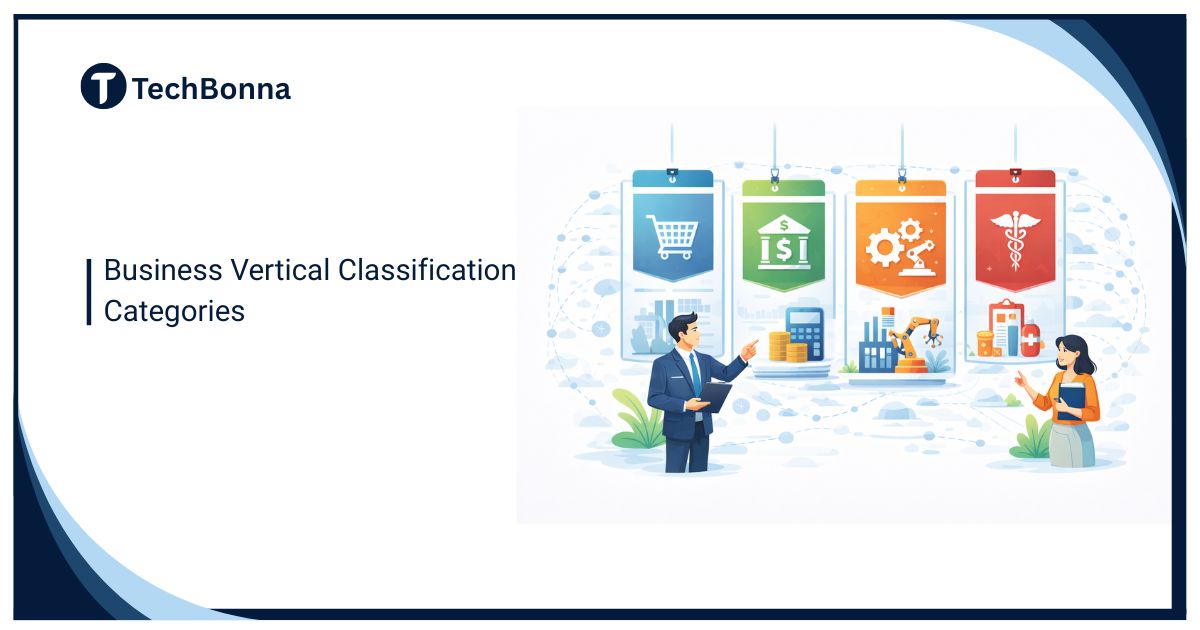
Business vertical classification categories help teams describe what a company sells, who it serves, and which market rules shape its growth. A clear label makes industry segmentation easier for founders, marketers, analysts, investors, and sales teams.
The goal is not to memorize every possible taxonomy. The goal is to use vertical market strategy to choose the right customers, compare the right competitors, and explain the business without bloated definitions.
Quick Answer
Business vertical classification categories group companies by the specific industry, customer type, problem, or operating environment they serve. The most useful approach is to classify a business from broad sector to industry, vertical, sub-vertical, and niche, then validate the label with standard codes such as NAICS and practical buyer behavior.
Sector, Industry, Vertical, Sub-Vertical, and Niche
A useful classification starts broad and gets narrower. This keeps business vertical classification categories simple enough to scan while still giving enough detail for real decisions.
| Level | Meaning | Example |
| Sector | Broad part of the economy | Technology |
| Industry | A group of related companies | Software |
| Vertical | A focused market inside an industry | Healthcare software |
| Sub-Vertical | A narrower customer or use case | Patient scheduling software |
| Niche | A very specific audience, workflow, or problem | Scheduling software for dental clinics |
This table also prevents a common mistake. A company can be in the technology sector, the software industry, and the healthcare vertical at the same time. Those labels are not rivals. They answer different segmentation questions.
How Business Verticals Differ From Horizontal Markets
A vertical market focuses on one specific industry, customer group, or operating context. A horizontal market serves many industries with the same general function, such as email, payroll, analytics, or project management.
For example, a SaaS business that sells accounting tools to any company has a horizontal market. A SaaS business that sells revenue-cycle tools only to hospitals has a vertical market. The first competes on broad features and price. The second competes on workflow knowledge, compliance fit, and deep industry segmentation.
When a consulting company has already chosen its vertical, the next step is turning that positioning into a working business plan for IT consulting with packages, pricing, delivery assumptions, KPIs, and risk controls.
This matters because companies are often grouped into verticals and then analyzed against their closest peers. If the peer set is wrong, pricing, valuation, content strategy, and market positioning can all become misleading.
Common Business Vertical Categories

Most modern business verticals sit inside familiar economic areas, but the practical category should match how buyers search, compare, and budget. A simple list is usually more helpful than a massive industry taxonomy.
- Technology: software, cybersecurity, AI tools, cloud platforms, developer infrastructure, and data products.
- Financial Services: banking, insurance, payments, lending, accounting technology, and fintech platforms.
- Healthcare: providers, medical devices, healthtech, wellness services, patient administration, and healthcare data.
- Retail and Ecommerce: online stores, marketplaces, point-of-sale software, fulfillment, and customer-experience tools.
- Manufacturing and Supply Chain: production, logistics, procurement, warehousing, quality management, and industrial automation.
- Professional Services: Consulting, legal, accounting, staffing, training, design, and business advisory firms.
- Education and Public Sector: schools, training providers, government services, civic technology, and compliance-led organizations.
These business verticals can be combined with company size, geography, buyer role, and business models. That is why “B2B cybersecurity for small healthcare clinics” is more useful for vertical market strategy than “technology company.”
Use Standard Industry Codes Without Letting Them Control Strategy
Standard codes help with research, reporting, procurement, and market sizing. The North American Industry Classification System groups establishments by primary economic activity and is one of the most useful references for U.S. market research.
Other classification system references include Standard Industrial Classification, the Global Industry Classification Standard, and the Industry Classification Benchmark. These classification frameworks are useful when you need comparable data across companies by industry.
The Standard Industrial Classification is the one you are most likely to meet in older records and in some regulatory filings, and the full SIC manual is still published as a browsable division-by-division index. Reading a couple of divisions is the fastest way to see how coarse these codes are compared with the way your buyers actually describe themselves.
However, official industry classification is not the same as practical segmentation. A government code might place two companies in the same industry even if their buyers, sales cycles, product risks, and content needs are completely different. Use codes for structure, then use customer evidence for strategy.
How to Choose the Right Vertical for a Startup or Product
A startup should choose a vertical by looking at customer pain, budget, access, urgency, competition, and proof. The right vertical is not always the largest one. It is the market where your product, story, and distribution can become specific enough to win.
A clear vertical classification should make sales, content, product roadmaps, and investor conversations easier. If the label creates more confusion, it is probably too broad, too narrow, or based on internal language instead of buyer behavior.
- Can customers instantly recognize themselves in the vertical?
- Does the vertical share a common workflow, pain point, or buying trigger?
- Can the company show relevant case studies, integrations, compliance knowledge, or data?
- Is the vertical large enough to support business growth?
- Can marketing content speak to a specific vertical audience without becoming too narrow?
- Can sales teams explain the market position in 30 seconds?
How Classification Supports Marketing, SEO, and Sales
Business classification becomes valuable when it changes execution. Marketing teams use vertical categories to group audiences, plan content, choose keywords, build landing pages, and write messaging that sounds specific instead of generic.
SEO teams use industry segmentation to decide whether a page should target a broad industry term, a vertical market term, or a narrow use case. A page about “ERP software” has different intent from a page about “ERP software for food manufacturers.”
Sales teams use vertical market strategy to qualify leads and explain relevance quickly. Instead of saying a product works for everyone, they can show how it supports one industry or niche with examples, integrations, and language buyers already understand.
The same logic applies to paid media, partnerships, and customer research. If business vertical classification categories are too broad, every campaign sounds generic. If they are too narrow, the audience may be too small to support repeatable acquisition. Practical industry segmentation keeps the message specific while leaving enough room for growth.
A good vertical market strategy also improves internal alignment. Product teams know which integrations matter, sales teams know which objections to expect, and leadership can decide whether to deepen one vertical or expand into adjacent industry segments.
For reporting, the same structure helps everyone use one language. A content manager can plan vertical pages, an analyst can compare peer companies, and a founder can explain why the company belongs in a specific industry or market instead of a vague catch-all category.
Challenges in Business Vertical Classification
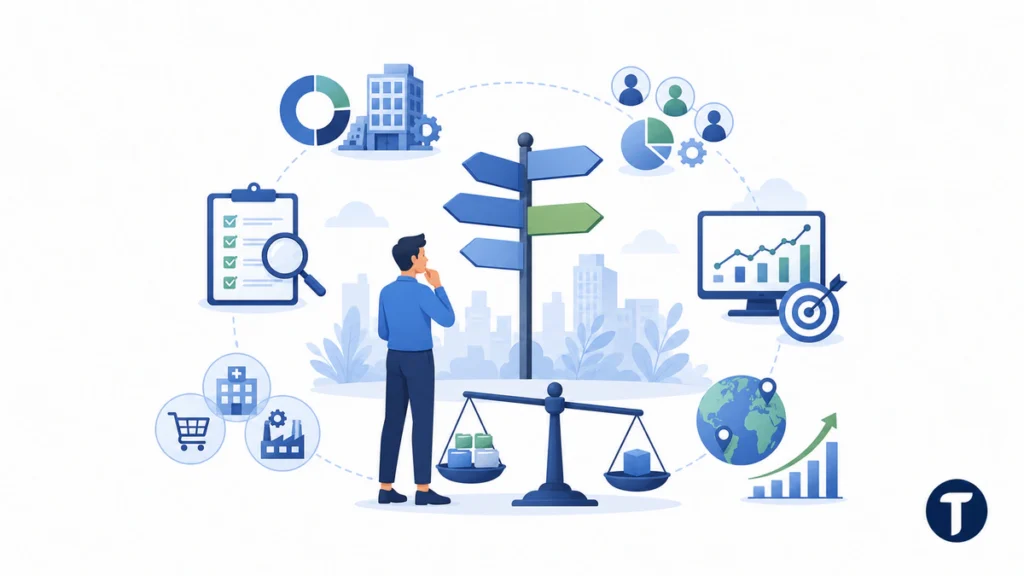
The biggest challenge is that many companies serve multiple verticals. A payment platform might serve retail, hospitality, software, and healthcare. A cybersecurity firm might support finance, ecommerce, education, and public-sector clients.
In those cases, classify the core business first, then list secondary verticals. If one product line has a different buyer, workflow, or compliance burden, treat it as a separate sub-vertical for marketing and reporting.
Another challenge is market drift. New verticals appear when technology, regulation, behavior, or distribution changes. AI operations, climate technology, creator tools, and vertical SaaS platforms show how a new vertical can emerge from several verticals and traditional verticals at once.
A practical review cadence helps. Revisit business vertical classification categories when the company launches a new product, enters a new geography, changes its buyer profile, or notices that competitors are being grouped differently by analysts, customers, and search results.
Keep the review simple. Compare how customers describe the problem, how competitors organize their pages, how analysts group the market, and how revenue is actually distributed. If those signals disagree, choose the label that best supports the next business decision and document the reason for future teams and later reviews.
Frequently Asked Questions
What Are the Main Business Vertical Classification Categories?
The main business vertical classification categories usually include technology, financial services, healthcare, retail, manufacturing, supply chain, education, public sector, professional services, real estate, media, telecom, and energy. The best category depends on how customers buy and compare the company.
Is NAICS the Same as a Business Vertical?
No. NAICS is an official industry classification system used for economic data. A business vertical is a practical market label used for strategy, marketing, sales, product planning, and competitive positioning.
Can a Company Operate Across Multiple Verticals?
Yes. Many companies operate across multiple verticals, but they should still define a primary vertical for positioning. Secondary verticals can be handled with dedicated pages, case studies, sales materials, or product bundles.
What Is the Difference Between an Industry and a Vertical?
An industry is usually broader. A vertical is a more focused market inside or across an industry. “Software” is an industry. “Compliance software for banks” is a vertical market with a specific buyer and problem set.
Final Thoughts
Business vertical classification categories are most useful when they turn a messy taxonomy into clear decisions. Use industry segmentation to choose the right peer group, content angle, and sales message, then use vertical market strategy to decide where the business can compete with the most credibility.
When the label is clear, teams can align content, sales, product, investor updates, and market research around the same definition. That is the practical value of business vertical classification categories, industry segmentation, and vertical market strategy.